

Vacant rental properties in the Dallas area face unique insurance challenges that standard homeowners policies simply don’t cover. Vacant property insurance protects your investment from theft, vandalism, and weather damage when a unit sits empty between tenants.
We at Brooks Cannon Insurance Group help Dallas landlords navigate these coverage gaps with policies designed specifically for vacant properties. Getting the right protection in place now prevents costly losses down the road.
What Vacant Property Insurance Actually Covers
Vacant property insurance operates under fundamentally different rules than standard landlord policies, and this distinction matters enormously in Dallas. Most traditional homeowners and rental policies terminate coverage or severely restrict it once a property sits empty for 30 to 60 days, according to industry standards tracked by the Insurance Information Institute. When you leave a rental unit vacant between tenants, you lose protection against vandalism, theft, arson, and water damage-the exact perils that strike hardest when nobody watches the property. Vacant dwelling endorsements and specialized vacant property policies fill this gap by explicitly covering these risks during occupancy lapses. The coverage typically includes malicious mischief, unauthorized entry, and weather-related damage if utilities remain active. Dallas landlords who skip this step face potentially devastating losses; a single break-in or storm can cost thousands in repairs and lost rental income, with no insurance recovery if the policy lapsed.
Why Dallas Properties Face Elevated Vacancy Risk
The Dallas rental market is cooling in ways that extend vacancy periods. Rents on new leases show modest declines, which means turnover takes longer and units sit empty while landlords adjust pricing or wait for qualified tenants. Simultaneously, renter cost burdens have reached record levels, pushing more prospective tenants out of the Dallas market entirely and stretching vacancy timelines further. Older Dallas units left vacant longer accumulate maintenance issues-roof leaks, pipe bursts, and HVAC failures accelerate when properties sit unoccupied. Vandalism and theft risk skyrocket in vacant properties; the Insurance Information Institute documents that vacant rental properties face substantially higher exposure to break-ins and arson than occupied units. Security measures like monitored alarm systems, exterior lighting, and cameras reduce this risk meaningfully and often qualify you for premium discounts.
What Texas Requires for Vacant Properties
Texas doesn’t impose statewide mandatory coverage rules for vacant rental properties, but your mortgage lender almost certainly does. Lenders require specific policy language, including a loss-payee clause naming them as an interested party, and they often mandate replacement-cost coverage rather than actual cash value. This protects their collateral and yours simultaneously. Verify your lender’s exact requirements before vacancy begins, because misaligned coverage can trigger policy cancellation or claim denial. Dallas properties also face flood risk that standard policies exclude entirely; separate flood insurance from the National Flood Insurance Program becomes necessary if your property sits in a flood zone. Wind and hail damage occur frequently in North Texas, so confirm your vacant policy includes adequate endorsements for roof, siding, and window damage-this isn’t optional given the region’s weather patterns.
Documentation Protects Your Claims and Your Coverage
You must maintain dated photos of the property at vacancy onset and throughout the vacancy period, along with inspection logs and maintenance records. This paper trail protects you if a claim dispute arises and demonstrates responsible property management to your insurer. Lenders also scrutinize this documentation when you file claims, so thorough records accelerate settlements and prevent coverage denials. An independent insurance agent in Dallas can walk you through the specific documentation your lender and insurer require before vacancy begins. This preparation prevents gaps that could leave you unprotected when damage occurs.
Coverage Options for Vacant Rental Properties in Dallas
Single-Family and Duplex Properties
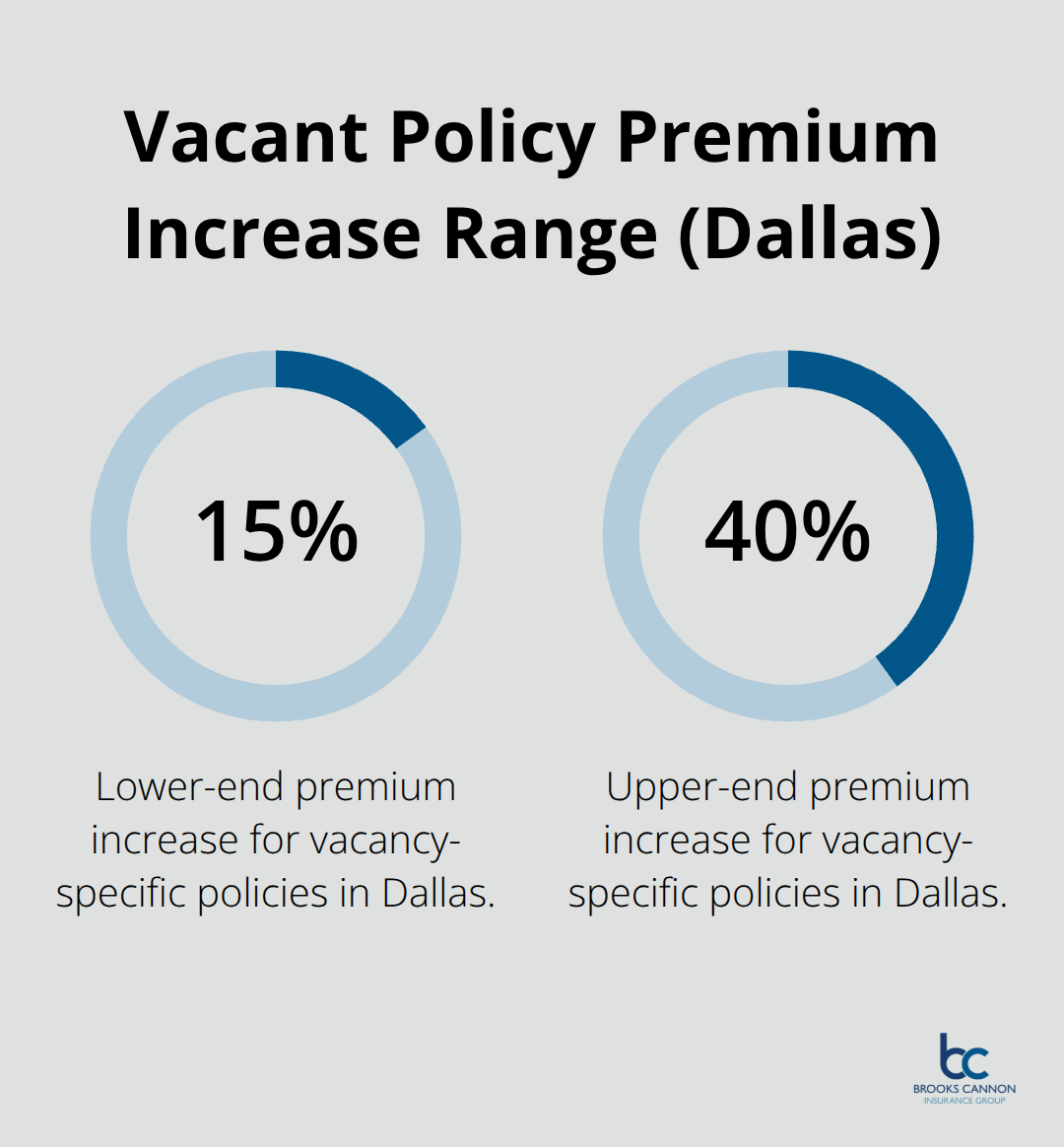
Single-family rental homes and duplexes qualify for vacancy-specific homeowners policies that attach to your standard landlord coverage through an endorsement or operate as standalone vacant dwelling policies. These policies cost between 15 and 40 percent higher in premium than occupied rental coverage, according to pricing patterns tracked across the Dallas market, but they provide comprehensive protection against the perils that strike hardest when units sit empty.
The Insurance Information Institute emphasizes that standard homeowners policies contain explicit vacancy exclusions that activate after 30 to 60 days of non-occupancy, so waiting to purchase coverage after a tenant moves out guarantees you’ll face either denial or massive premium penalties. Dallas landlords who secure vacant coverage before vacancy begins lock in rates and avoid the underwriting nightmare of applying for coverage on an already-empty property.
Multi-Unit Commercial Properties
Multi-unit properties with four or more units fall into commercial territory and require commercial property insurance tailored to vacant buildings. This coverage costs substantially more upfront but protects larger asset bases and often includes business interruption coverage to offset lost rental income during extended vacancies. Commercial policies demand more detailed underwriting and documentation than residential vacant coverage, so start conversations with insurers well before your property becomes vacant.
Essential Endorsements for Dallas Vacant Properties
Vandalism and malicious mischief endorsements are non-negotiable for Dallas properties; they cover break-ins, graffiti, and arson losses that plague vacant buildings in urban and suburban markets alike. Water damage endorsements prove critical when utilities remain on-pipes burst when heating systems fail, and you need explicit coverage for this scenario. Theft and unauthorized occupancy endorsements protect against squatters and theft of fixtures, appliances, and materials.
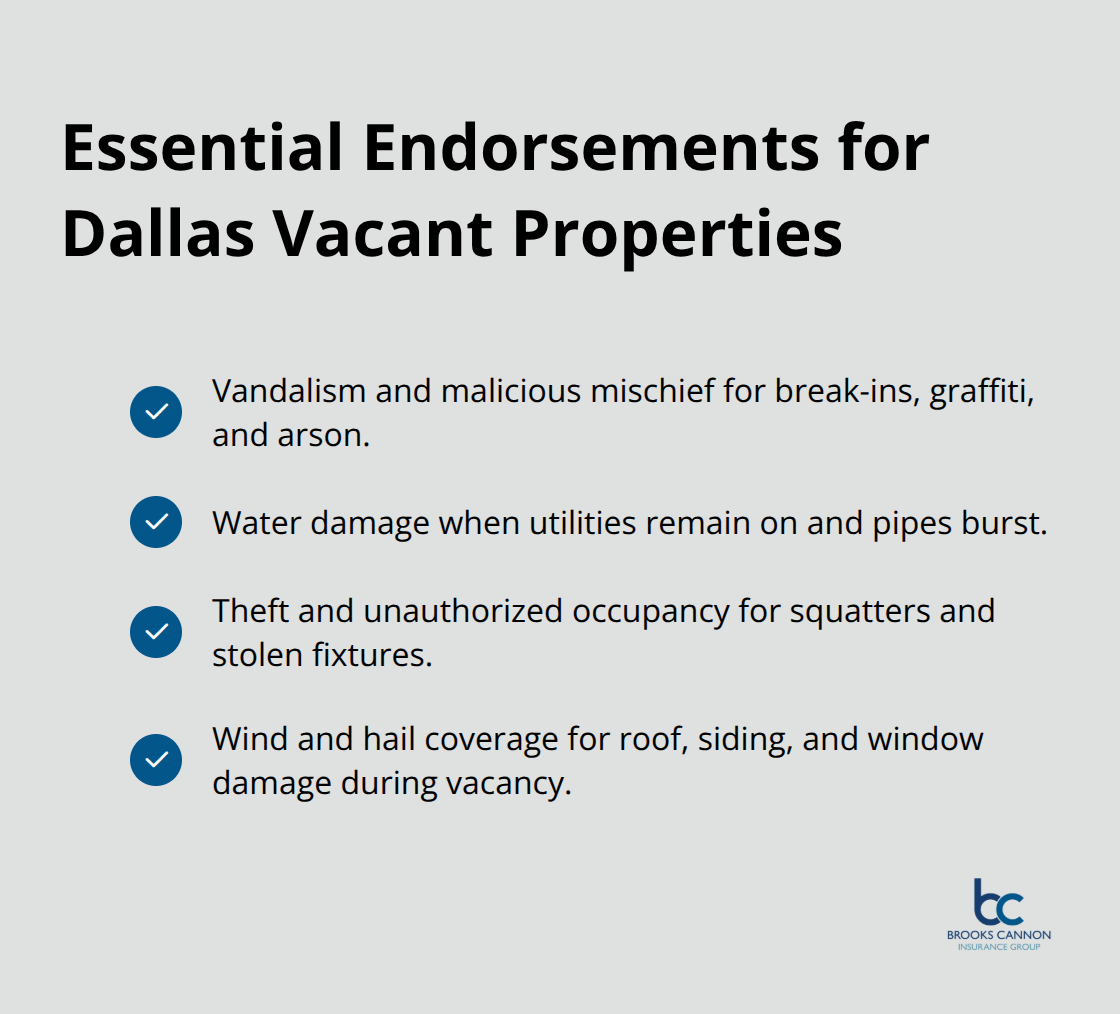
Wind and hail coverage becomes essential given North Texas weather patterns; confirm your policy covers roof damage, siding damage, and window breakage specifically during vacancy, not just when occupied.
Utility Status and Coverage Implications
Some insurers restrict coverage for utilities being off; if you shut off water to prevent freezing, confirm your policy still covers weather-related damage. Conversely, keeping utilities active creates different risks-water damage from burst pipes becomes more likely, but your coverage for that peril must remain active. This decision affects which endorsements you actually need and how much your premium will run.
Getting the Right Endorsements in Place
An independent agent who understands Dallas risk factors can audit your existing landlord policy to identify exactly which endorsements you need before vacancy begins. This prevents the costly mistake of discovering coverage gaps only after damage occurs. As an independent agency based in Dallas, Brooks Cannon Insurance Group works with multiple top-rated carriers to match your vacant property with the right endorsements and pricing for your specific situation.
Cutting Vacant Property Insurance Costs Without Sacrificing Protection
Security Measures Lower Premiums Directly
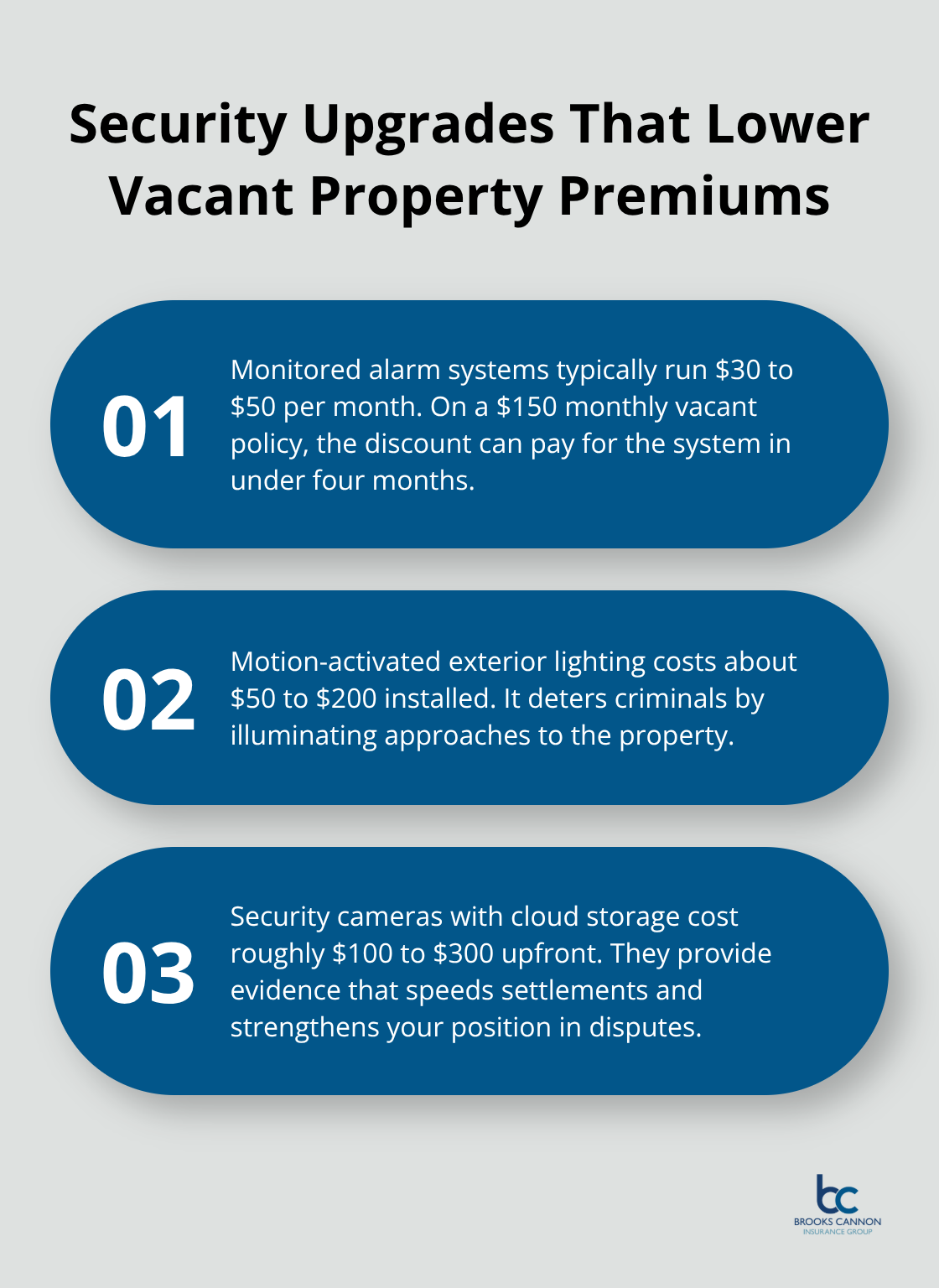
Security measures reduce your vacant property insurance premiums in Dallas, and the savings often exceed what you spend on the upgrades. Monitored alarm systems, exterior lighting, and security cameras signal to insurers that your property faces lower risk of theft and vandalism, typically earning you discounts on vacant coverage premiums. The math works in your favor: a monitored alarm system costs roughly $30 to $50 monthly, but a premium reduction on a $150 monthly vacant policy can generate significant yearly savings, paying for the system in under four months. Motion-activated exterior lighting costs even less-$50 to $200 for installation-and prevents criminals from approaching the property undetected. Security cameras with cloud storage run $100 to $300 upfront and create documented evidence if a claim occurs, which accelerates settlements and strengthens your position in coverage disputes.
Dallas insurers favor these concrete risk-reduction measures because they demonstrably lower loss frequency; you’re not just asking for a discount, you’re showing them why your property deserves one.
Inspections Catch Damage Before It Becomes Catastrophic
Regular property inspections during vacancy periods transform your risk profile from unmanageable to insurable at reasonable rates. Monthly inspections catch water damage, HVAC failures, and weather damage before they become catastrophic losses, reducing claim severity when damage does occur. Documentation from these inspections-dated photos, maintenance logs, contractor receipts-becomes your strongest defense in claims disputes and renewal negotiations with insurers. An independent insurance agent in Dallas can recommend inspection frequencies that satisfy your specific lender’s requirements while keeping costs reasonable; some landlords hire property management companies for this purpose, which also demonstrates professional oversight to underwriters.
Shop Quotes Across Multiple Carriers
Work with an agent who understands how Dallas insurers actually price vacant coverage rather than accepting quotes from carriers unfamiliar with local risk factors. Independent agents compare quotes across multiple carriers simultaneously, revealing which insurers offer the best rates for your specific property type, location, and risk profile. A carrier that charges significantly more than competitors for one property type might offer the best pricing for another, so shopping quotes independently prevents you from overpaying. Ask prospective agents how they handle renewal reviews-the best ones proactively compare new quotes annually and flag coverage gaps before renewal dates arrive, ensuring you never pay unnecessary premiums or face surprise coverage denials.
Final Thoughts
Vacant property insurance protects your Dallas rental investment from the specific perils that strike hardest when units sit empty. Standard landlord policies terminate coverage after 30 to 60 days of vacancy, leaving you exposed to theft, vandalism, weather damage, and arson losses that can cost thousands in repairs and lost rental income. The right vacant dwelling endorsement or standalone vacant property policy fills this gap and keeps your investment protected during tenant transitions.
Contact your mortgage lender first to confirm their exact coverage requirements, including loss-payee language and replacement-cost minimums. Implement concrete risk-reduction measures like monitored alarm systems, exterior lighting, and security cameras-these upgrades lower your premiums while demonstrably reducing theft and vandalism exposure. Schedule monthly property inspections and maintain dated photos, maintenance logs, and contractor receipts throughout the vacancy period, as this documentation accelerates claim settlements and strengthens your position in coverage disputes.
Shop quotes across multiple carriers rather than accepting the first offer you receive, since Dallas insurers price vacant coverage differently based on property type, location, and risk profile. An independent agent who understands local risk factors can audit your existing policy, identify coverage gaps, and match you with endorsements that actually protect your property without unnecessary cost. Contact Brooks Cannon Insurance Group to review your vacant property situation and lock in protection before your next vacancy begins.
Disclaimer: The information provided in this blog is for general informational purposes only and does not constitute legal, financial, or insurance advice. Coverage options, terms, and availability may vary. Please consult with a licensed professional for advice specific to your situation