

Being a landlord in Dallas means managing multiple risks at once. Background checks help you spot problem tenants before they sign a lease, but they’re only half the equation.
At Brooks Cannon Insurance Group, we know that landlord screening insurance fills the gaps that tenant vetting alone cannot cover. Together, these two tools create a complete defense against financial loss.
What Background Checks Reveal About Tenant Risk
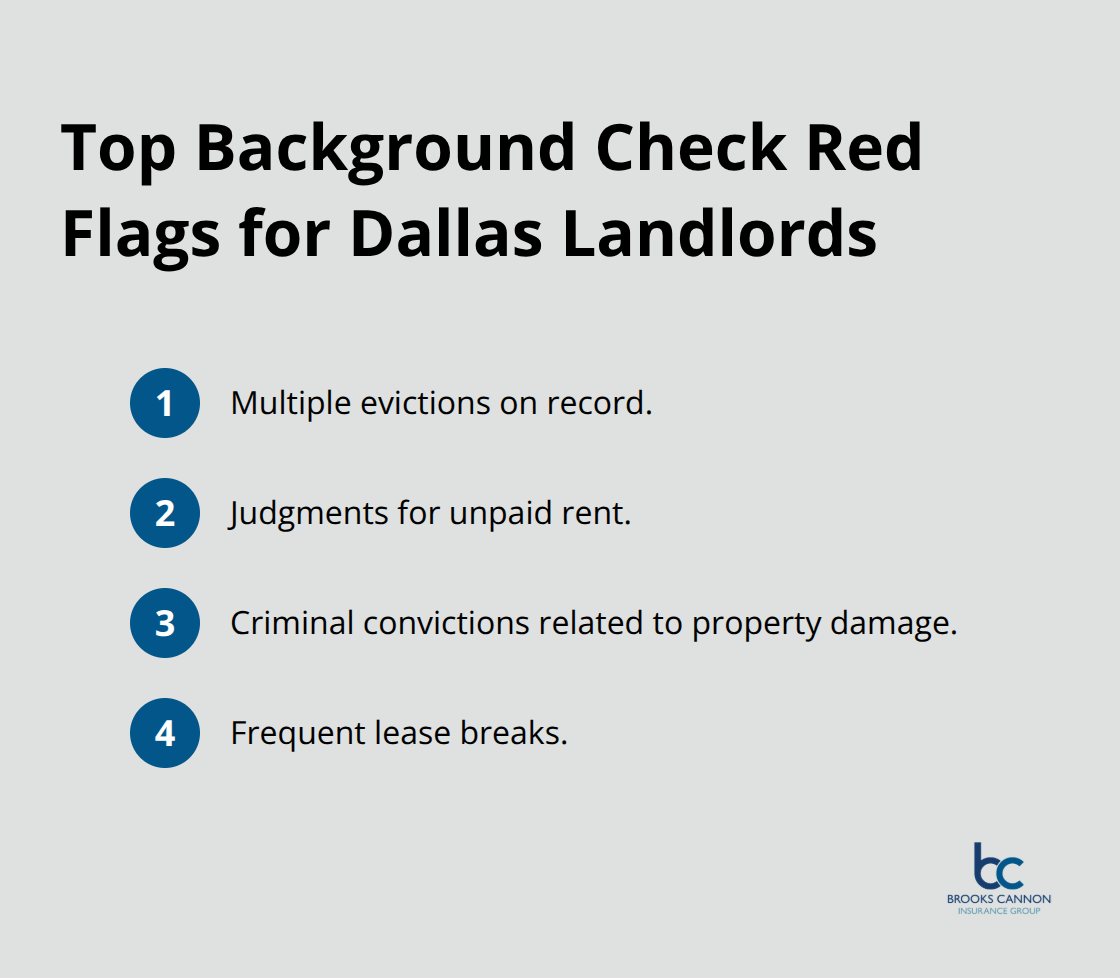
Background checks do more than verify names and addresses. They expose patterns of behavior that predict future problems. A Dallas landlord who skips this step is essentially gambling with their investment. When you pull a background check, you’re looking for specific red flags: multiple evictions, judgments for unpaid rent, criminal convictions related to property damage, and frequent lease breaks. A tenant with three evictions in five years isn’t an outlier-they’re a liability.
Property damage claims from problem tenants cost landlords an average of $2,500 to $5,000 in repairs, according to the American Property Management Association. Beyond damage, non-payment cases drain resources fast. The average eviction in Texas costs $1,200 to $2,500 in legal fees alone, not counting lost rent during the process. Background checks identify these risks upfront, but here’s the critical truth: they don’t prevent losses-they only help you avoid the worst candidates. You still need protection for the tenants who pass screening but still cause problems.
Rental History Tells You What Credit Scores Don’t
Eviction records and prior lease violations reveal behavioral patterns that financial reports miss. A tenant might have excellent credit but a history of property damage or noise complaints. Check for patterns: Has this person been evicted before? Did they break leases early? Were there disputes with previous landlords? Many Dallas landlords use services like Zillow’s rental screening tool or specialized platforms like RentBureau that compile this information. Cost runs $20 to $50 per report, a small investment compared to one eviction.
Non-Payment Risk Is Measurable and Preventable
Tenants with prior judgments for unpaid rent are statistically more likely to default again. A background check that shows prior civil judgments for debt is your clearest warning. When you see a pattern of broken payment agreements, trust it. This is where background checks become your first line of defense-they eliminate candidates before they occupy your property and stop paying.
Why Background Checks Alone Leave You Exposed
Background checks filter out problem applicants, but they can’t protect you from unexpected events. A tenant who passes screening today might face a job loss tomorrow and stop paying rent. Property damage happens even with vetted tenants (accidents, negligence, and disputes occur). Liability claims arise when tenants or their guests suffer injuries on your property-something no background check predicts. This gap between screening and reality is where landlord insurance steps in to cover what tenant vetting cannot.
What Insurance Protects When Screening Doesn’t
Background checks eliminate many problem tenants, but they cannot predict job loss, unexpected medical emergencies, or accidents that occur after a lease begins. Dallas landlords who understand that tenant screening and insurance serve different purposes gain a significant advantage. A tenant who passes every background check can still stop paying rent due to circumstances no screening tool can foresee. Landlord insurance covers lost rent when this happens, protecting your cash flow during the months it takes to evict and re-lease the unit.
Lost Rent Coverage Bridges the Gap Between Screening and Reality
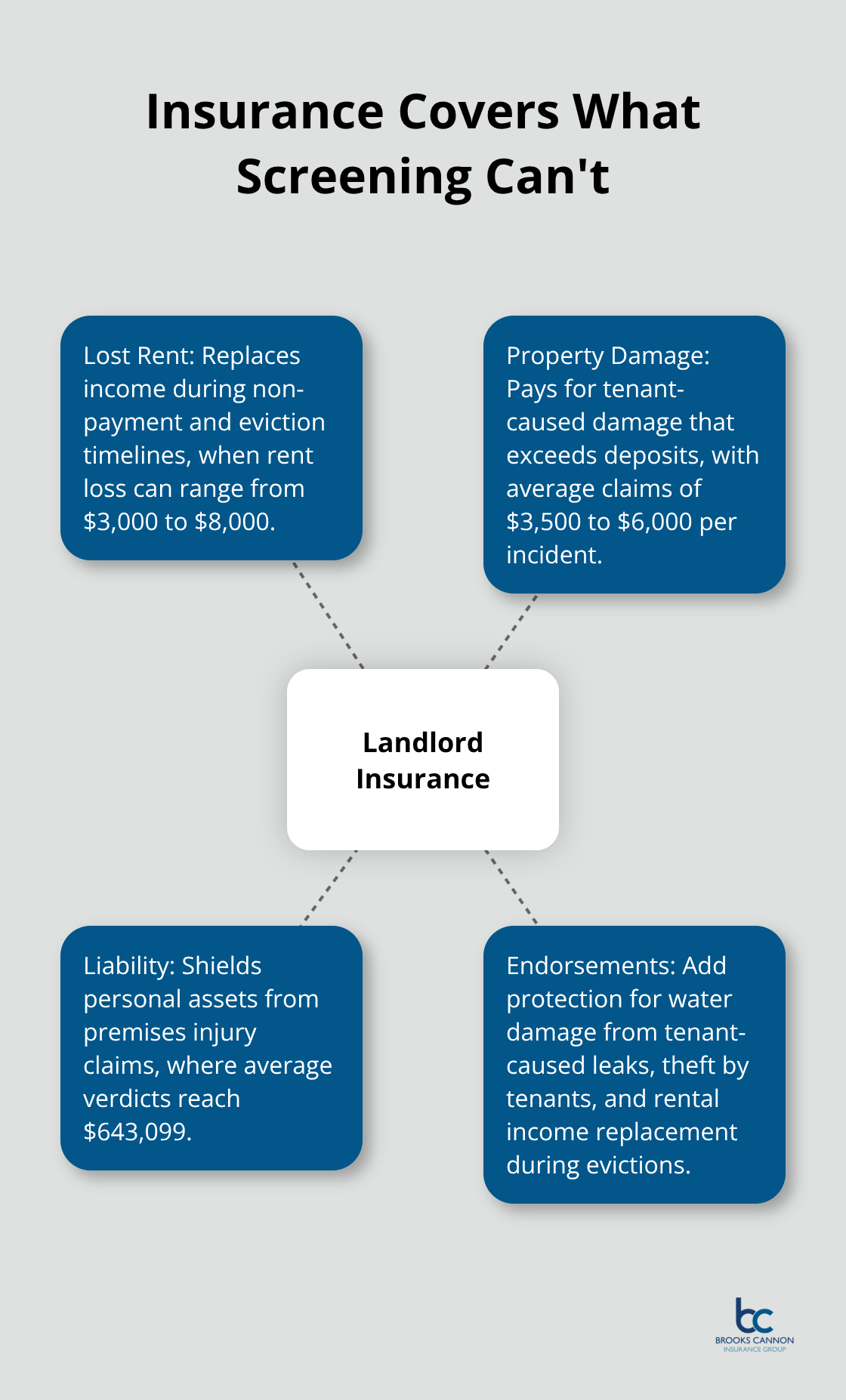
The National Multifamily Housing Council reports that the average rent loss during a non-payment eviction ranges from $3,000 to $8,000 depending on local market conditions and how long the process takes. Texas eviction timelines typically span 20 to 30 days minimum, but contested cases extend longer. Your security deposit rarely covers the full gap. Most Texas landlords collect one month’s rent as a deposit, which gets consumed immediately by legal fees and property inspections. Insurance fills this void by replacing lost rental income so your mortgage and maintenance expenses don’t pile up unpaid.
Property Damage Claims Exceed What Deposits Cover
A vetted tenant might accidentally cause significant damage through negligence, careless repairs, or disputes that escalate beyond normal wear and tear. The American Property Management Association reports that tenant-caused damage claims average $3,500 to $6,000 per incident, far exceeding typical security deposits. Landlord policies cover these gaps without requiring you to pursue the tenant in small claims court, which consumes time and often yields nothing if the tenant lacks assets.
Liability Coverage Protects Your Personal Assets
If a tenant or their guest suffers an injury on your property-a slip on stairs you maintain, a fall from a balcony, an accident in a common area-you face a lawsuit regardless of tenant screening. The average premises liability claims verdict is $643,099. Your personal homeowner’s policy excludes rental properties, leaving you personally liable for these judgments. A landlord liability endorsement or dedicated rental property policy protects your personal assets from these claims.
Combining Screening and Insurance Creates Your Defense Strategy
Background checks reduce frequency of losses; insurance reduces severity when losses occur. You need both working together to eliminate the most common financial disasters that Dallas landlords face. This combination approach addresses what screening alone cannot handle, setting the stage for how you should actually implement these protections in your daily operations.
How to Build a Tenant Screening System That Actually Works
The difference between Dallas landlords who stay profitable and those who face constant financial crises comes down to execution, not just having the right tools. A background check sitting in a file folder does nothing for you. The real protection comes from running a systematic screening process that catches red flags consistently, then layering insurance coverage on top of that foundation.
Select a Background Check Service That Goes Beyond Basic Records
Start with a background check service that compiles eviction records, prior judgments, and payment history in one report. Services like RentBureau and Zillow rental screening cost $20 to $50 per applicant but eliminate the guesswork of contacting previous landlords individually. Pull reports on every applicant without exception, even if someone seems perfect on paper. A tenant with solid credit but two prior evictions in four years is a known risk; someone with average credit but zero rental violations is significantly safer. Texas eviction records are public, so there’s no excuse for skipping this step.
Document Everything in Your Tenant File
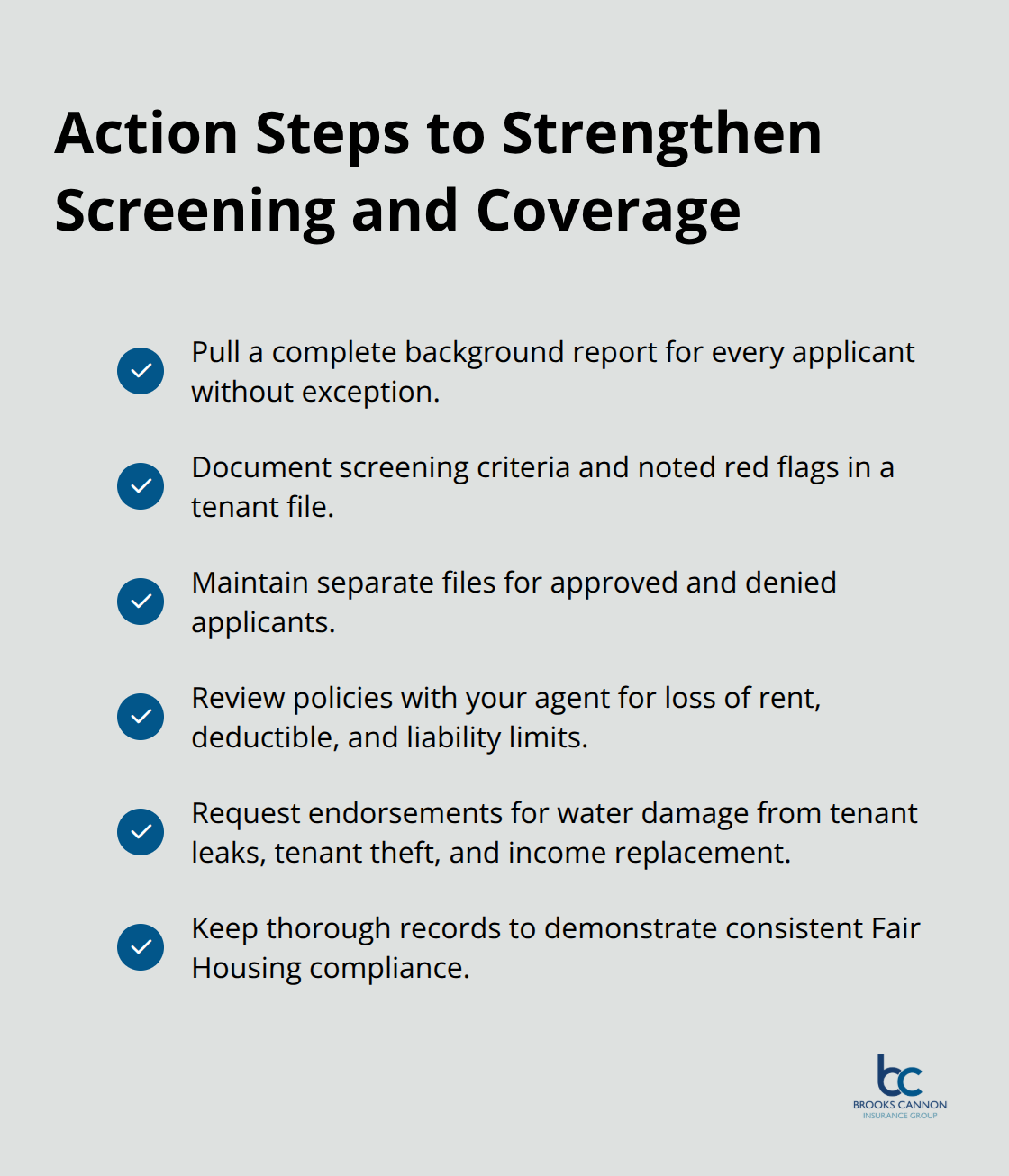
Create a tenant file the moment you receive information, including the date you pulled the background check, which service you used, and what specific red flags appeared. This documentation matters enormously if a tenant later claims discrimination during a denied application or if you need to justify your rental decision to legal counsel. Keep separate files for approved and denied applicants. The Fair Housing Act requires you to maintain consistent screening criteria, and written records prove you applied the same standards to every applicant. When you approve a tenant, attach a copy of their background check, credit report, employment verification, and previous landlord references to their lease file. If problems develop later, these documents protect you in court (showing you acted reasonably during screening).
Review Your Coverage Gaps With Your Insurance Agent
Your insurance agent should review your tenant screening process to identify landlord insurance coverage gaps that your vetting alone cannot address. Tell your agent about the types of properties you own, the typical rent amounts, and your current eviction and damage history. A landlord with multiple prior non-payment claims needs different coverage than someone with a clean track record. Discuss whether your current policy includes loss of rent coverage, what your deductible is, and whether you have adequate liability limits for premises claims. Some Dallas landlords discover their policies exclude damage caused by tenant negligence or cap liability coverage at levels far too low for serious injuries. An insurance review takes one hour and costs nothing, yet it prevents thousands in uninsured losses.
Request Specific Endorsements for Your Rental Properties
Ask your insurance agent specifically about endorsements that cover water damage from tenant-caused leaks, theft by tenants, and rental income replacement during evictions. These aren’t standard add-ons; you must request them. The combination of rigorous screening documentation plus appropriate insurance coverage creates the real protection. When you can prove in court that you screened carefully and selected tenants based on objective criteria, you strengthen your legal position. When your insurance covers the financial gaps that screening cannot prevent, you maintain cash flow and protect your personal assets (which is how professional landlords in Dallas operate).
Final Thoughts
Background checks and landlord screening insurance address two separate but equally important problems. Screening eliminates high-risk applicants before they occupy your property, while landlord screening insurance protects your cash flow and personal assets when problems occur despite your best efforts to vet tenants carefully. A Dallas landlord who relies on only one of these tools operates with incomplete protection.
The financial stakes are real: evictions cost $1,200 to $2,500 in legal fees alone, lost rent ranges from $3,000 to $8,000 per incident, and property damage claims average $3,500 to $6,000. A single premises liability judgment can exceed $600,000, and no background check prevents these losses entirely because tenant screening cannot predict job loss, accidents, or injuries that occur after lease signing. Insurance fills these gaps by covering lost rent, property damage beyond your security deposit, and liability claims that would otherwise drain your personal assets.
The most successful Dallas landlords treat screening and insurance as complementary strategies, not alternatives. You document your tenant selection process meticulously, maintain organized files showing objective criteria applied consistently, and carry appropriate coverage for the specific risks your properties face. Contact us at Brooks Cannon Insurance Group to review your landlord insurance coverage and identify gaps that tenant screening alone cannot address.
Disclaimer: The information provided in this blog is for general informational purposes only and does not constitute legal, financial, or insurance advice. Coverage options, terms, and availability may vary. Please consult with a licensed professional for advice specific to your situation