
Your commercial lease is only as strong as the insurance backing it. Most Dallas landlords require specific coverage before you can even sign, and missing these requirements can cost you thousands in fines or lease violations.
At Brooks Cannon Insurance Group, we help tenants understand exactly what their leases demand and how to meet those obligations without overpaying. This guide walks you through the insurance clauses that matter most.
What Your Landlord Actually Requires
The Non-Negotiable Coverage Types
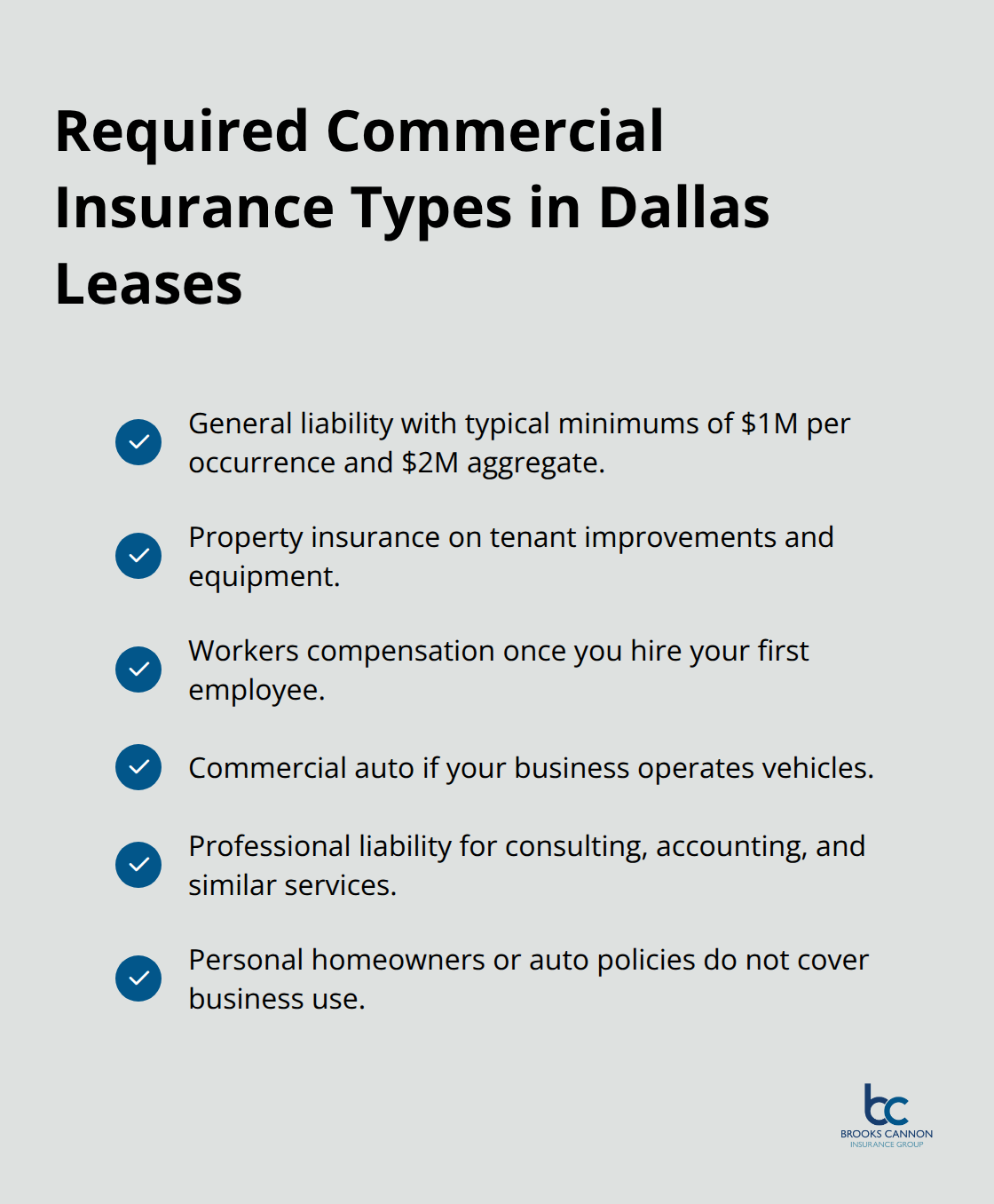
Most Dallas commercial leases demand general liability insurance, and landlords will not compromise on this requirement. Landlords typically require minimum coverage of at least $1 million per occurrence and $2 million aggregate. Property insurance on your improvements and equipment ranks equally high on landlord checklists-they want protection if your operations cause damage to their investment. Workers compensation insurance becomes mandatory the moment you hire your first employee, and Texas law sets coverage limits based on your payroll. Many leases also require commercial auto insurance if your business operates vehicles, and professional liability if you work in consulting, accounting, or similar fields. Most tenants make a critical mistake by assuming their homeowner’s or personal auto policy covers business activities-it does not, and landlords will reject your lease application immediately if you attempt this approach.
Understanding Coverage Limits and Your Risk Profile
Coverage limits vary dramatically depending on your industry and lease location. A retail tenant in a Dallas shopping center faces different demands than a manufacturing operation in an industrial park. Standard general liability minimums range from 500,000 to 2 million dollars depending on your tenant risk profile, but landlords increasingly add umbrella or excess liability requirements of 1 to 5 million dollars for higher-risk businesses. Property coverage limits should match your actual replacement cost, not some arbitrary number-underinsuring here means you absorb losses your landlord expects you to cover. Most leases also require you to name the landlord as an additional insured on your general liability and property policies, which shifts some risk to your insurance carrier rather than leaving the landlord exposed.
How Additional Insured Status Protects Both Parties
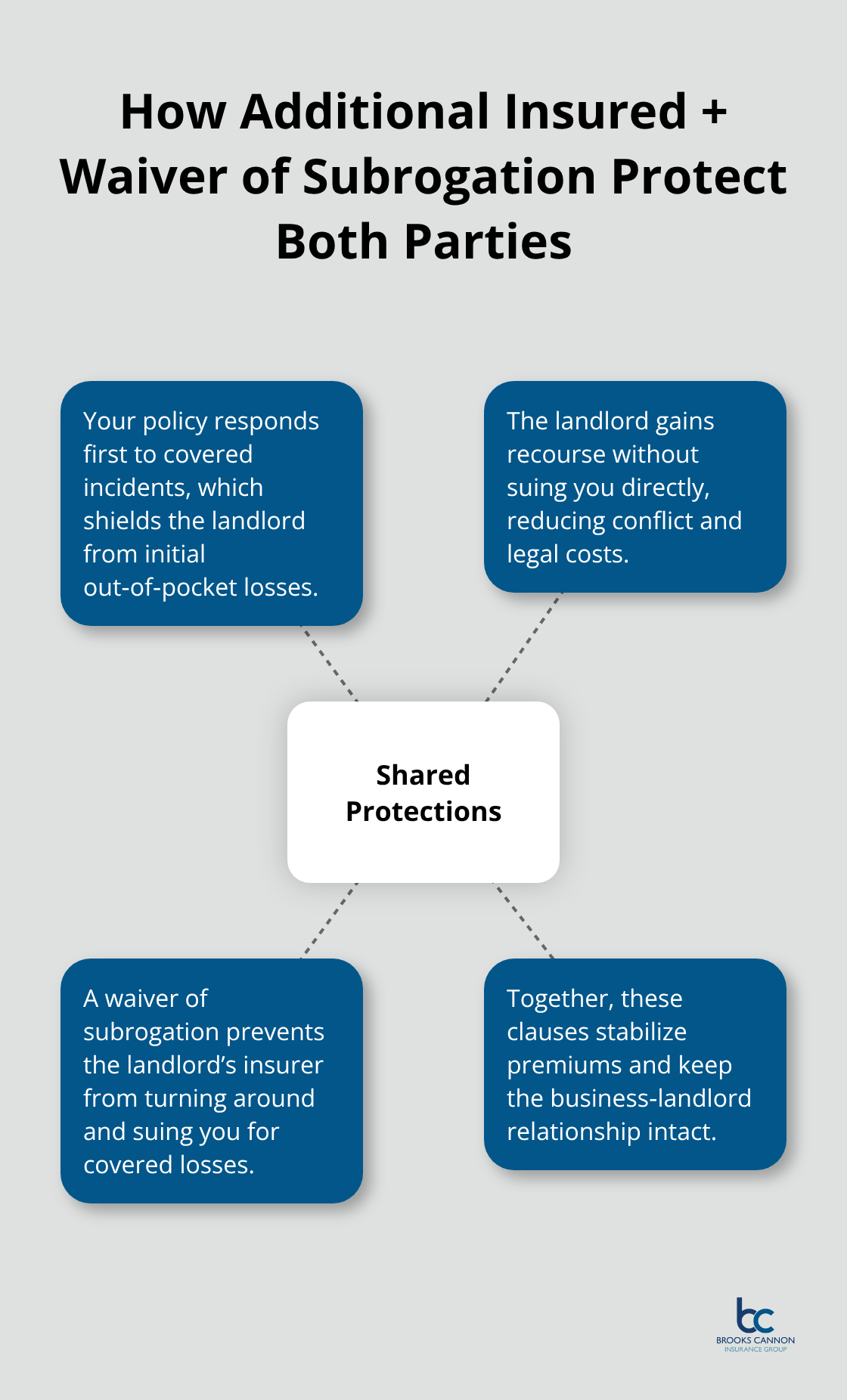
This additional insured designation protects both you and your landlord: your insurance pays first if something goes wrong, and the landlord has recourse without fighting you in court. The protection runs both directions too-your landlord’s insurance typically includes a waiver of subrogation, meaning they will not sue you for losses their own insurance covers (which keeps your relationship intact and your premiums stable). These reciprocal protections form the backbone of most commercial leases in Dallas, and understanding how they work helps you negotiate better terms with your landlord.
The next section walks through the specific lease clauses that spell out these requirements and what they actually mean for your business operations.
The Lease Clauses That Actually Matter
Additional Insured Requirements
Your lease will contain specific insurance language that determines exactly what coverage you need and when you need it. The most common clause requires you to name your landlord as an additional insured on your general liability and property policies, which means the landlord receives the same protection your policy provides to you. Dallas landlords treat this as non-negotiable because it protects them from lawsuits arising from your business operations. When you add a landlord as additional insured, your insurance carrier pays defense costs and damages first, eliminating the landlord’s need to pursue you separately.
The paperwork moves quickly: your insurance agent adds the landlord’s name and address to your policy endorsement within days, and you provide a certificate of insurance proving it happened. Many tenants delay this step or skip it entirely, which immediately puts them in lease violation and gives landlords grounds for lease termination.
Waiver of Subrogation Protections
Your lease will also include a waiver of subrogation clause, which prevents your landlord from suing you for losses their own insurance covers. This clause works in your favor despite what many tenants assume-it keeps your relationship professional and prevents your insurance premiums from skyrocketing after a covered incident. Without this protection, your landlord could file a claim with their insurer, then their insurer could turn around and sue you for reimbursement, even though your insurance already covered the loss.
The waiver essentially says both parties accept their own insurance will handle their own losses. This reciprocal arrangement (common in Dallas commercial leases) protects your bottom line and maintains the landlord relationship intact.
Certificate of Insurance Deadlines
Certificate of insurance deadlines appear throughout most Dallas commercial leases, typically requiring you to provide updated certificates before occupancy and then annually or whenever your policy renews. Missing these deadlines costs you nothing directly, but landlords treat expired certificates as lease violations that justify lease termination or fines.
Set calendar reminders 30 days before your policy renewal date to request fresh certificates from your insurance agent-this single step prevents most compliance problems tenants face. Your agent can handle this task automatically (many agents track renewal dates for their clients), so coordinate with them during your initial policy setup. These administrative requirements seem minor until you face a lease violation notice, which brings us to the negotiation strategies that actually work in your favor.
Negotiating Insurance Terms That Actually Work
What Moves and What Stays Fixed
Most Dallas commercial tenants assume their landlord’s insurance requirements are written in stone, but experienced negotiators know which terms move and which ones don’t. General liability minimums, additional insured status, and waiver of subrogation clauses rarely budge because landlords view these as baseline risk management. What actually flexes in negotiations are the coverage limits above those minimums, the timeline for providing certificates, and which specific business operations trigger additional coverage demands. If your lease requires $2 million in general liability but your actual risk profile suggests $1 million is sufficient, this conversation happens between your insurance agent and the landlord’s attorney before you sign anything. The landlord cares about protection, not arbitrary numbers, which means your agent can present industry standards and loss history data that justify lower limits for your specific business type.
How Your Industry Affects Negotiation Leverage
Retail shops, offices, and light service businesses frequently negotiate down from inflated umbrella requirements that would cost thousands annually. Manufacturing operations and high-risk trades face much tighter negotiations because their actual loss exposure justifies the landlord’s demands. Start negotiations early-before you’re emotionally committed to a space-because changing terms after you’ve already signed costs far more in legal fees than negotiating upfront. Your insurance agent becomes your most valuable asset in this process because they understand both what coverage actually costs and what landlords truly need for protection.
Using Data to Support Your Position
Your agent can pull comparable lease requirements from similar businesses in your market and present this data to landlords as proof that your proposed limits align with actual risk. Before you meet with a landlord, your agent should calculate the exact cost difference between their requested limits and industry-standard minimums for your business type-this number often surprises landlords into reconsidering inflated demands.
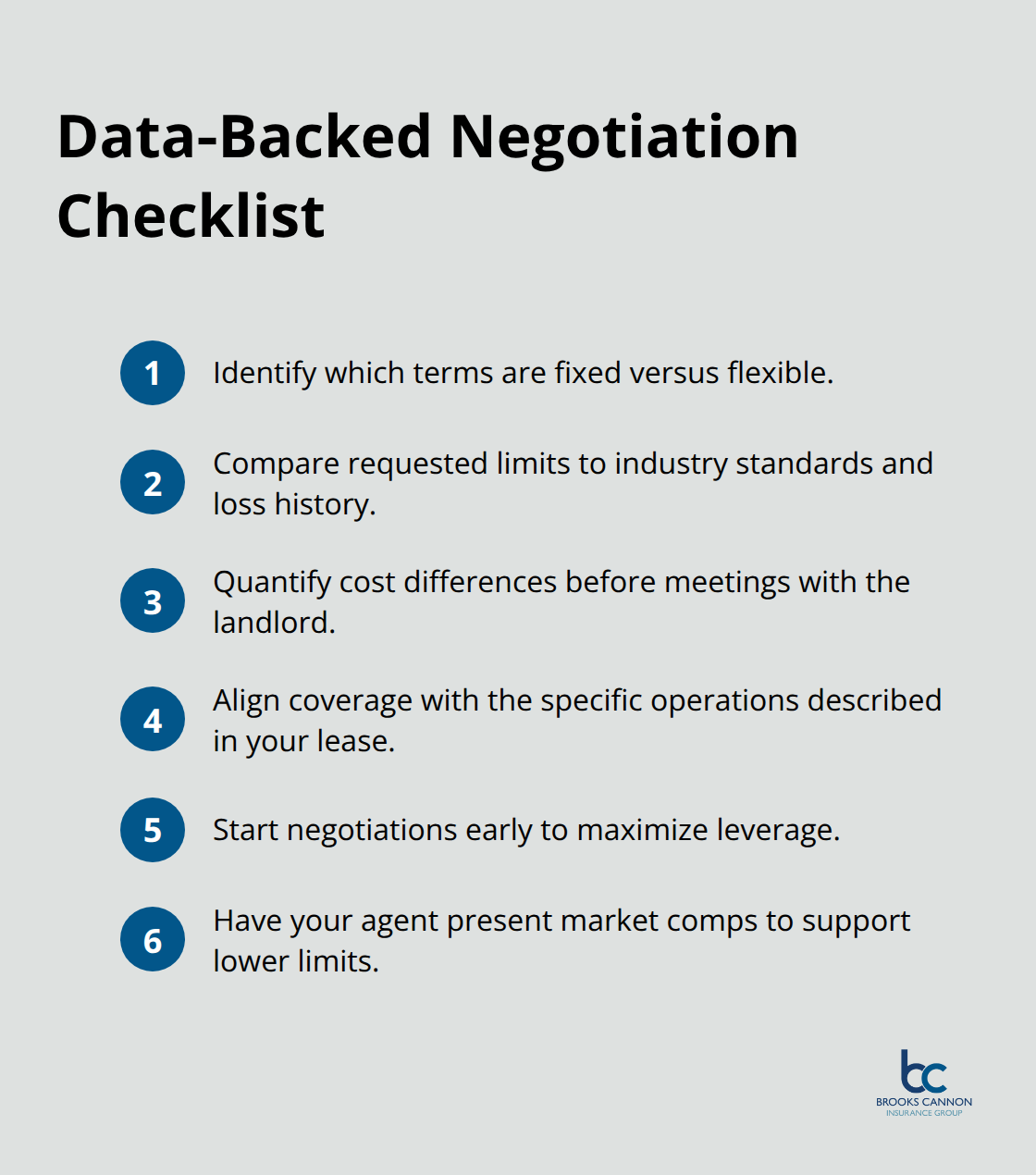
Coverage gaps represent the real danger in lease negotiations, not the specific dollar amounts, so your agent must verify that your policy actually covers the operations your lease describes.
Identifying Hidden Coverage Gaps
Many tenants discover mid-lease that their general liability excludes certain revenue streams or that their property coverage doesn’t include equipment they use daily. Your agent should work through your actual business operations line-by-line and confirm every activity receives coverage before you sign anything. This verification step takes one hour and prevents tens of thousands in uninsured losses later. Your agent should also confirm that your policy covers any subcontractors or temporary workers your lease mentions, since most standard policies exclude these unless you add them specifically.
Final Thoughts
Ignoring commercial lease insurance requirements creates immediate and expensive problems. Landlords treat missing coverage as lease violations that justify lease termination, eviction proceedings, or financial penalties that exceed what proper insurance would have cost annually. Your business also faces catastrophic liability exposure when you operate without the coverage your lease demands-a single incident can bankrupt you if your insurance doesn’t cover it because you failed to meet lease requirements.
If you’re currently out of compliance, contact your insurance agent immediately rather than hoping your landlord doesn’t notice. Most agents add missing coverage within days, and you can provide updated certificates of insurance to your landlord with a brief explanation. Landlords appreciate tenants who fix problems quickly rather than ignoring them until lease termination becomes necessary.
At Brooks Cannon Insurance Group, we help Dallas business owners navigate commercial lease insurance requirements and build insurance programs that actually protect their operations. We work with multiple carriers to find coverage that meets your lease demands without unnecessary costs. Contact us to review your current lease requirements and confirm your coverage is complete.
Disclaimer: The information provided in this blog is for general informational purposes only and does not constitute legal, financial, or insurance advice. Coverage options, terms, and availability may vary. Please consult with a licensed professional for advice specific to your situation