
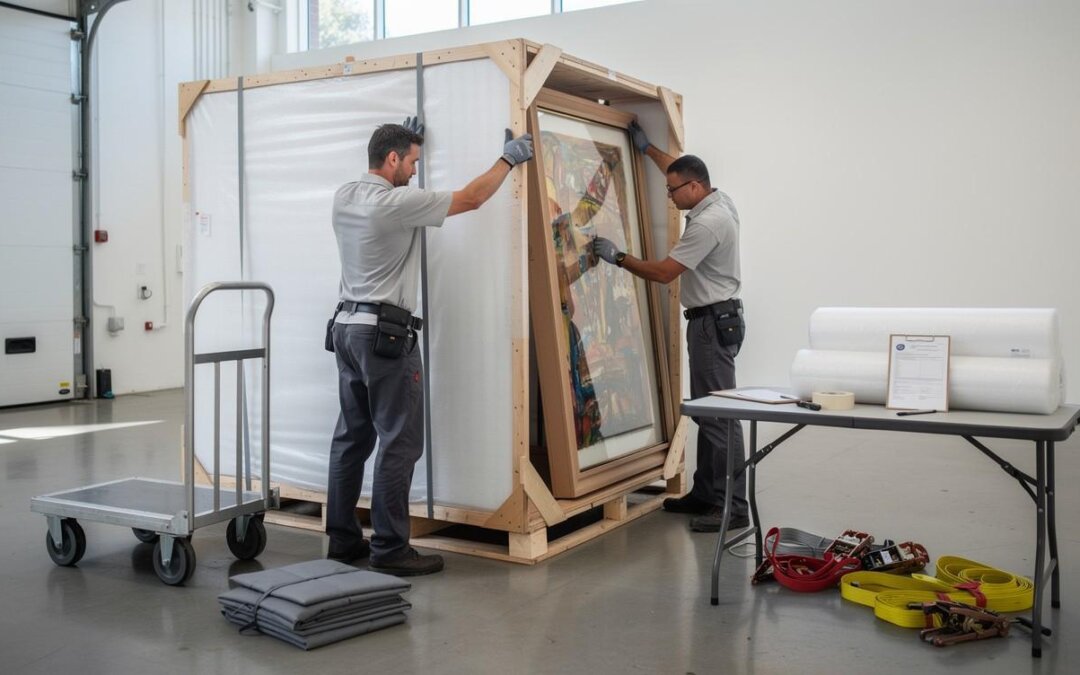
Moving art between collections in Dallas requires more than careful handling-it demands proper art transit insurance. We at Brooks Cannon Insurance Group see collectors make costly mistakes by underestimating transportation risks.
Damage, theft, and environmental exposure can happen during transit, and standard homeowners policies won’t cover these losses. This guide walks you through assessing your collection’s needs and finding the right coverage to protect what matters most.
Assessing Your Art Collection’s Insurance Needs
Calculate Your Collection’s True Value
Knowing what you own is the first step toward protecting it. Many Dallas collectors underestimate their collection’s total value, which leads to inadequate coverage when transit goes wrong. List every piece with its current market value, not what you paid for it years ago. Art appreciates, and a painting worth $5,000 ten years ago might be worth $15,000 today. Without current valuations, you’ll face a harsh reality if something happens during transport-your insurance payout won’t match your actual loss.
Get Professional Appraisals for High-Value Pieces
Professional appraisals matter for pieces valued above $2,500. A qualified art appraiser in the Dallas area who specializes in fine art valuation can provide the documentation you need. An appraisal costs between $200 and $500 per piece but protects you from significant financial exposure. This investment pays for itself the moment you file a claim.
Document Everything Thoroughly
Photograph each artwork from multiple angles in natural light, and keep these images with your appraisal documentation. Include close-ups of signatures, frames, and any damage or unique characteristics. Store this documentation separately from the originals-digitally in cloud storage and physically in a secure location.
Identify High-Risk Items
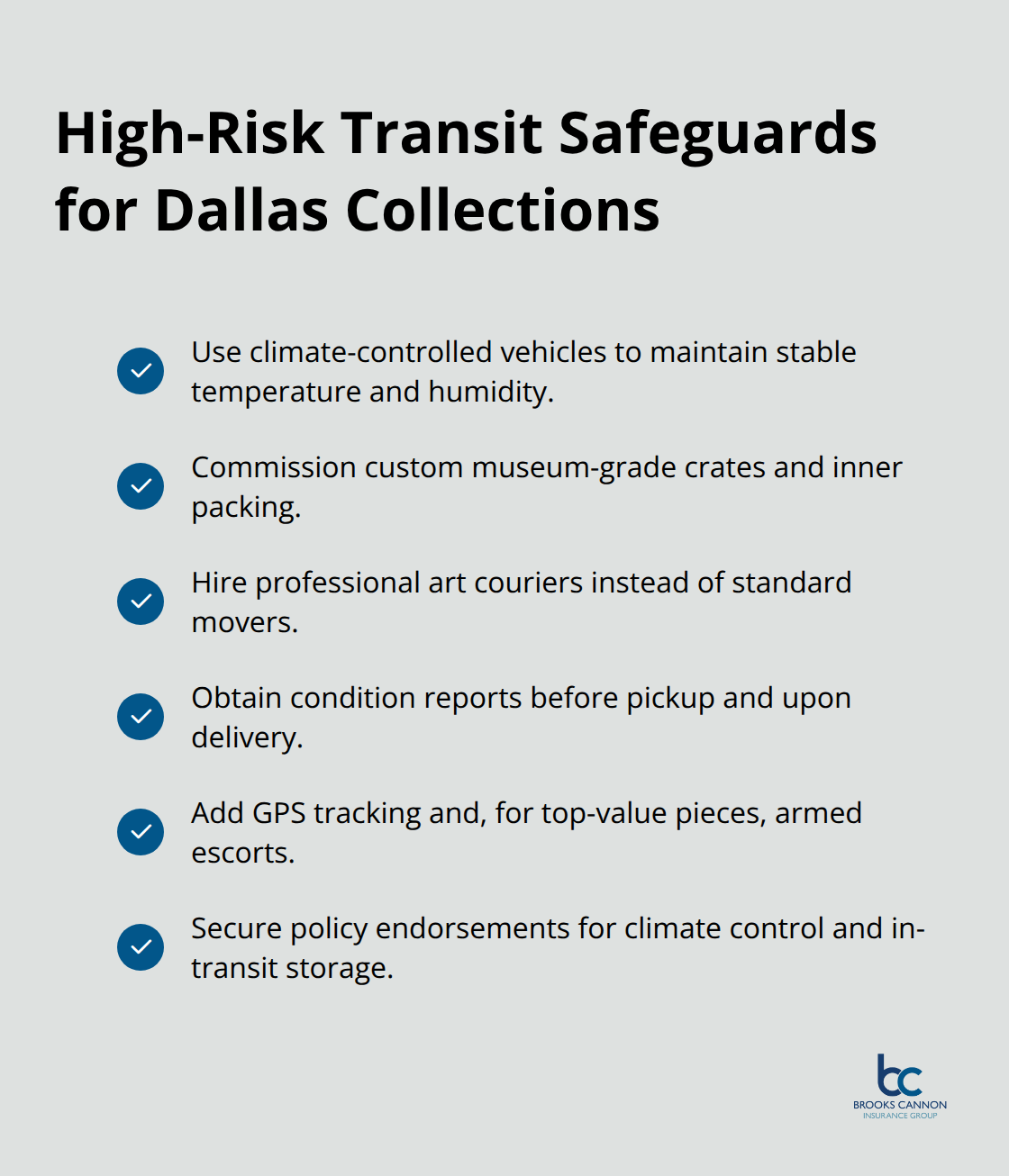
For high-value pieces (particularly those over $25,000), you need to identify items that pose specific transit risks: delicate sculptures, works on paper, paintings with cracked varnish, or pieces sensitive to temperature and humidity fluctuations. These require specialized handling and often demand higher insurance premiums or additional protective measures during transport. High-risk items might need climate-controlled vehicles, custom crating, and courier services rather than standard moving companies.
Your insurance agent can help you identify which pieces fall into this category and what additional coverage protections make financial sense for your collection. Understanding these risks positions you to address the transportation challenges that threaten your art during the move itself.
What Threatens Your Art During Transport
Environmental Damage Destroys Art Silently
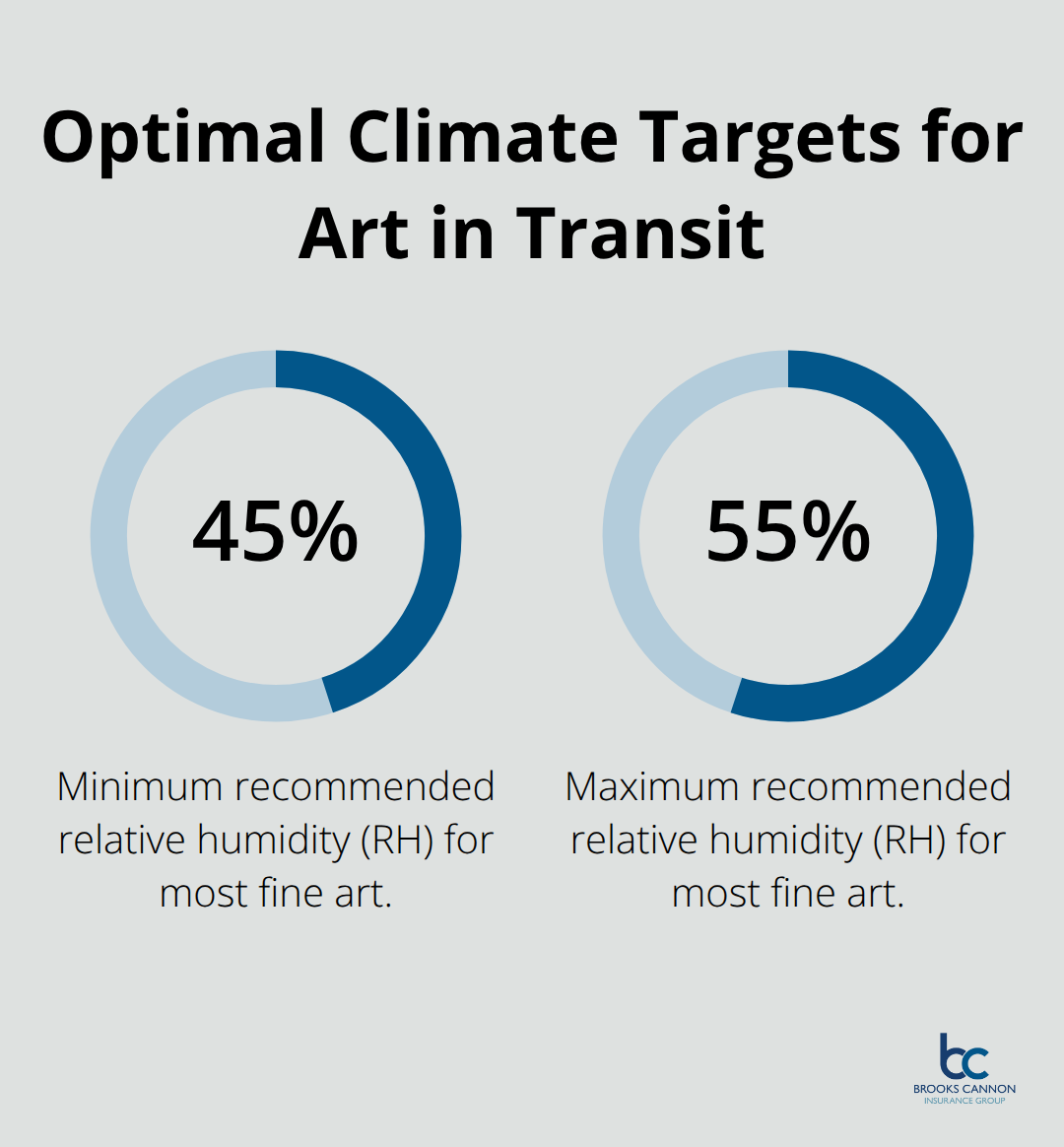
Environmental conditions during transit pose the most underestimated risk to Dallas art collections. Temperature fluctuations and humidity swings damage paintings, sculptures, and works on paper far more often than collectors realize. Standard moving trucks lack climate control, exposing your collection to Texas heat while humidity fluctuates. This combination causes wood panels to crack, canvas to warp, and delicate pigments to flake. Fine art requires stable conditions between 60–70°F and 45–55 percent relative humidity. If your pieces travel in an uncontrolled environment for even a few hours, the damage becomes permanent and often invisible until months later when varnish crazing or paint lifting appears.
Climate-controlled vehicles eliminate this risk entirely. Most Dallas moving companies charge an additional $500 to $1,500 for climate-controlled transport, which represents genuine protection against environmental loss that standard coverage won’t address adequately.
Theft Targets Art in Transit
Theft during art transit happens more frequently than most collectors acknowledge. Moving trucks attract criminals because thieves know valuable items travel unmonitored between locations. Your standard homeowners policy covers neither transit damage nor theft during transport.
Specialized fine art policies cover transportation risks, but only when you hire professional art handlers who carry their own liability coverage. Verify that your moving company carries fine art transit insurance and that their coverage limits match your collection’s documented value. Request written confirmation of their insurance before any pieces leave your home.
Improper Handling Causes Physical Damage
Untrained movers who don’t understand art’s fragility cause physical damage that goes unnoticed until pieces reach their destination. Sculptures tip over, frames crack against walls, and paintings suffer punctures from careless loading. High-value collections deserve courier services with armed guards and GPS tracking rather than standard moving trucks, particularly for pieces exceeding $50,000 individually. These specialized handlers understand how to protect your art and carry insurance that covers transit losses.
The specific coverage options available to you depend on your collection’s value and the transportation method you select.
Insurance Coverage That Actually Protects Your Art in Transit
Why Standard Homeowners Policies Fall Short
Standard homeowners insurance stops at your front door, which means your collection sits unprotected the moment movers load it into a truck. All-risk policies from standard insurers typically cap payouts at $2,500 per item and exclude common art transit losses like temperature damage or theft during transport. Your homeowners policy treats art like furniture, not like the irreplaceable assets they actually are. This fundamental mismatch between what you own and what your policy covers creates serious financial exposure when pieces move between locations.
Fine Art Policies Offer Superior Protection
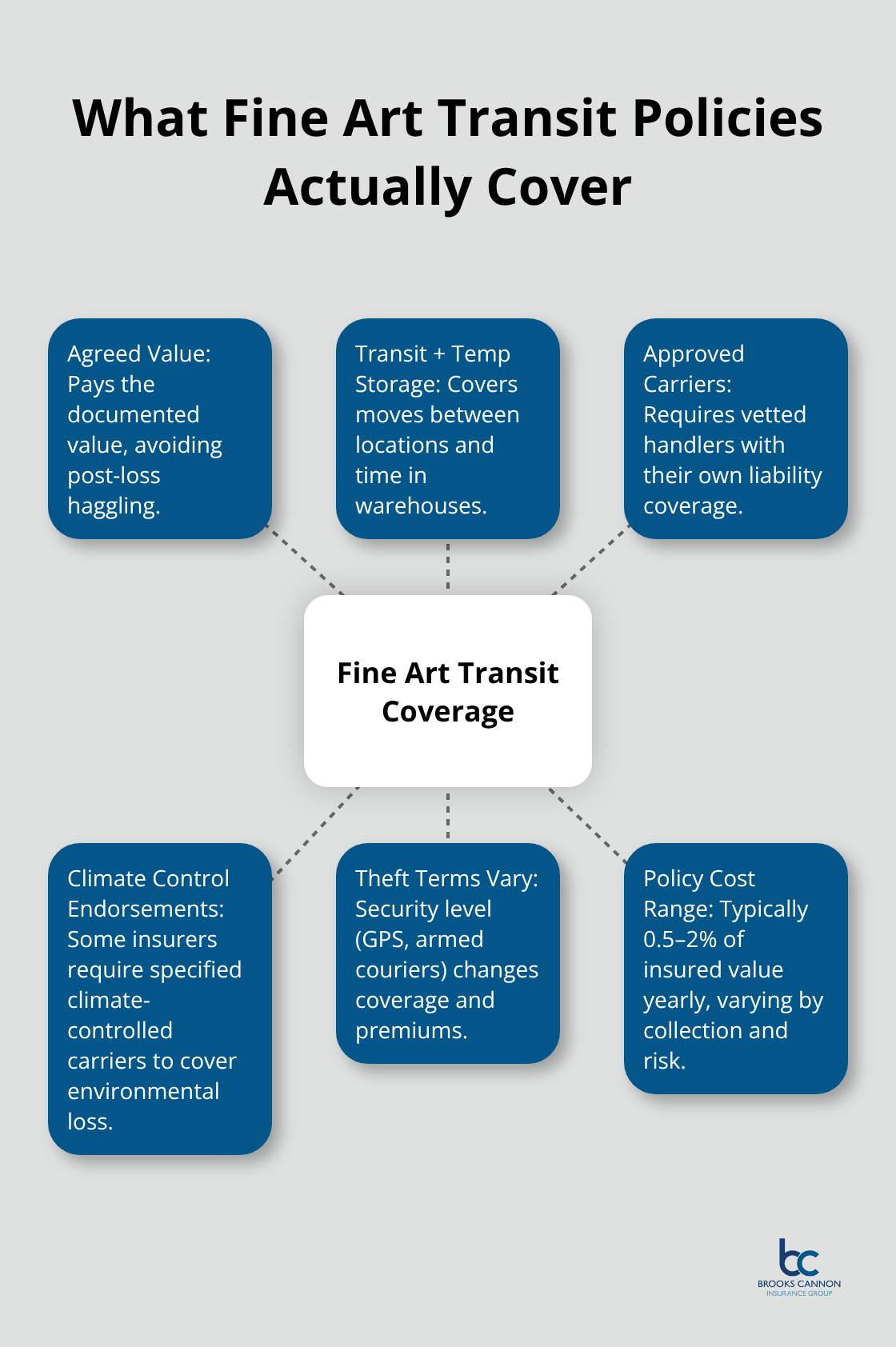
Specialized fine art transit policies operate differently than all-risk general coverage because they protect art at agreed values rather than actual cash value. This means you receive what you documented, not what an insurer decides your piece is worth after damage occurs. Agreed-value coverage eliminates disputes when you file a claim, which matters enormously when your $30,000 painting suffers humidity-induced cracking during a three-hour drive across Dallas. Most fine art transit policies cost between 0.5 and 2 percent of your collection’s total insured value annually, translating to roughly $500 to $2,000 per year for a $100,000 collection. This premium covers transportation between locations, temporary storage during moves, and coverage while pieces sit in transit warehouses.
Coverage Limits and Hidden Exclusions
The critical gap most collectors miss involves coverage limits and exclusions within their chosen policy. Many fine art insurers exclude loss if you hire movers without verifying their cargo liability coverage first, meaning you could file a claim only to discover your moving company’s insurance won’t cooperate with yours. Request written proof that your movers carry minimum $1 million in liability coverage before any pieces leave your home. Climate-controlled transport typically requires specific endorsements on your fine art policy-some insurers won’t cover environmental damage unless you use their approved carriers.
Theft Coverage Depends on Your Transportation Method
Theft coverage often depends on whether you use armed couriers, GPS-tracked vehicles, or basic moving trucks, with premiums varying dramatically based on your chosen method. A basic moving truck might cost $1,500 but leave your collection vulnerable to theft, while an armed courier service costs $3,000 to $5,000 but provides GPS tracking and security personnel. Your fine art policy will reflect these differences in its coverage terms and exclusions. Schedule a policy review with an agent who specializes in fine art before your collection moves, as gaps between what you think you’re covered for and what your actual policy covers frequently emerge only after damage occurs.
Final Thoughts
Protecting your Dallas art collection during transit requires three concrete actions: documenting every piece with current appraisals, understanding which items face the highest transportation risks, and securing art transit insurance that addresses gaps in standard homeowners policies. Environmental damage, theft, and improper handling represent real threats that generic insurance won’t cover adequately. Art transit insurance fills these gaps by protecting your collection at agreed values rather than leaving you to dispute actual cash value after damage occurs.
The difference between adequate protection and financial disaster often comes down to one decision: working with an insurance professional who understands fine art rather than treating your collection like standard household goods. Your homeowners policy wasn’t designed for art in transit, and attempting to stretch it across transportation scenarios leaves you exposed. An agent who specializes in fine art coverage identifies which pieces require additional protection, verifies that your moving company carries appropriate liability insurance, and structures your policy to cover climate-controlled transport, temporary storage, and theft during the move itself.
Contact Brooks Cannon Insurance Group to schedule a policy review before your next move. Our licensed experts work with Dallas collectors to build customized protection strategies that match their specific transportation methods and collection values. A conversation with our team takes thirty minutes and could prevent thousands in uninsured losses when your art travels between locations.
Disclaimer: The information provided in this blog is for general informational purposes only and does not constitute legal, financial, or insurance advice. Coverage options, terms, and availability may vary. Please consult with a licensed professional for advice specific to your situation