
Construction projects in Dallas face real risks-weather damage, theft, and accidents happen more often than you’d think. When disaster strikes, knowing how to file builders risk claims quickly and correctly makes the difference between recovering fast and losing money.
We at Brooks Cannon Insurance Group help contractors navigate this process every day. This guide walks you through each step so you can get your claim approved without delays or rejections.
What Your Builders Risk Policy Actually Covers
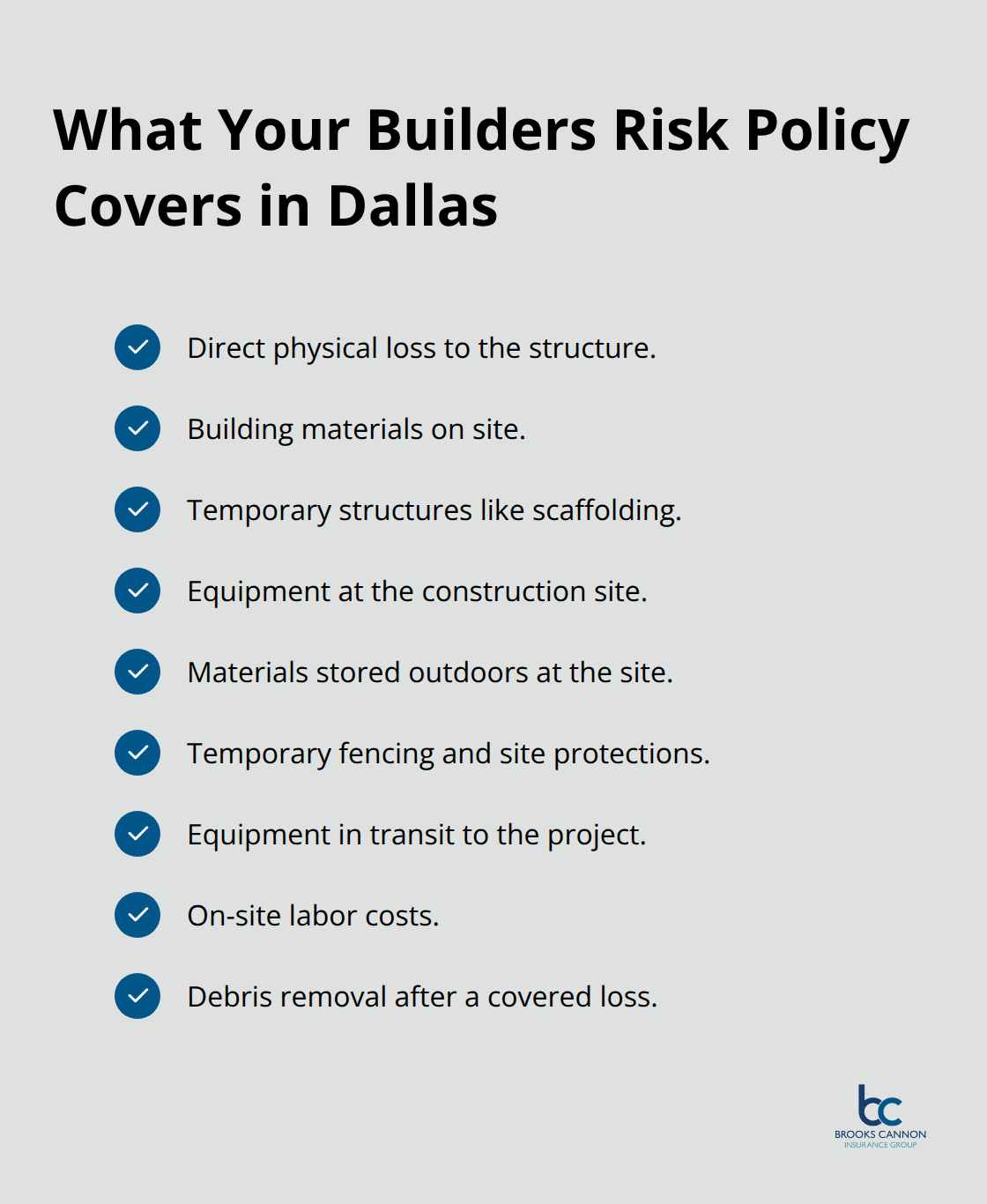
Builders risk insurance in Dallas covers direct physical loss to the structure, building materials, temporary structures, and equipment at your construction site. This includes damage from fire, lightning, wind, hail, theft, and vandalism-the perils that actually threaten Dallas projects during construction. The policy also protects materials stored outdoors at the site, scaffolding, temporary fencing, and equipment in transit to the project. Hartford reports that standard coverage extends to on-site labor costs and debris removal after a covered loss. What matters most is that the policy covers tangible construction assets while work is underway, not after completion.
Many contractors mistakenly assume their general liability policy handles construction damage, but it does not-that’s why builders risk exists as a separate, temporary policy. Dallas projects average construction costs between $500,000 and several million dollars, making the difference between replacement-cost and depreciated-value payouts significant. Chubb, a top-tier carrier for Dallas projects with an AM Best A++ rating, typically includes soft costs coverage as standard, reimbursing architect fees, permit costs, and financing charges if a covered event delays completion. This protection matters because a single weather event in Dallas can halt work for weeks, and without soft costs coverage, those losses come directly from your pocket.
Standard Exclusions That Cause Claim Denials
Standard builders risk policies exclude flood, earthquakes, employee theft, wear and tear, and faulty workmanship-these exclusions cause most claim denials in Texas. Design defects and construction defects are not covered under basic policies, yet these issues frequently halt projects and trigger expensive rework. If your subcontractor installs faulty framing and water intrusion follows, the insurer will likely deny the claim as faulty workmanship, not a covered peril.
Critical Add-On Endorsements You Need
Adding design-defect and construction-defect endorsements costs roughly 0.3% to 0.5% of your premium but can protect against rework expenses that run ten times higher. Flood coverage is particularly critical in Dallas given spring storm patterns-standard policies exclude water damage from heavy rain unless you purchase a separate flood endorsement. Soft costs endorsement, which reimburses indirect losses during project delays, typically adds 0.4% to 0.8% of premium and should be mandatory for any project over $250,000.
Many contractors skip these add-ons to save a few hundred dollars annually, then face tens of thousands in uninsured losses when claims arise. The cost of these endorsements pales in comparison to the exposure they close. Understanding what your policy actually covers-and what gaps exist-determines whether you recover fully or absorb losses yourself when damage occurs.
How to File Your Claim Without Delays or Rejections
The moment damage occurs at your Dallas construction site, your response determines whether the claim gets approved or denied. Speed and documentation are not optional-they’re the foundation of successful claim recovery. Texas law requires insurers to acknowledge claims within 15 days under the Prompt Payment of Claims Act, but most carriers in Dallas won’t move forward without complete, accurate information from you first. The difference between a contractor who recovers full damages and one who gets a partial payout or denial often comes down to what happens in the first 48 hours after loss.
Photograph and Document Damage Immediately
Take photographs and record video of all damage before any cleanup or repairs begin. Wide shots show the overall damage, medium shots capture specific affected areas, and close-ups reveal material damage or debris. Modern smartphones embed timestamps and location data automatically into photos. If weather caused the loss, capture images of hail on the ground, damaged vehicles nearby, or weather service reports confirming the storm’s intensity. Contractors who wait days to photograph damage often find insurers questioning whether the loss was as severe as claimed or whether damage occurred before the policy period. One Dallas general contractor lost $50,000 in coverage because photos taken five days after a wind event showed partial cleanup, and the adjuster argued the damage was less extensive than originally reported. Photograph everything before moving a single board or calling cleanup crews.
Contact Your Carrier the Same Day
Contact your insurance provider the moment you discover damage-do not wait until the next business day. Most carriers maintain 24/7 claims hotlines specifically because delays create disputes. When you call, provide your policy number, the date and time damage was discovered, a brief description of what happened, and the estimated cost of damage if you have one. Keep the name and direct number of the claims representative who takes your report. Follow up that same day with written notification via email, including the same information plus photographs if possible.
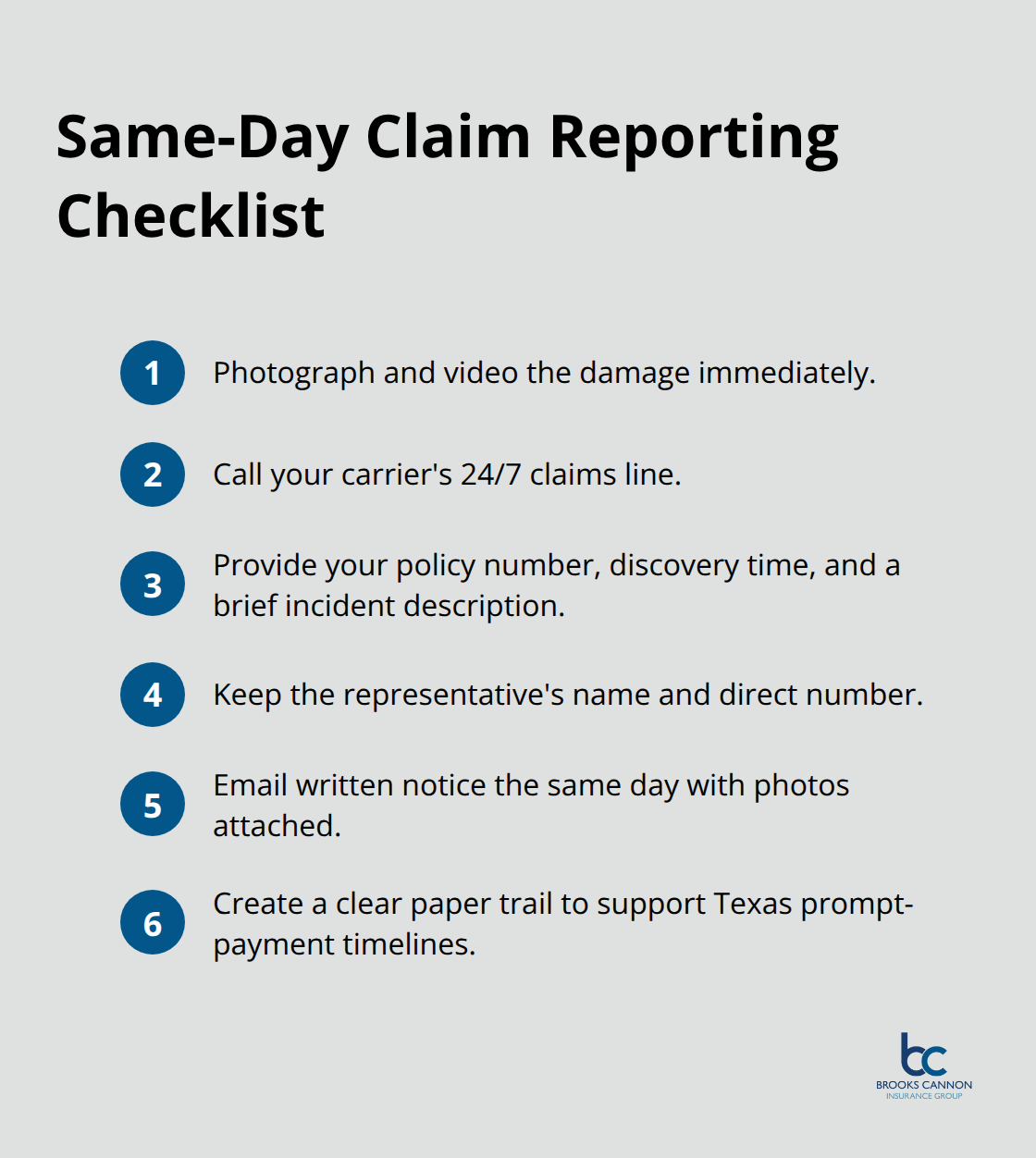
This creates a documented record showing you reported promptly, which matters under Texas law. Insurers cannot deny claims based on late notice if you demonstrate reasonable diligence in reporting, but waiting weeks invites scrutiny about whether you’re hiding something or whether damage worsened during the delay.
Assemble Complete Documentation Before Submission
Prepare a comprehensive loss package before formal claim submission. Include the original construction contract, change orders, receipts for materials purchased, invoices from subcontractors, and project photographs taken before the loss occurred. If materials were damaged, collect supplier invoices showing current replacement costs-material prices fluctuate, and showing what you actually paid or what current replacement costs are prevents undervaluation disputes. Weather reports from the National Weather Service document the storm, wind speeds, or hail and confirm the peril was genuine and not fabricated. Contractor estimates for repair or replacement should come from licensed, local contractors with verifiable credentials; low-ball estimates invite adjuster skepticism. One Dallas framing contractor submitted a $15,000 damage estimate from an unlicensed handyman, and the carrier’s adjuster obtained a competing estimate of $8,500, resulting in a $6,500 underpayment. Licensed contractor estimates with detailed breakdowns of labor and materials carry significantly more weight.
Work with the Adjuster and Provide Supporting Evidence
When the adjuster schedules an inspection, be present with complete documentation and project records. Bring the original construction plans, permits, and proof of project timeline so the adjuster can verify work was ongoing when damage occurred. Adjusters occasionally deny claims because they believe construction had already been completed or abandoned, making the project ineligible for coverage. If the adjuster questions whether damage stems from a covered peril or from faulty workmanship, provide evidence supporting your position-weather reports, photographs of the damage pattern, and expert assessments distinguish external damage from construction defects. Do not be argumentative with the adjuster, but do ask clarifying questions if their assessment seems inaccurate. Request a written summary of the adjuster’s findings before they leave the site, and photograph their inspection notes if possible. If you disagree with the damage valuation, submit supplemental estimates and documentation within 30 days of the adjuster’s report rather than waiting months to challenge findings.
Disagreements over claim value or coverage interpretation happen frequently in Dallas construction projects. Understanding your rights under the policy and Texas law positions you to challenge unfair denials or underpayments effectively. The next section covers the most common reasons insurers deny builders risk claims and how to structure your claim to avoid these pitfalls.
Why Builders Risk Claims Get Denied
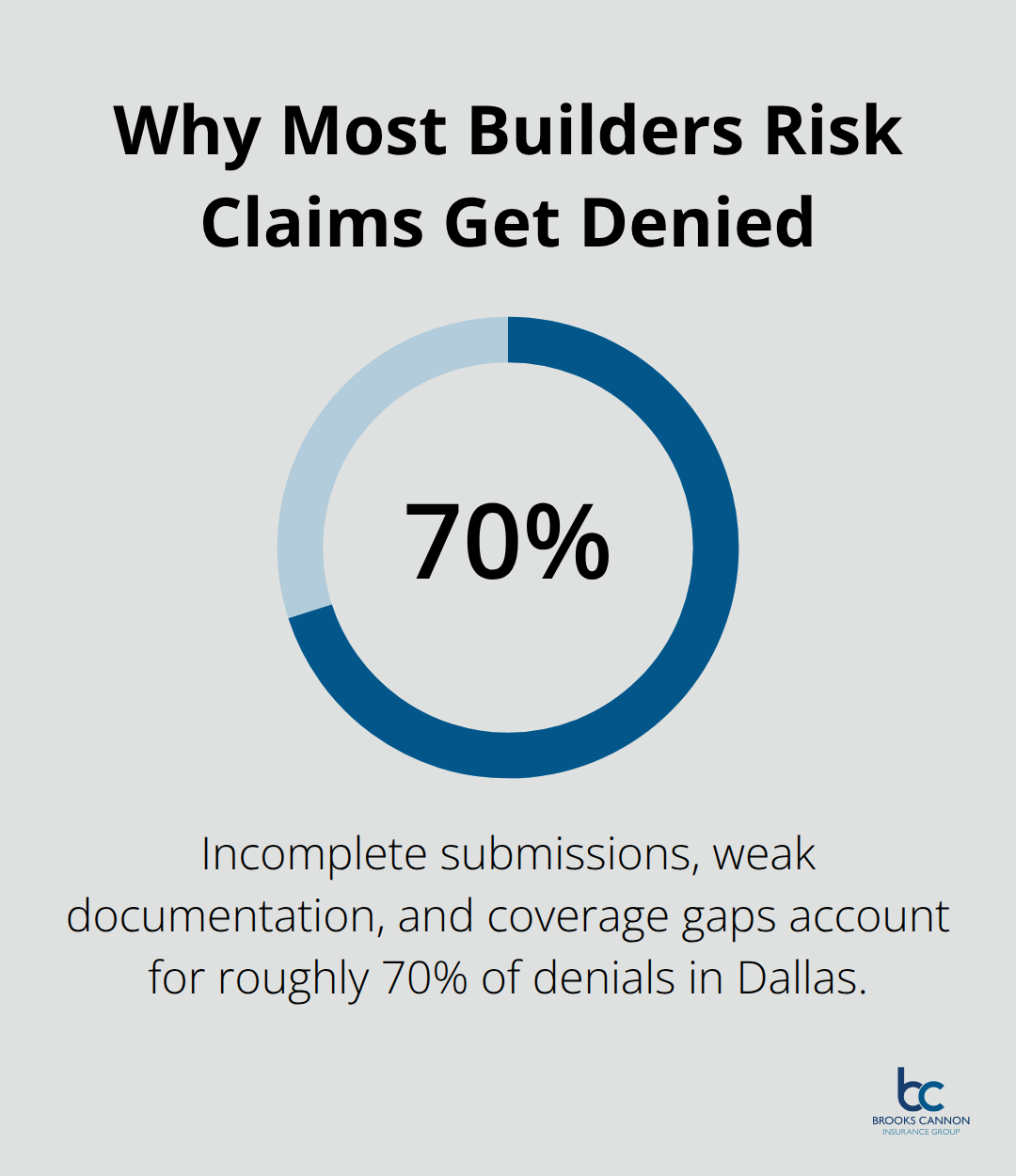
Builders risk claim denials in Dallas fall into three categories, and each one is preventable with the right approach. Incomplete submissions, weak documentation, and coverage gaps account for roughly 70% of all denials. The frustrating part is that most contractors could avoid these rejections entirely by understanding what insurers scrutinize and preparing accordingly before submitting.
Insurers don’t deny claims to be difficult-they deny them because the claim packet lacks what they need to approve payment under Texas law. Your job is to anticipate their questions and answer them before they ask.
Late Submission and Incomplete Claim Packets Trigger Automatic Rejection
Late claim submission is the easiest reason for an insurer to reject you outright. Texas law requires you to notify your carrier promptly, but many contractors interpret promptly loosely-waiting two weeks to report damage gives insurers ammunition to question your credibility. Submit your complete claim package within 10 business days of notifying the carrier, not 30 days later. Incomplete submissions are equally problematic. Carriers will deny a claim if you submit photos without contractor estimates, or estimates without supporting invoices showing material costs.
One Dallas contractor submitted a $40,000 claim with only smartphone photos and no supporting documentation. The carrier requested invoices, receipts, and contractor estimates. The contractor took three weeks to compile them, and by then the adjuster had already recommended denial based on incomplete information. When you finally submit supplemental documentation, the carrier reopens the claim, but delays cost you money and credibility. Submit everything at once-photos, estimates, receipts, weather reports, and project records. If you’re missing a document, note it in your cover letter and commit to providing it within five business days, then follow through immediately.
Documentation Quality Determines Payout Amount
Weak documentation doesn’t always result in outright denial-it results in underpayment. An adjuster facing vague damage photos and low-ball contractor estimates will approve the lower estimate. Dallas contractors frequently lose $5,000 to $15,000 on claims because they submitted estimates from unlicensed repair people or incomplete cost breakdowns. Licensed, detailed contractor estimates with itemized labor and materials carry 10 times the weight of informal quotes.
If the adjuster’s estimate differs from yours by more than 10%, request a re-inspection and submit a competing estimate from another licensed contractor. The carrier must consider multiple estimates before finalizing payment. Weather documentation matters equally. National Weather Service reports confirm wind speed, hail diameter, or rainfall intensity-this evidence prevents disputes over whether damage actually came from the peril you claimed. Missing weather documentation forces you to defend your claim verbally, and verbal arguments rarely win against adjuster skepticism.
Coverage Gaps Create Rejection Before Damage Occurs
The most painful denials happen because your policy simply doesn’t cover what you thought it did. You report wind damage, and the carrier denies the claim because you purchased the policy during hail season without adding wind endorsement language. You discover water intrusion from heavy rain, and the denial letter cites the flood exclusion. These gaps exist because contractors skip endorsements to save premium dollars.
Standard policies cover fire, lightning, explosion, wind, hail, theft, vandalism, faulty design, flawed materials, and negligent workmanship. Design-defect and construction-defect endorsements cost roughly $1,500 to $3,000 annually on a $500,000 project but prevent $50,000 to $150,000 in uninsured rework costs. Soft costs endorsement costs $2,000 to $4,000 annually but reimburses financing charges and permit fees if a covered event delays completion-skipping it means absorbing those losses yourself. Review your policy declarations page before damage occurs. If endorsements aren’t listed, contact your agent immediately and add them. Adding coverage after damage happens is impossible, and insurers will deny the claim based on policy terms in effect at the time of loss.
Final Thoughts
Filing builders risk claims successfully in Dallas requires you to report damage immediately, document everything thoroughly, and understand your coverage before loss occurs. Contractors who follow these steps recover full damages without delays or disputes, while those who skip documentation or wait to report damage face denials, underpayments, or lengthy appeals that drain time and money from projects already behind schedule. After your claim receives approval and payment arrives, move quickly to repair or replace damaged materials and get work back on track.
Obtain written approval from your carrier before starting major repairs if the damage estimate exceeds your deductible, and keep all receipts and invoices for the work performed. Most insurers allow policy extensions with advance notice if your project timeline extended beyond the original end date due to the covered loss, preventing gaps in protection while reconstruction continues. Some carriers require photographic proof that repairs were completed as described in the claim, so maintain documentation throughout the repair process.
Builders risk claims in Dallas are technical and complex, with policy language containing exclusions and conditions that trip up contractors unfamiliar with insurance terms. We at Brooks Cannon Insurance Group work with Dallas contractors daily to structure builders risk policies that actually protect their projects and help you navigate claim disputes when they arise. Contact us today to discuss your builders risk coverage or get assistance with a claim in progress.
Disclaimer: The information provided in this blog is for general informational purposes only and does not constitute legal, financial, or insurance advice. Coverage options, terms, and availability may vary. Please consult with a licensed professional for advice specific to your situation