
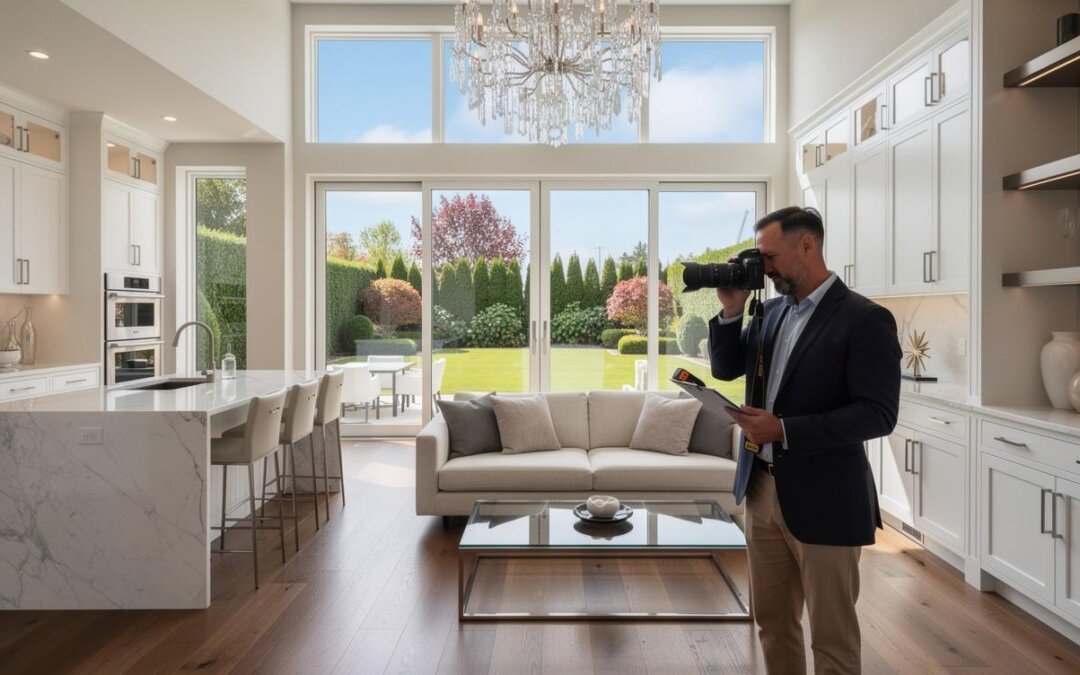
Selling a high-end home in Dallas requires more than just listing it at market rate. An elite home appraisal in Dallas determines your property’s true value, and getting it right protects your financial interests.
At Brooks Cannon Insurance Group, we’ve seen how inaccurate appraisals can derail luxury home sales and complicate refinancing. This guide walks you through what matters most when appraising premium properties in the Dallas market.
What Happens During a Dallas Home Appraisal
A home appraisal in Texas is a formal, state-licensed assessment that determines your property’s market value for mortgage or refinancing purposes. The process typically takes 7 to 10 days from start to finish, with the appraiser’s in-person visit lasting over an hour. Appraisers analyze recent comparable sales in your area, local market trends, and county records to form an opinion of value.
How Appraisers Evaluate Your Property
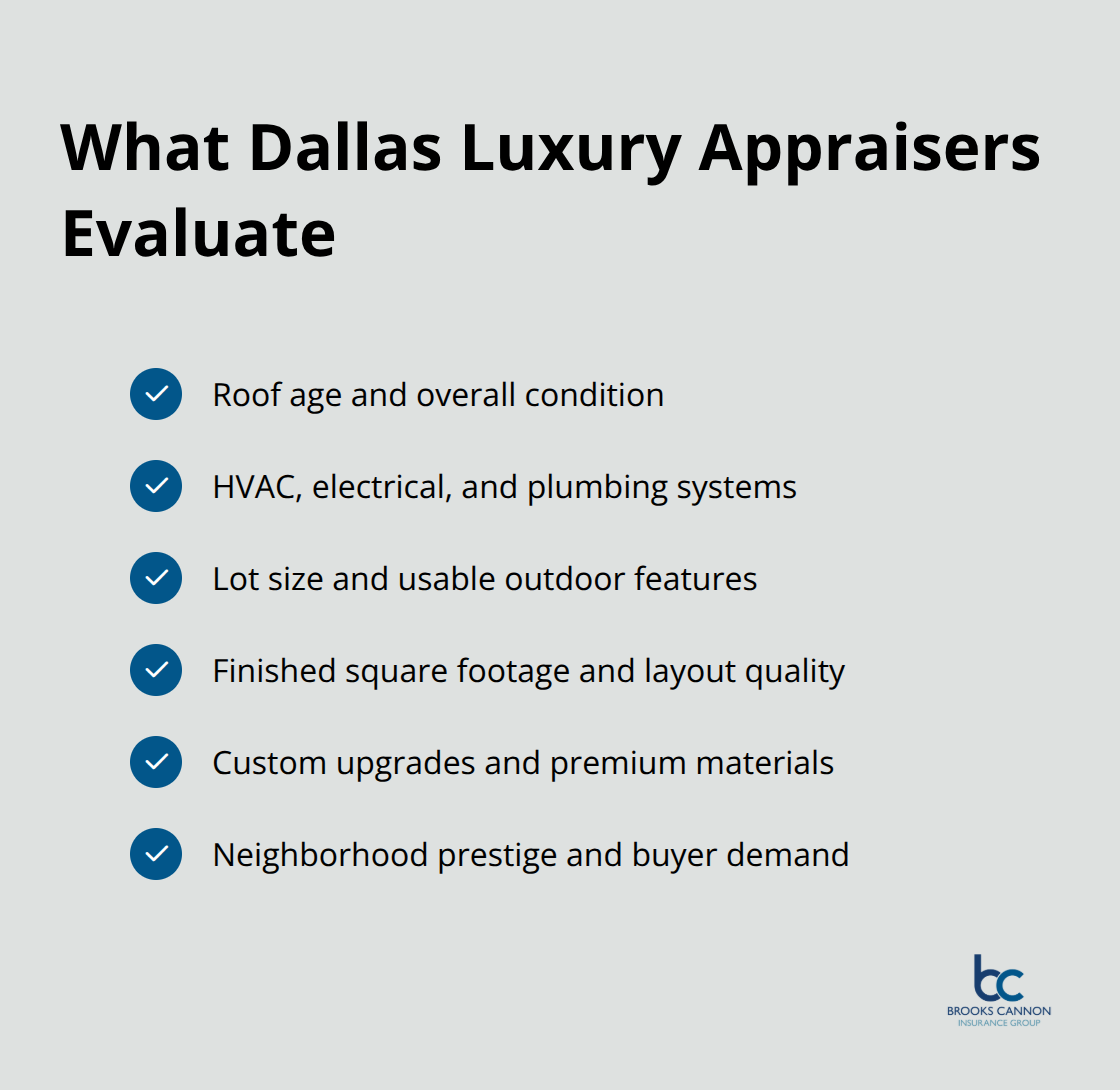
For high-end Dallas properties, the appraiser examines everything from your roof age and HVAC system to your lot size, finished spaces, and custom upgrades. Property size and square footage drive value significantly, but in luxury markets, the appraiser also weighs location prestige, neighborhood demand, and whether your home sits in coveted districts like Highland Park or Uptown. The cost of an appraisal typically ranges from $300 to $1,200, with most Dallas properties falling in the $600 to $1,000 range depending on location and property size.
Why Precision Matters for Elite Properties
Inaccurate appraisals hurt luxury sellers far more than average homeowners. If your $1.5 million home appraises low, your buyer’s lender may refuse to fund the full loan amount, forcing you to reduce price or lose the deal. From November 2023 to October 2024, 4,992 homes priced $1 million and above sold in Dallas, totaling $8.5 billion in sales volume. These premium properties tend to sell near asking price due to strong cash demand, but that advantage disappears if the appraisal comes in below contract price.
Appraisers look at documentation of upgrades and permits, major systems replacements, and high-value room improvements like kitchens and bathrooms to justify your price. A roof replacement, electrical panel upgrade, or finished lower level with proper permits can materially raise appraised value, but without documentation, the appraiser may overlook these improvements entirely. Exterior condition, interior systems functionality, and lot features like pools or outdoor kitchens also factor heavily into the final number.
Selecting the Right Appraiser Changes Everything
Work with licensed local appraisers who understand Dallas market nuances and have access to local data sources. Generic online estimates like Zestimates are not legally defensible and miss the micro-market segmentation that defines Dallas luxury real estate. A qualified appraiser knows which comps matter in Preston Hollow versus Park Cities, adjusts for premium amenities and privacy differences, and recognizes how neighborhood improvements like new schools or transit access influence value.
Before hiring, ask whether they have experience with properties at your price point and in your specific neighborhood. Request their process for selecting comparable sales and how they account for custom features your home has. Red flags include appraisers who quote prices significantly below market without seeing the property, rush the inspection, or rely solely on automated valuation models.
Moving Forward With Confidence
A pre-listing appraisal grounds your pricing strategy in real, defensible data and reduces the risk of later price reductions that damage buyer confidence and extend your time on market. Understanding what appraisers look for positions you to present your property in the strongest possible light-and that preparation directly influences which neighborhoods and appraiser qualifications matter most for your specific situation.
What Really Drives Value in Dallas Luxury Homes
Location Prestige Sets the Appraisal Foundation
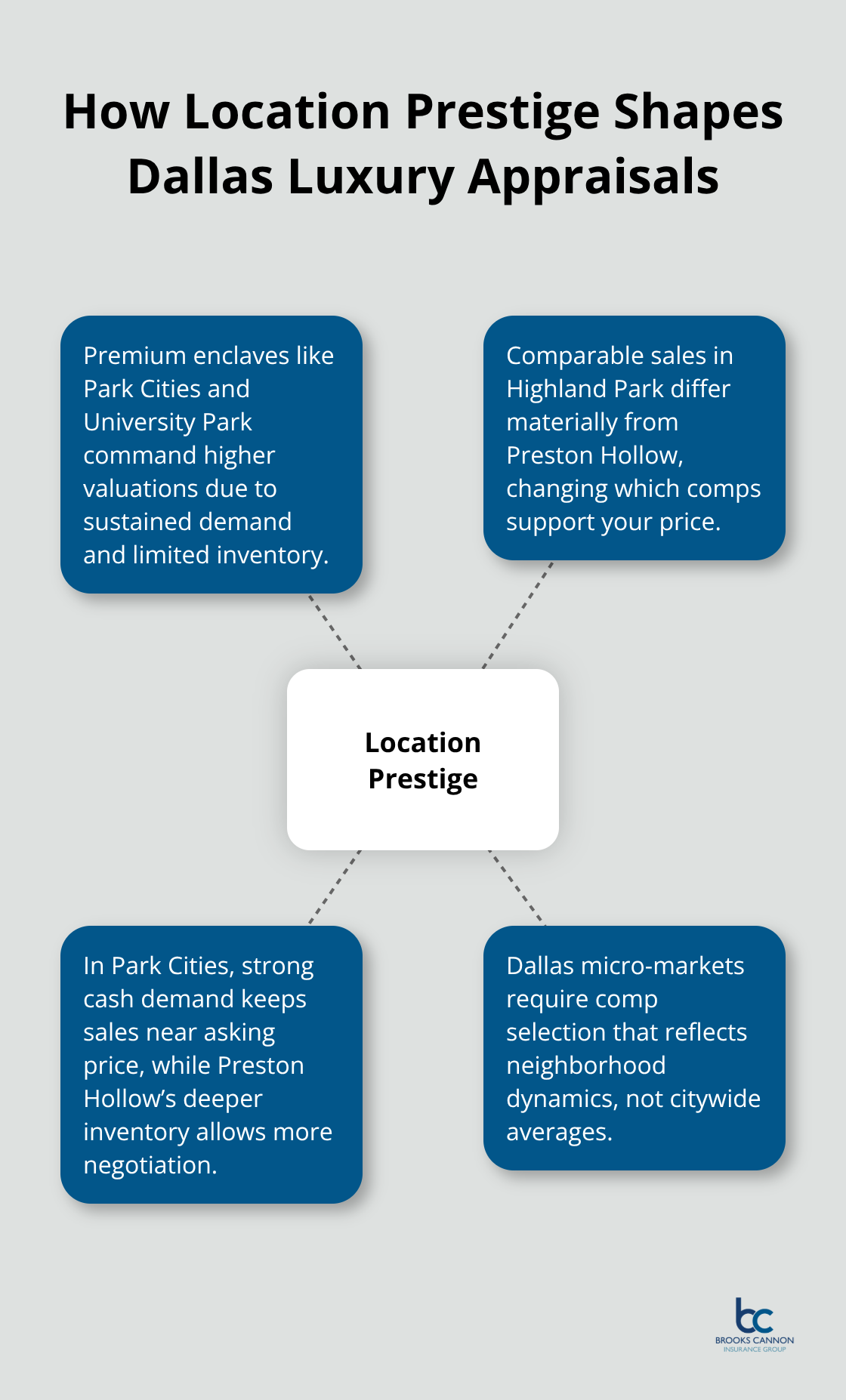
Location prestige in Dallas luxury markets is not subtle-it’s absolute. Park Cities, Highland Park, and University Park command premium valuations because appraisers recognize their sustained demand and limited inventory. When an appraiser pulls comparable sales for a $1.5 million property in Highland Park versus Preston Hollow, the difference is stark. Park Cities homes often sell near asking price due to strong cash buyer demand, while Preston Hollow offers deeper inventory and more room for negotiation.
The Texas Repeat Sales Home Price Index shows steady luxury appreciation across the state, but Dallas’s micro-market segmentation means location prestige directly affects which comparable sales matter for your appraisal.
Proximity to highly rated schools, transit access, and neighborhood stability influence appraiser assessments far more than generic market averages. Uptown’s new luxury construction and redevelopment projects have raised design and amenity benchmarks, which means older Uptown properties may face pressure if they lack modern finishes. When selecting an appraiser, ensure they understand these neighborhood distinctions and can justify why your specific location commands its price point.
Custom Upgrades and Documentation Drive Real Value
Custom upgrades and documented renovations separate competitive appraisals from disappointing ones. A new roof, updated electrical panel, or finished lower level with proper permits materially raises appraised value, but only if the appraiser knows about them. Energy-efficient systems like smart thermostats and better insulation increasingly influence valuations because they reduce buyer operating costs. Wellness-oriented amenities (on-site spas, fitness facilities, modern HVAC systems) now carry measurable weight in luxury appraisals.
The current Dallas market rewards turnkey quality and architectural refinement over raw square footage, meaning strategic upgrades matter more than size alone. Maintain thorough documentation with receipts, installation dates, and permits for every significant improvement. When the appraiser visits, provide a concise one-page list highlighting major systems upgrades and high-value room improvements.
Strategic Improvements Over Excessive Spending
Avoid over-improving; focus on market-aligned updates that buyers at your price point actually expect. The Dallas luxury market’s cash-driven nature means buyers and appraisers alike prioritize properties that require minimal remedial work over those needing extensive repairs or updates. This distinction between smart upgrades and wasteful spending shapes how appraisers assess your home’s true competitive position in the market.
Understanding these value drivers positions you to prepare your property strategically-and that preparation directly influences how appraisers evaluate your home against comparable sales in your specific neighborhood.
Finding an Appraiser Who Gets Dallas Luxury Markets
The difference between a mediocre appraisal and an accurate one often comes down to your appraiser’s familiarity with Dallas’s hyper-segmented luxury market. A state-licensed appraiser with five years of experience in suburban single-family homes will miss critical nuances that separate a Park Cities property from a Preston Hollow listing, even if both homes sit in the $1.5 million range.
Experience at Your Price Point Matters Most
Your appraiser needs hands-on experience valuing properties at your specific price point and ideally within your exact neighborhood. Ask directly about their portfolio: How many appraisals have they completed above $1 million in the past 12 months? Have they appraised properties in your specific zip code or neighborhood in the last two years? Appraisers who work regularly in Highland Park, Uptown, and Lake Highlands understand the micro-market distinctions that automated systems completely miss. They know which comparable sales actually matter, how new construction in Uptown has shifted design benchmarks, and why a Preston Hollow home with deeper inventory commands different pricing dynamics than a Park Cities property selling near asking price due to cash buyer demand.
Evaluate Their Methodology and Process
When vetting candidates, ask about their process for selecting comparable sales and whether they adjust valuations based on smart home integration, security systems, designer kitchens, luxurious bathroom renovations, or customized walk-in closets. Request references from recent clients selling homes at your price point-not to verify honesty, but to understand whether the appraiser’s valuation matched actual sale prices and whether the client felt heard during the process. An appraiser who takes time to understand your specific upgrades and neighborhood context will produce a defensible valuation that holds up under scrutiny.
Spot Red Flags Before You Hire
Red flags emerge quickly if you pay attention. An appraiser who quotes a value significantly below your expectations without visiting the property or who relies primarily on automated valuation models rather than on-site analysis is cutting corners that will hurt you. Appraisers who rush the inspection, spend less than an hour on-site, or seem unfamiliar with neighborhood-specific factors like school quality or transit improvements are treating your luxury property like a standard residential appraisal.
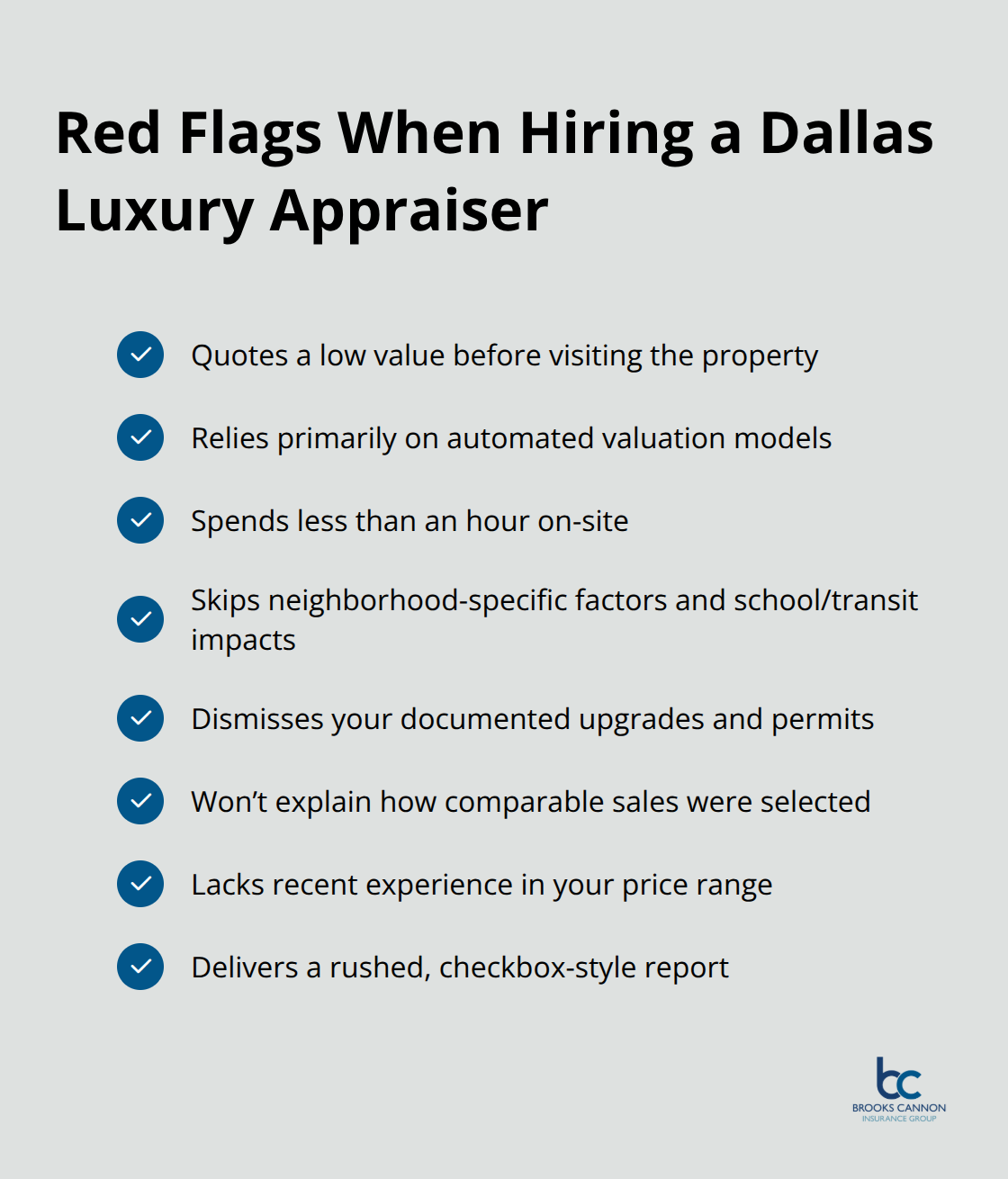
Similarly, appraisers who dismiss your documentation of upgrades or fail to ask detailed questions about renovations, system replacements, and custom features are not conducting the thorough analysis luxury properties demand.
Ground Analysis in Dallas-Specific Data
The Texas Repeat Sales Home Price Index tracks statewide trends, but your appraiser must move beyond state-level data and ground their analysis in Dallas-specific market movement, comparable sales within your neighborhood, and recognition of how zoning changes or new development can influence property values. If an appraiser seems indifferent to understanding the long-term appeal of your specific location or treats all $1.5 million homes identically regardless of neighborhood prestige, find someone else. Your appraisal directly determines whether your buyer’s lender will fund the full loan amount-and that outcome shapes whether your sale closes on time or stalls.
Final Thoughts
An elite home appraisal in Dallas protects your financial interests and grounds your pricing strategy in defensible market data. The three factors that matter most are appraiser expertise at your price point, thorough documentation of upgrades and systems improvements, and selection of comparable sales that reflect your neighborhood’s actual market dynamics. When you invest time in preparing your property and hiring an appraiser who understands Dallas’s micro-market segmentation, you eliminate the risk of low appraisals that derail sales or force price reductions.
Schedule a pre-listing appraisal before you list your property to obtain real data for competitive pricing and identify repairs or upgrades that could materially raise your valuation. Request an appraiser with documented experience in your specific neighborhood and price range, ask about their methodology for selecting comparables, and provide them with a one-page summary of all major systems upgrades and custom features. The appraiser’s in-person visit typically takes over an hour, and the full process completes within 7 to 10 days.
Professional appraisals do more than satisfy lender requirements-they protect your investment by confirming your property’s true value in the market. An accurate appraisal prevents buyer financing from falling through, supports your negotiating position, and accelerates your sale timeline. Contact Brooks Cannon Insurance Group to learn how we help safeguard your home and financial future.
Disclaimer: The information provided in this blog is for general informational purposes only and does not constitute legal, financial, or insurance advice. Coverage options, terms, and availability may vary. Please consult with a licensed professional for advice specific to your situation