
A single day without revenue can threaten your Dallas company’s survival. Business interruption coverage protects you when unexpected events force temporary closures, covering lost income and ongoing expenses while you recover.
At Brooks Cannon Insurance Group, we help Dallas business owners understand this protection and build coverage that matches their real financial needs. The right policy can mean the difference between weathering a crisis and facing permanent damage to your business.
What Business Interruption Coverage Actually Protects
Business interruption coverage can help replace income you lose if you can’t open temporarily after a covered loss, like property damage. Unlike property insurance that reimburses physical damage, this coverage addresses the financial hemorrhage that happens when revenue stops but expenses continue. If a fire damages your restaurant and you shut down for three weeks of repairs, business interruption insurance covers the meals you didn’t serve and the profit you didn’t earn during that period.
How the Coverage Works
The policy pays for expenses that keep running regardless-your manager’s salary, utility bills, rent, and loan payments don’t pause when your doors close. The policy triggers only when the disaster causing closure is covered under your property insurance, meaning fire, severe weather, or vandalism typically qualify, while general business downturns don’t. This distinction matters enormously because it prevents frivolous claims while protecting against genuine catastrophic scenarios.
Dallas Threats That Force Closures
Dallas businesses face legitimate threats that can force extended closures. Tornadoes and severe thunderstorms regularly impact the region, and the area has experienced multiple severe weather events that caused significant business disruptions. Beyond weather, organized theft and burglary remain persistent problems in Dallas, particularly in retail and warehouse operations in high-density urban areas. A single break-in can trigger police investigations, security upgrades, and temporary closures that stretch beyond the immediate damage.
Why Recovery Takes Longer Than You Think
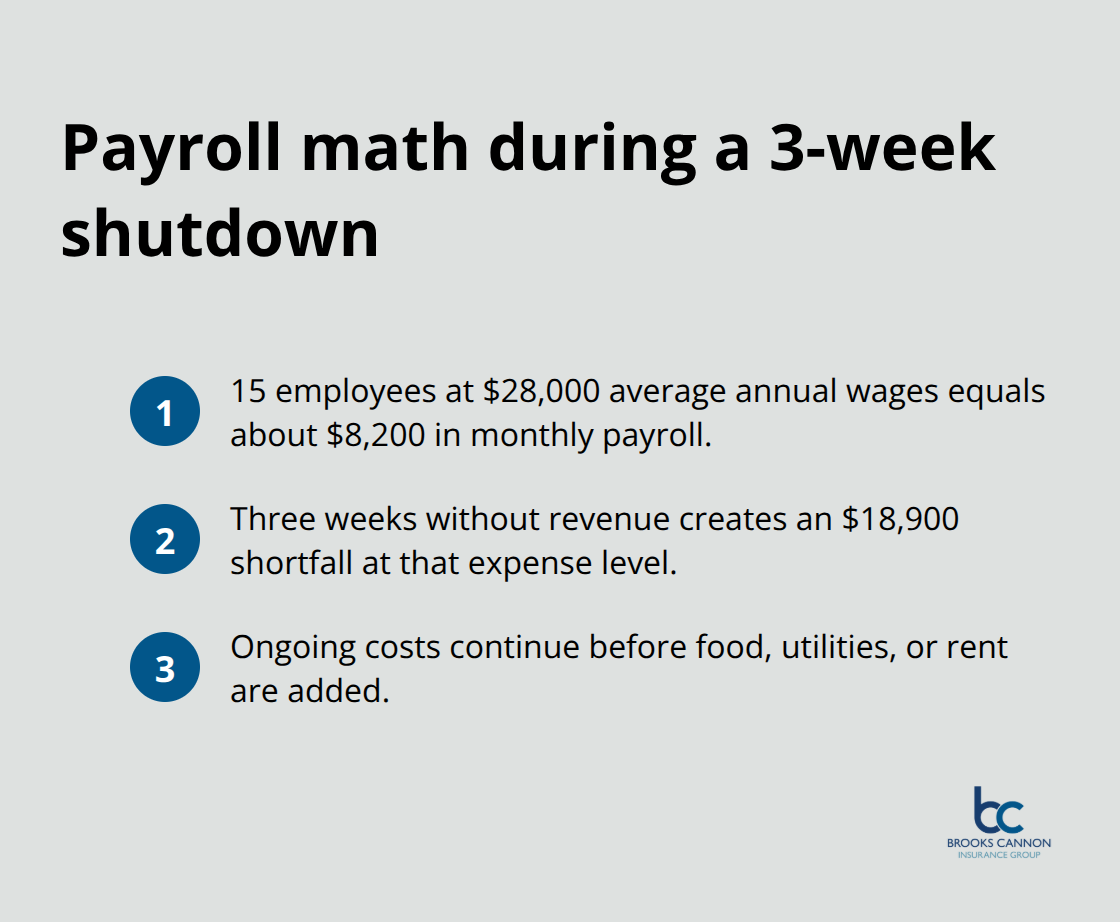
Small business owners dramatically underestimate how long recovery takes-most assume a few days when reality often extends to weeks or months depending on the scope of repairs and contractor availability. During that restoration period, your payroll obligations don’t shrink, inventory orders may still arrive, and lease payments remain due. A restaurant with 15 employees paying average wages of $28,000 annually spends roughly $8,200 per month just on payroll before food costs, utilities, or rent. Three weeks without revenue at that expense level creates an $18,900 gap that depletes most small business reserves instantly.
The Financial Protection You Need
Business interruption coverage bridges that gap, allowing you to maintain financial stability while rebuilding. The right policy covers both your lost profits and the operating expenses that continue during closure, protecting your company from the financial devastation that extended downtime creates. Understanding what your specific business needs-based on your monthly expenses, industry risks, and how long you could actually survive without income-determines whether your coverage truly protects you or leaves dangerous gaps.
Assessing Your Business’s Specific Needs
Most Dallas business owners guess wrong about how long they can operate without revenue. You need hard numbers, not assumptions. Start by listing every monthly expense that continues during a closure: payroll for all employees, rent or mortgage, utility bills, loan payments, insurance premiums, equipment leases, and subscription services. Pull your actual bank statements and profit-and-loss statements from the last twelve months instead of estimating. A typical Dallas retail operation with five employees spends $18,000 to $24,000 monthly on payroll alone, plus $3,000 to $5,000 for rent, utilities, and insurance. Add those together and you’re looking at $21,000 to $29,000 in non-negotiable monthly expenses before you sell a single product.
Calculate Your Actual Survival Window
Divide your liquid reserves by your monthly total to find your survival timeline. If you have $50,000 in the bank and monthly expenses hit $25,000, you have exactly two months before insolvency. Most small businesses fail within three weeks of forced closure because they run out of cash before repairs finish. Your coverage limit should reflect the worst-case scenario for your industry in Dallas, not your optimistic timeline.
Industry-Specific Risks Shape Your Recovery Duration
Restaurant owners face different threats than real estate offices. A restaurant’s fire risk is substantially higher than a real estate agency’s, which affects both your insurance premiums and your realistic closure duration. Dallas restaurants typically experience longer recovery periods because health department inspections and potential structural repairs extend the timeline beyond simple fire damage cleanup. Retail operations in high-traffic areas like the Dallas Design District face organized theft and burglary risks that can trigger multi-week police investigations and security system overhauls before reopening.
Warehouse and distribution operations deal with supply chain vulnerabilities-a break-in requiring perimeter upgrades and new surveillance systems can force 30 to 60 days of closure. Manufacturing facilities face even longer recovery windows because equipment repairs and specialized contractor availability stretch timelines unpredictably. A Dallas contractor should calculate coverage based on typical project timelines plus equipment repair delays, not best-case scenarios. Speak with others in your exact field about their actual closure experiences-not theoretical possibilities, but real incidents they’ve weathered.
Account for Extra Expenses That Accelerate Recovery
Business interruption policies cover lost profits and continuing operating expenses, but owners often forget about extra expenses that accelerate recovery. If your facility needs emergency repairs to reopen faster, or if you rent temporary space to maintain partial operations, those costs aren’t automatically covered under standard business interruption insurance. Extra expense coverage-a separate rider available through most policies-reimburses these acceleration costs.
A Dallas restaurant that rents a temporary kitchen space during repairs might spend $8,000 to $12,000 monthly for that temporary setup, getting back to partial revenue within weeks instead of months. That extra investment pays for itself through recovered sales. Calculate your worst monthly loss scenario, multiply it by your actual recovery timeline for your industry and location, then add 20 percent for unexpected complications.
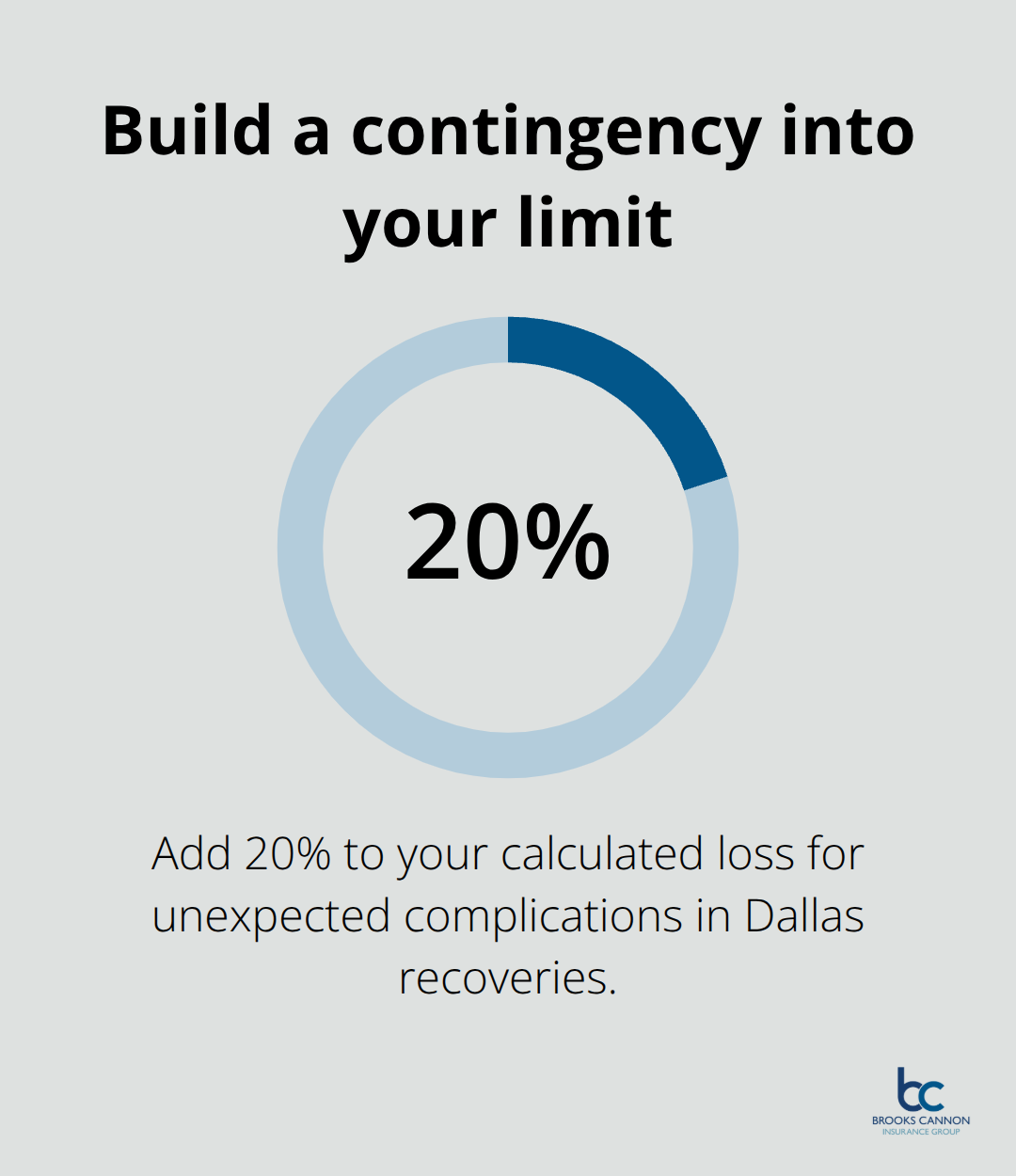
That total becomes your minimum coverage target, and assessing your insurance needs positions you to select coverage limits that actually protect your business rather than leave dangerous gaps when you need protection most.
Selecting the Right Coverage Limits and Waiting Periods
Your coverage limits that reflect actual financial damage your Dallas business faces during its recovery period, not a number that sounds reasonable. Start with the monthly expense total you calculated in the previous section, then multiply it by the number of months your industry typically requires to fully reopen. A Dallas restaurant facing three months of closure at $28,000 monthly expenses needs a minimum coverage limit of $84,000, but that only covers lost profits and operating expenses. Add extra expenses like temporary kitchen rental, expedited repairs, or emergency staffing, and your realistic limit climbs to $100,000 or higher.
A warehouse operation in the Dallas area dealing with organized theft and security system overhauls might face four to six months of closure, pushing coverage needs to $120,000 to $180,000 depending on monthly burn rate. Insurance carriers in Texas commonly see underinsured businesses file inadequate claims because owners selected limits based on what felt comfortable rather than what their actual recovery would cost.
Understanding Coverage Limits and Deductibles
Your deductible-the amount you pay before coverage begins-directly affects your premium. Higher deductibles typically lower your premium costs, but selecting a $1,000 deductible means you absorb that first $1,000 of losses yourself. Most Dallas business owners should select a deductible between $500 and $2,500 because it balances affordable premiums with reasonable out-of-pocket risk.
Selecting a $5,000 or higher deductible saves premium dollars upfront but leaves you vulnerable if your actual closure lasts only two weeks and your total loss falls below that threshold. The deductible you choose shapes both your immediate financial exposure and your long-term protection strategy.
Choosing Appropriate Waiting Periods
The waiting period, sometimes called the elimination period, is the number of days after a covered loss occurs before your policy begins paying benefits. A 24-hour waiting period means the insurer starts coverage one day after the disaster; a 72-hour period means three days pass before payments begin. This matters intensely in Dallas because severe weather events and theft happen without warning, and your cash flow stops immediately regardless of when insurance kicks in.
A three-week restaurant closure with a 72-hour waiting period means you personally cover expenses for the first three days out of pocket before receiving any reimbursement. Most Dallas businesses should select a 24-hour or 48-hour waiting period because it minimizes your personal cash drain during the crisis period when your stress and expenses peak simultaneously.
Longer waiting periods like 7 or 14 days reduce your premium significantly, but they create dangerous gaps if your business has minimal reserves. A contractor with $30,000 in liquid reserves selecting a 14-day waiting period risks running out of cash before the insurance payments arrive if closure hits unexpectedly.
Additional Riders That Protect Against Coverage Gaps
Standard business interruption policies trigger only when a covered peril damages your property and forces closure. Civil authority coverage extends protection when government authorities prevent access to your premises due to a nearby disaster, even if your building sustains no damage. If a major fire damages the building next to your Dallas retail location and authorities close the street for cleanup, your business loses revenue even though your property remains unharmed. Civil authority coverage reimburses that loss, and most Dallas businesses should add it for roughly $200 to $400 annually.
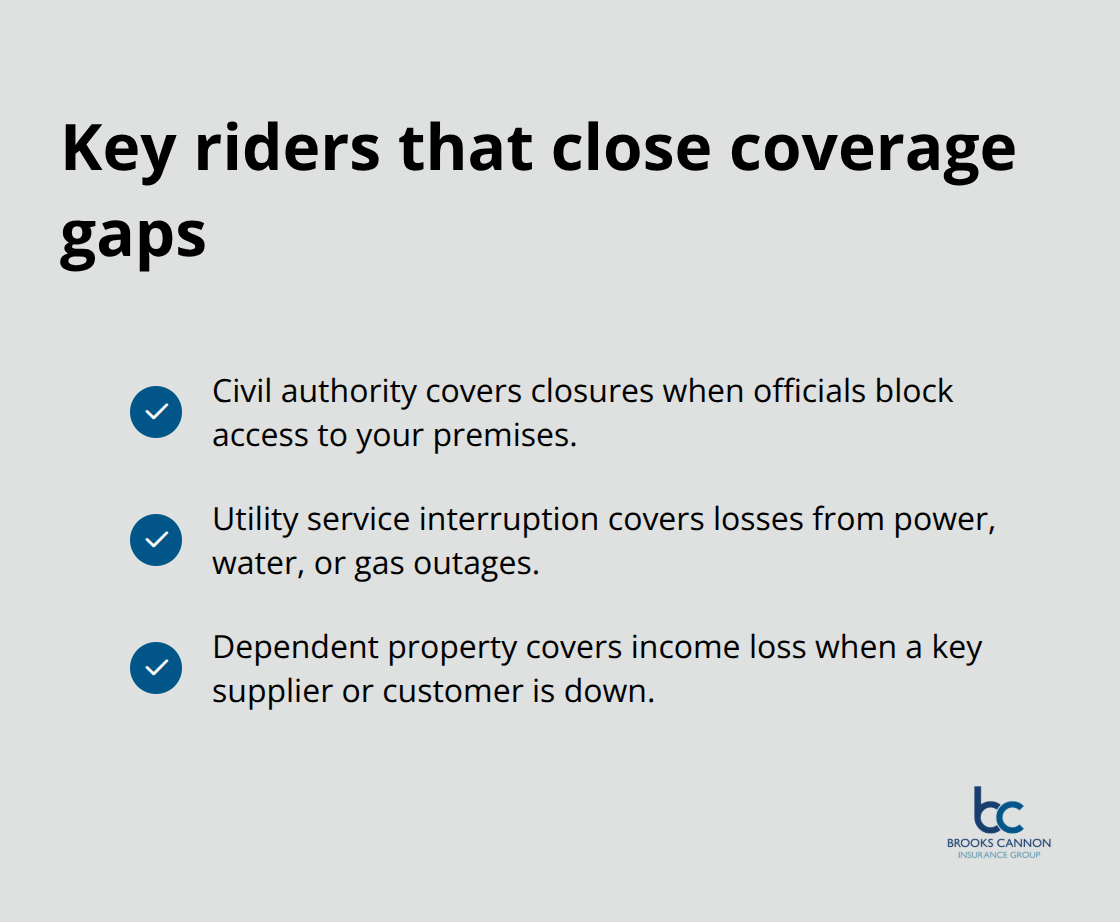
Utility service interruption coverage protects you when a utility company failure cuts your power, water, or gas, forcing temporary closure without property damage to your building. A Dallas data center or medical facility depending on consistent utilities should absolutely carry this rider.
Dependent property coverage extends protection when a supplier or customer you rely on heavily experiences a covered loss and cannot fulfill orders or accept deliveries. A manufacturing operation in Dallas supplying automotive parts needs dependent property coverage because a major customer’s closure directly reduces your revenue even though your facility operates normally. These riders typically cost $300 to $800 annually depending on your risk profile and the coverage limits you select.
Final Thoughts
Choosing business interruption Dallas coverage for your company requires three concrete decisions: calculating your actual monthly expenses, determining how long your industry typically needs to recover from a covered loss, and selecting coverage limits that match that timeline plus unexpected complications. Most Dallas business owners underestimate both their monthly burn rate and their recovery duration, leading them to purchase inadequate coverage that fails when they need it most. Your coverage limit should reflect worst-case scenarios specific to your industry and location, not optimistic timelines or comfortable round numbers.
The waiting period you select directly impacts your cash flow during the crisis period-a 24-hour or 48-hour waiting period protects you far better than longer elimination periods that save premium dollars but create dangerous gaps when your reserves run low. Adding riders like civil authority coverage, utility service interruption, and dependent property coverage fills gaps that standard policies leave exposed, particularly for Dallas businesses vulnerable to supply chain disruptions or nearby disasters that affect your operations indirectly. We at Brooks Cannon Insurance Group work with multiple top-rated insurance carriers to find business interruption coverage that actually protects your financial stability during recovery.
Gather your last twelve months of bank statements and profit-and-loss statements, then contact our team for a consultation. We’ll calculate your coverage needs based on your real numbers and connect you with carriers offering competitive pricing for the protection your Dallas business requires. Visit Brooks Cannon Insurance Group to start the process today.
Disclaimer: The information provided in this blog is for general informational purposes only and does not constitute legal, financial, or insurance advice. Coverage options, terms, and availability may vary. Please consult with a licensed professional for advice specific to your situation