

A cyber attack can cripple your business in minutes. Without the right response plan and insurance protection, the financial and operational damage can be devastating.
At Brooks Cannon Insurance Group, we help Dallas-area businesses understand exactly what happens after an attack strikes. This guide walks you through the critical cyber attack response steps and shows you how your cyber liability coverage actually protects your bottom line.
Your First Hours After a Cyber Attack
Isolate Infected Systems Immediately
The first few hours after a cyber attack determine whether your business survives the incident with minimal damage or faces catastrophic losses. Speed matters more than perfection. According to IBM’s 2024 Data Breach Report, organizations that detected and contained breaches within 30 days saved an average of $1.49 million compared to those taking 90 days or longer. Your immediate actions directly impact both your recovery timeline and your cyber liability insurance claim.
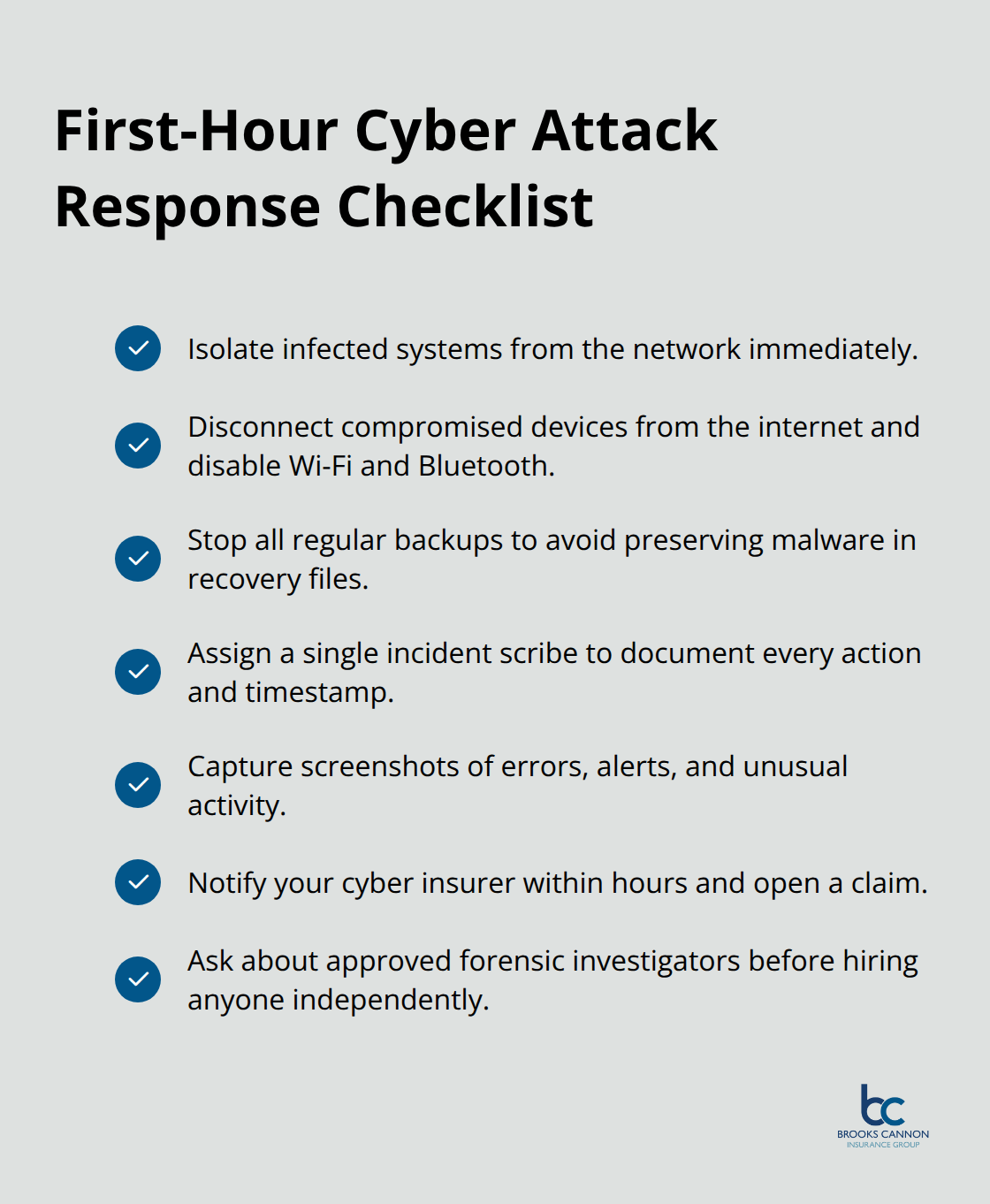
Isolate every affected system from your network right now, not after a meeting or consultation. If a single computer shows signs of compromise, disconnect it from the internet and disable wireless connectivity. This prevents attackers from spreading to other machines and stealing additional data. Contact your IT department or managed service provider immediately and instruct them to stop all regular backups temporarily, since backing up infected systems locks the malware into your recovery files.
Document the Attack With Precision
Assign one person to document everything that happens during the attack. Record the exact time you discovered the breach, what systems were affected, which files appear compromised, and any suspicious activity you observed. Take screenshots of error messages, unusual network traffic, or system alerts. This documentation becomes your evidence for the insurance claim and helps forensic investigators understand the attack’s scope.
Write down employee names and contact information for anyone who accessed affected systems. Detailed incident logs reduce claim disputes because insurers have concrete evidence of your response timeline and the damages incurred.
Notify Your Insurance Provider Within Hours
Your cyber liability insurance provider needs to hear from you within the first 24 hours, ideally within the first few hours. Most policies require prompt notification, and delays can jeopardize your coverage eligibility. Call your insurance agent or the claims hotline listed on your policy documents, not just an email address. Verbal notification creates a timestamped record.
Tell them you’ve isolated systems and begun documenting the incident, then ask about your policy’s forensic investigation coverage and whether they have preferred investigators you should contact. Many cyber liability policies include access to breach response specialists, legal counsel, and forensic firms at no additional cost (but only if you engage them through your insurer’s network). Your insurance company wants to help you respond correctly because a faster, more professional response reduces their ultimate payout. This is not a conflict of interest-it’s alignment.
Do not hire outside consultants, forensic firms, or lawyers independently before checking with your insurer, as costs outside their approved network often fall outside coverage limits. Ask your insurer specifically whether they’ll cover third-party notifications, credit monitoring services for affected customers, and potential regulatory fines related to the breach. Understanding these coverage details now prevents expensive surprises later and positions you to work effectively with the breach response team your insurer recommends.
What Your Cyber Liability Coverage Actually Covers
Your cyber liability policy is not a single solution that addresses every cost after a breach. It’s a targeted financial safety net that covers specific expenses most businesses don’t anticipate.
The average cost of a data breach in 2024 reached $4.88 million, but most small to mid-sized businesses grossly underestimate their actual expenses because they focus only on stolen data rather than the cascading operational and legal costs that follow.
Notification and Monitoring Expenses Add Up Fast
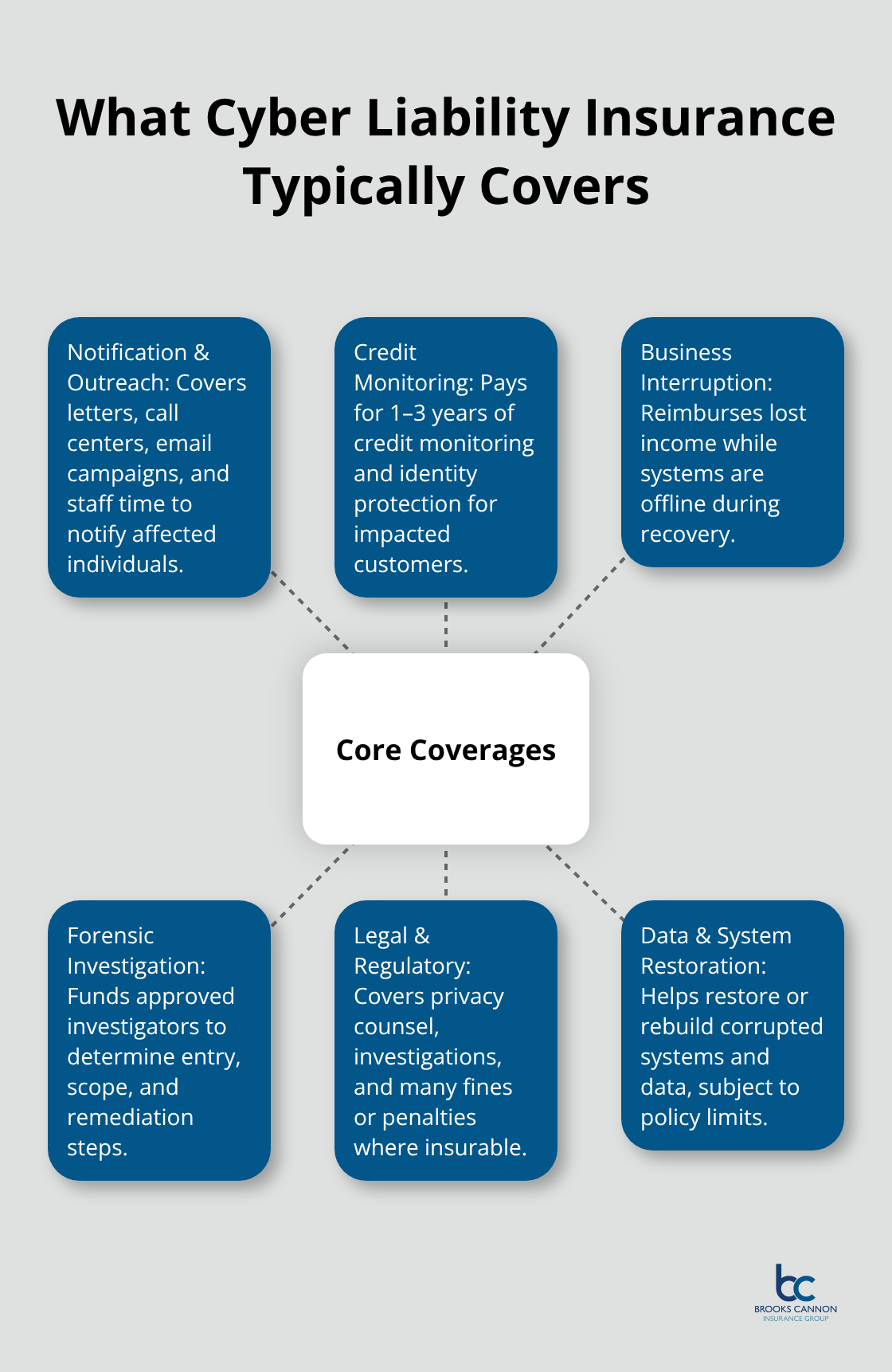
When a breach exposes customer data, you must notify affected individuals in most states, including Texas. That notification process costs money-notification letters, phone calls, email campaigns, and staff time to manage inquiries. Your cyber liability coverage pays for these direct notification costs, which typically run between $5 and $15 per affected individual depending on the notification method. If your breach affects 5,000 customers, you face $25,000 to $75,000 in notification expenses before anything else.
Beyond notification, most policies cover credit monitoring and identity theft protection services for affected individuals for a set period, usually one to three years. This isn’t optional generosity on your part-it’s a legal requirement in Texas and demonstrates reasonable care to regulators and your customers. Your policy covers these monitoring subscriptions, so you won’t pay the bill directly.
Income Loss During System Downtime Hits Your Bottom Line
When attackers encrypt your files or shut down your systems, your business stops generating revenue until systems are restored. A manufacturing company in Houston might lose $50,000 per day when production halts. A dental practice loses appointment revenue. An accounting firm can’t service clients. Your cyber liability policy includes business interruption coverage that compensates you for lost income during the period your systems remain offline and unusable.
This coverage typically applies from the moment the attack occurs until your systems are fully restored and operational again. The coverage amount depends on your policy limits, so a business with $100,000 in daily revenue needs significantly higher coverage than one with $10,000 in daily revenue. This is where many Dallas-area business owners make critical mistakes-they purchase cyber liability coverage with limits that sound adequate on paper but fall short of their actual daily operational costs. Calculate your true daily revenue figure, then try to secure coverage for at least 30 days of potential downtime, because major attacks often take 20 to 40 days to fully remediate.
Legal and Regulatory Costs Consume Most Breach Budgets
This is where cyber liability coverage proves its real value. After a breach, you’ll face legal fees from attorneys specializing in data privacy law, regulatory investigation costs if state attorneys general launch inquiries, and potential fines from regulatory bodies. Texas doesn’t have its own data privacy law, but federal regulations under laws like the Health Insurance Portability and Accountability Act apply to healthcare providers, and the Federal Trade Commission can impose penalties on any business that fails to protect consumer data adequately.
Your cyber liability policy covers these legal defense costs and regulatory fines, which often exceed $500,000 for mid-sized breaches. Without this coverage, you pay these costs directly from operating funds, which can bankrupt otherwise healthy businesses. Some policies also cover notification to credit bureaus and regulatory agencies, forensic investigation costs to determine how the breach occurred, and costs to restore or rebuild damaged systems and data (though specific coverage limits and exclusions vary dramatically between policies).
An independent insurance agency can compare multiple carriers’ policies to identify which one actually covers your specific business operations and risk profile. The difference between adequate coverage and inadequate coverage often determines whether your business recovers quickly or faces years of financial strain. Your next step involves understanding how to work with your insurer and breach response team to activate this coverage and maximize your recovery.
Working With Your Insurance Company and Breach Response Team
Activate Your Insurer’s Forensic Investigators Immediately
Your insurer’s forensic investigators are not optional consultants you hire if budget allows. They are your first line of defense in containing damage and building your insurance claim. The moment you notify your insurance company, ask for their breach response coordinator’s direct contact information and the names of forensic firms they’ve pre-approved. These investigators have already worked with your insurer on dozens of breaches, understand exactly what documentation your insurance company needs for claim approval, and know how to preserve evidence for potential legal proceedings.
Do not delay this step to shop around for cheaper investigators. Using your insurer’s preferred team costs less because they have established billing relationships, work faster due to familiarity with your insurer’s requirements, and coordinate seamlessly with legal counsel your policy covers. The average forensic investigation costs between $15,000 and $75,000 depending on breach complexity, but this entire cost falls under your policy’s investigation coverage when you use approved vendors. Hiring independent investigators outside your insurer’s network often leaves you paying out of pocket for portions they won’t reimburse, which defeats the entire purpose of cyber liability coverage.
Understand What Forensic Investigators Actually Do
Your forensic team determines exactly what attackers accessed, when they entered your systems, and how they gained entry. This information directly supports your claim because it quantifies damages and proves you responded professionally. They also identify whether your current security practices meet industry standards, which regulators and attorneys scrutinize heavily after breaches.
Navigate the Claims Process Strategically
Your claims process begins the moment you submit your initial breach notification but doesn’t end until your insurer approves final reimbursement, which typically takes 60 to 120 days for straightforward breaches. Assign one employee as your claims point person who communicates exclusively with your insurer’s claims adjuster. This prevents conflicting statements and ensures your insurer receives consistent information.
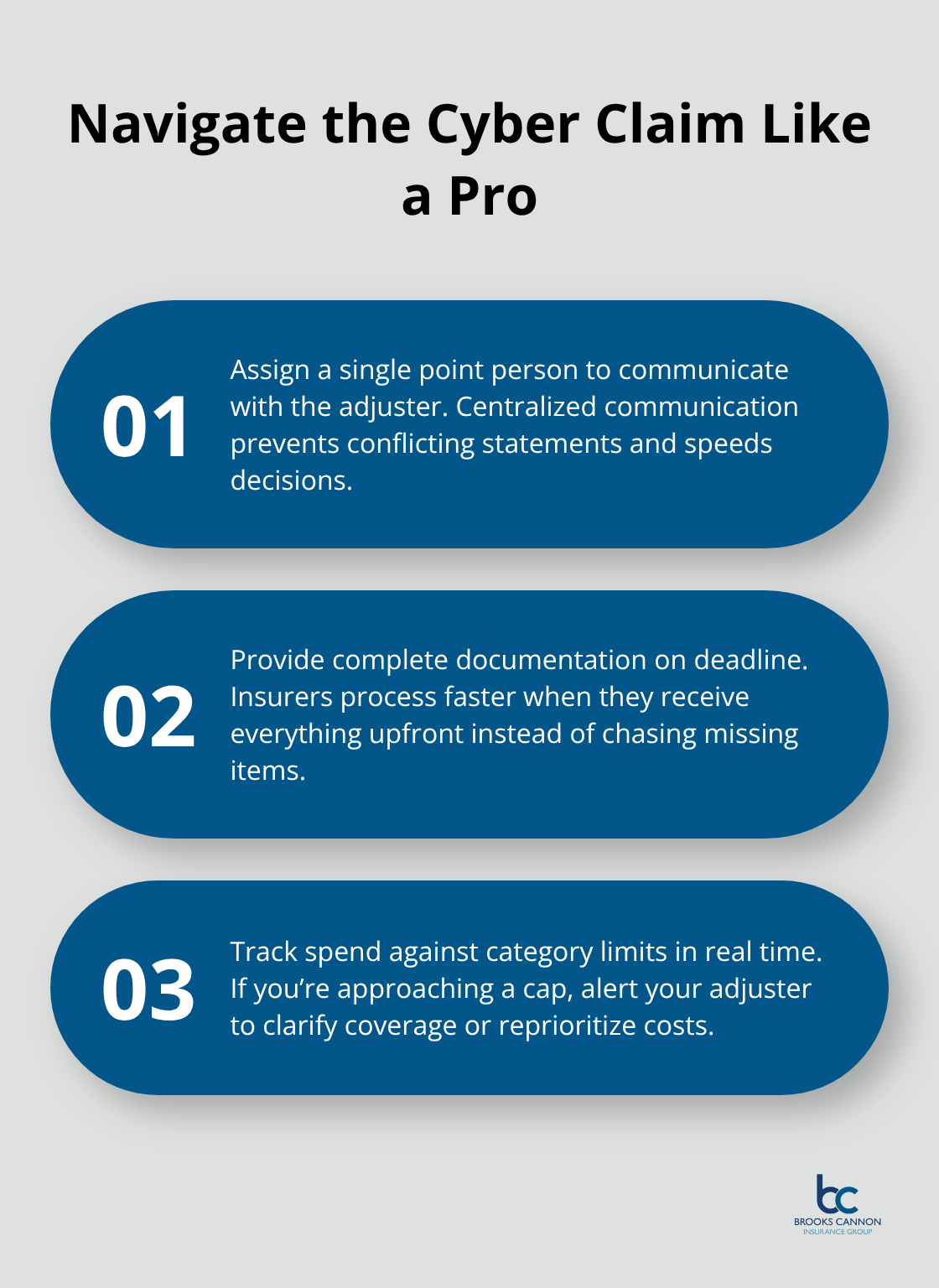
Submit all documentation your adjuster requests within their stated deadlines, even if the request seems excessive or redundant. Insurance companies process claims faster when they receive complete information upfront rather than having to request missing pieces repeatedly. Request a detailed breakdown of what your policy covers for each category of expenses you’re incurring, then track your actual costs against those coverage limits in real time.
Many Dallas-area business owners discover mid-recovery that they’ve exceeded their policy limits for specific coverage categories, forcing them to pay remaining costs directly. If you’re approaching coverage limits before your recovery completes, notify your adjuster immediately so they can clarify whether additional coverage applies or whether you need to prioritize which costs get reimbursed.
Implement Security Improvements Your Insurer Requires
After your systems are fully operational and forensic investigation concludes, your insurer will likely require you to implement specific security recommendations before they’ll renew your policy or before they’ll consider covering future breaches at the same rates. These aren’t suggestions. Security improvements like multi-factor authentication, regular backup testing, staff security training, and network segmentation significantly reduce your breach risk, and insurers know this from analyzing thousands of claims.
Implementing these recommendations also reduces your premiums on renewal, turning security investment into measurable cost savings that typically appear within your next policy year. Your insurer’s requirements reflect industry best practices that protect your business long after the current breach resolves.
Final Thoughts
A cyber attack response plan only works when you actually execute it. The steps outlined in this guide aren’t theoretical recommendations-they’re the exact sequence that separates businesses that recover quickly from those that face months of financial bleeding and operational chaos. Your cyber liability coverage becomes worthless if you don’t notify your insurer within hours, fail to document the attack properly, or hire investigators outside their approved network.
The reality is stark: the average data breach costs $4.88 million, but most of that expense comes from business interruption, legal fees, and regulatory fines rather than the breach itself. Your cyber liability policy addresses these specific costs directly, which is why it matters far more than most Dallas-area business owners realize. Without it, you’re betting your company’s survival on the hope that a breach never happens or that you can absorb millions in unexpected costs.
Contact Brooks Cannon Insurance Group to review your current cyber liability coverage or to build a policy from scratch if you don’t have one yet. We’ll calculate your true daily revenue, assess your breach risk based on your industry and data handling practices, and recommend coverage limits that protect your bottom line. Don’t wait for an attack to discover your coverage falls short.
Disclaimer: The information provided in this blog is for general informational purposes only and does not constitute legal, financial, or insurance advice. Coverage options, terms, and availability may vary. Please consult with a licensed professional for advice specific to your situation