
Your Dallas art collection represents years of careful curation and significant financial investment. Without proper art collection valuation, you’re likely underinsured and exposing yourself to substantial risk.
At Brooks Cannon Insurance Group, we’ve seen too many collectors discover gaps in their coverage after a loss occurs. The good news is that getting your collection properly valued and insured is straightforward when you know the right steps.
Understanding Art Valuation Methods
Professional Appraisals Set the Standard
Art valuation isn’t guesswork, and it shouldn’t rely on a single approach. Dallas’s art market moves fast, and accurate pricing protects both your assets and your insurance coverage. The most reliable valuations combine three distinct methods that cross-verify each other.
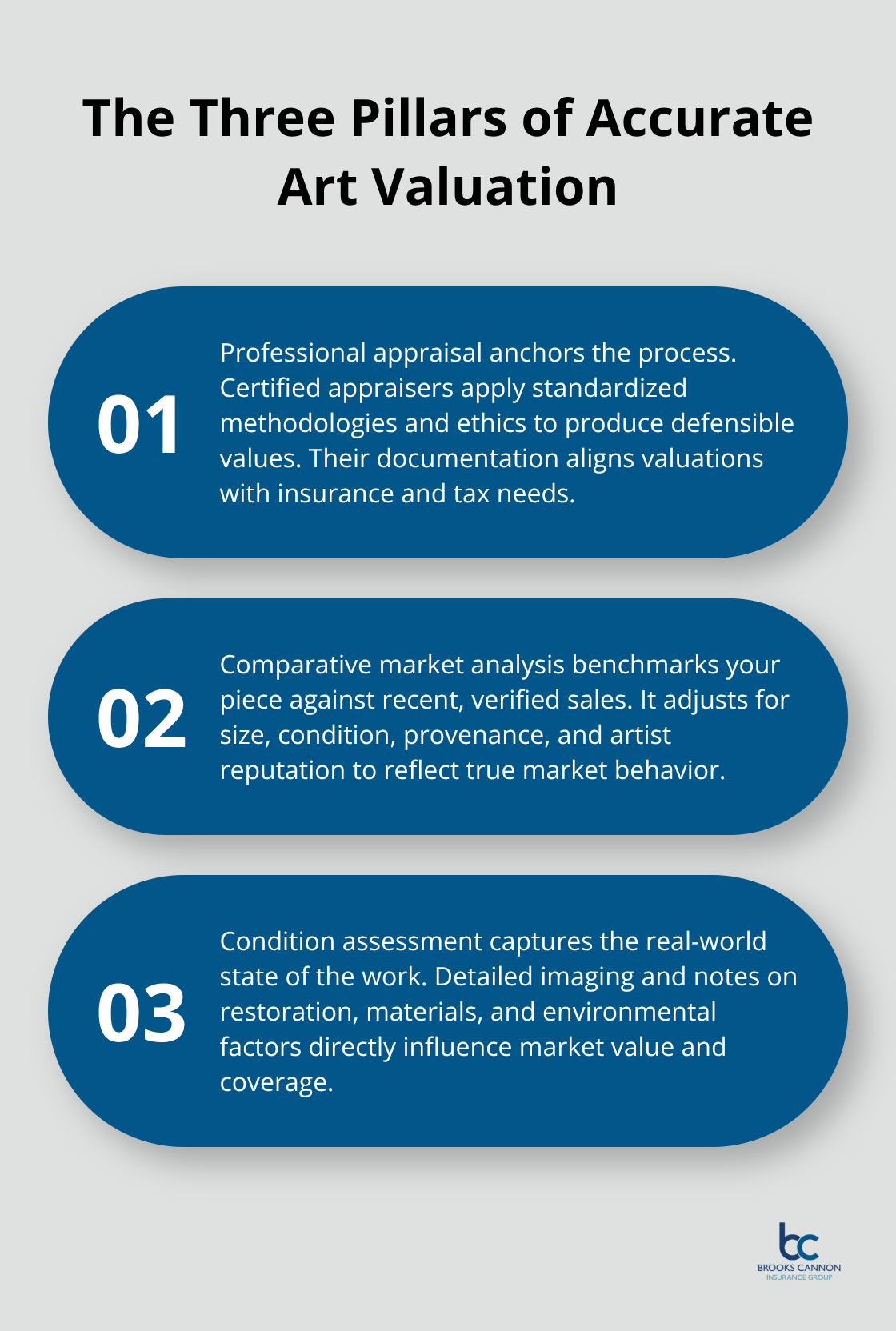
Professional appraisers certified through organizations like the American Society of Appraisers use these methods systematically, not randomly. A certified appraiser typically charges between $300 and $1,000 per piece, depending on complexity and market research required. This investment pays for itself through proper insurance alignment and potential tax deductions. The appraiser examines your piece’s provenance, exhibition history, and artist market trajectory before assigning any value to it.
Comparative Market Analysis Reveals Real Prices
Comparative market analysis looks at what similar works actually sold for in recent months and years. This isn’t theoretical pricing-it’s hard data from auction houses, galleries, and private sales. Websites like Artnet track auction results for thousands of artists, and Dallas galleries maintain records of local sales that directly impact your collection’s value.
This method grounds your valuation in market reality rather than speculation. Appraisers compare your piece against recent comparable sales, accounting for differences in size, condition, provenance, and artist reputation. The more comparable sales data your appraiser finds, the stronger your valuation becomes for insurance purposes.
Condition Assessment Determines Actual Market Value
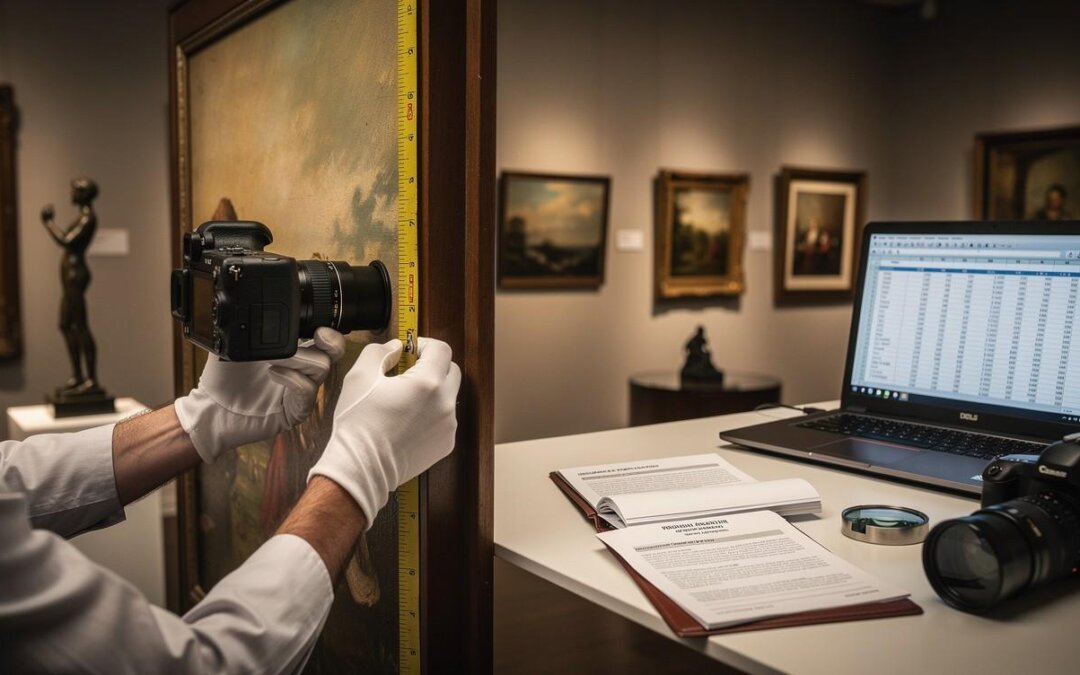
Condition assessment matters enormously because a painting with water damage or fading sells for significantly less than an identical piece in pristine condition. Your appraiser photographs your art under controlled lighting, documents any restoration work, and notes environmental factors that affect value.
Detailed documentation includes artist signatures, dimensions, materials, exhibition labels on the back of frames, and any published references where your piece appears. This documentation becomes your insurance company’s foundation for understanding exactly what they’re covering and why that coverage amount reflects market reality. With these three methods complete, you’re ready to explore how professional appraisers in Dallas conduct this process and what you should expect throughout the valuation journey.
Getting Your Art Collection Professionally Appraised
Finding a Qualified Appraiser in Dallas
The American Society of Appraisers maintains a directory where you can filter by specialty and location, which connects you with appraisers who focus specifically on fine art rather than general property valuation. When you contact potential appraisers, ask directly about their credentials, membership in professional organizations, and experience with your specific art type-whether that’s contemporary paintings, sculptures, or photography. Request references from other collectors or galleries they’ve worked with, and contact those references to verify their track record. A qualified appraiser carries errors and omissions insurance, holds professional appraiser credentials, and provides written documentation of their qualifications. The American Society of Appraisers requires members to follow the Uniform Standards of Professional Appraisal Practice, which means their work meets strict industry benchmarks. Insist that the appraiser charges you upfront rather than as a percentage of the collection’s value, which eliminates any conflict of interest in their pricing.
What Happens During the Appraisal Process
The appraiser photographs each piece under controlled lighting conditions that accurately represent the work’s true colors and condition. They examine the back of frames for artist signatures, exhibition labels, and provenance documentation that establishes ownership history. The appraiser takes detailed measurements, notes any restoration work or damage, and researches comparable sales through auction databases and gallery records specific to the Dallas market. This process typically takes one to three hours depending on your collection’s size and complexity. Afterward, the appraiser compiles a formal written report that documents each piece’s description, condition, comparable sales data, and assigned value. This report becomes your insurance company’s official reference for coverage amounts and serves as legal documentation for estate planning or tax purposes. The entire process from initial contact to final report usually takes two to four weeks, allowing appraisers adequate time for thorough market research.
Leveraging Your Valuation Report for Coverage
Your detailed valuation report from a certified appraiser forms the foundation for securing appropriate fine art coverage. Insurance companies require this documentation to write specialized art policies that reflect your collection’s actual market value. Collectors in Dallas should obtain new appraisals every three to five years as market values shift, particularly for contemporary artists whose work appreciates or depreciates rapidly. Your appraiser’s report should specify replacement value rather than cash value, which determines how much your insurance will actually pay if a loss occurs. Having this professional documentation also protects you in claims disputes, since your insurer can reference the appraiser’s detailed findings rather than disputing value after damage happens. With your collection properly valued and documented, you’re now ready to explore the insurance options that actually protect these assets from the gaps that standard homeowners policies create.
Protecting Your Valued Collection with Proper Insurance
Standard Homeowners Policies Fall Short for Art
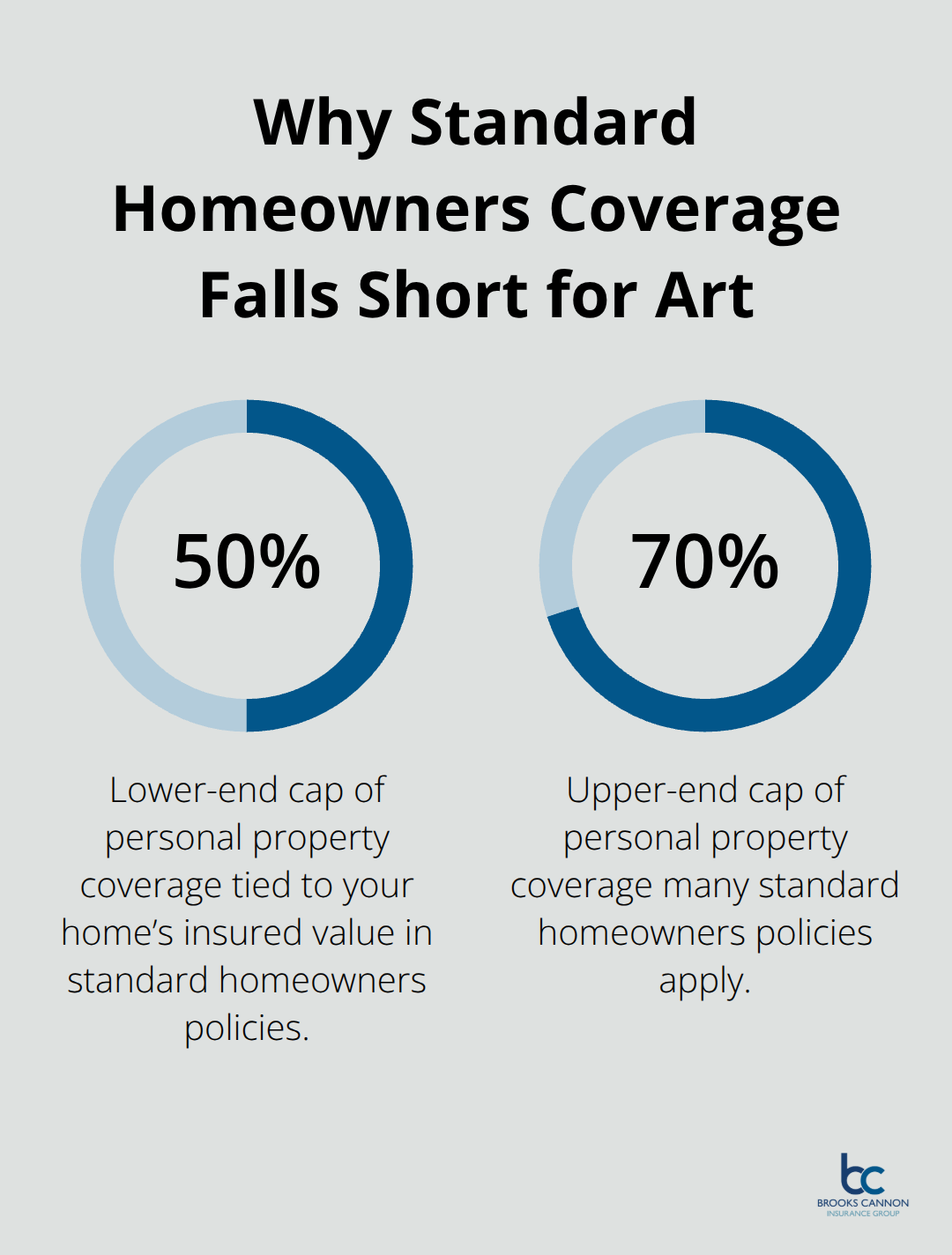
Standard homeowners policies impose severe restrictions on art collections that make them practically useless for protecting valuable pieces. Most homeowners policies cap personal property coverage at 50 to 70 percent of your home’s insured value, and they typically limit coverage for individual items to $1,500 to $2,500 regardless of actual worth. The Insurance Information Institute reports that homeowners policies exclude or severely limit coverage for high-value items like fine art, requiring separate scheduling. If your Dallas collection includes pieces worth $5,000 or more each, your standard policy likely provides insufficient protection and leaves you exposed to substantial financial loss.
Additionally, homeowners policies pay actual cash value rather than replacement cost for damaged art, meaning your insurance company deducts depreciation even if you purchased the piece decades ago at a much lower price. Theft coverage under standard policies also comes with strict limitations, and many policies require proof of purchase or appraisal documentation that most collectors haven’t organized. We’ve encountered collectors who believed their homeowners policy covered their art only to discover after a loss that coverage was inadequate or nonexistent.
Fine Art Insurance Eliminates Coverage Gaps
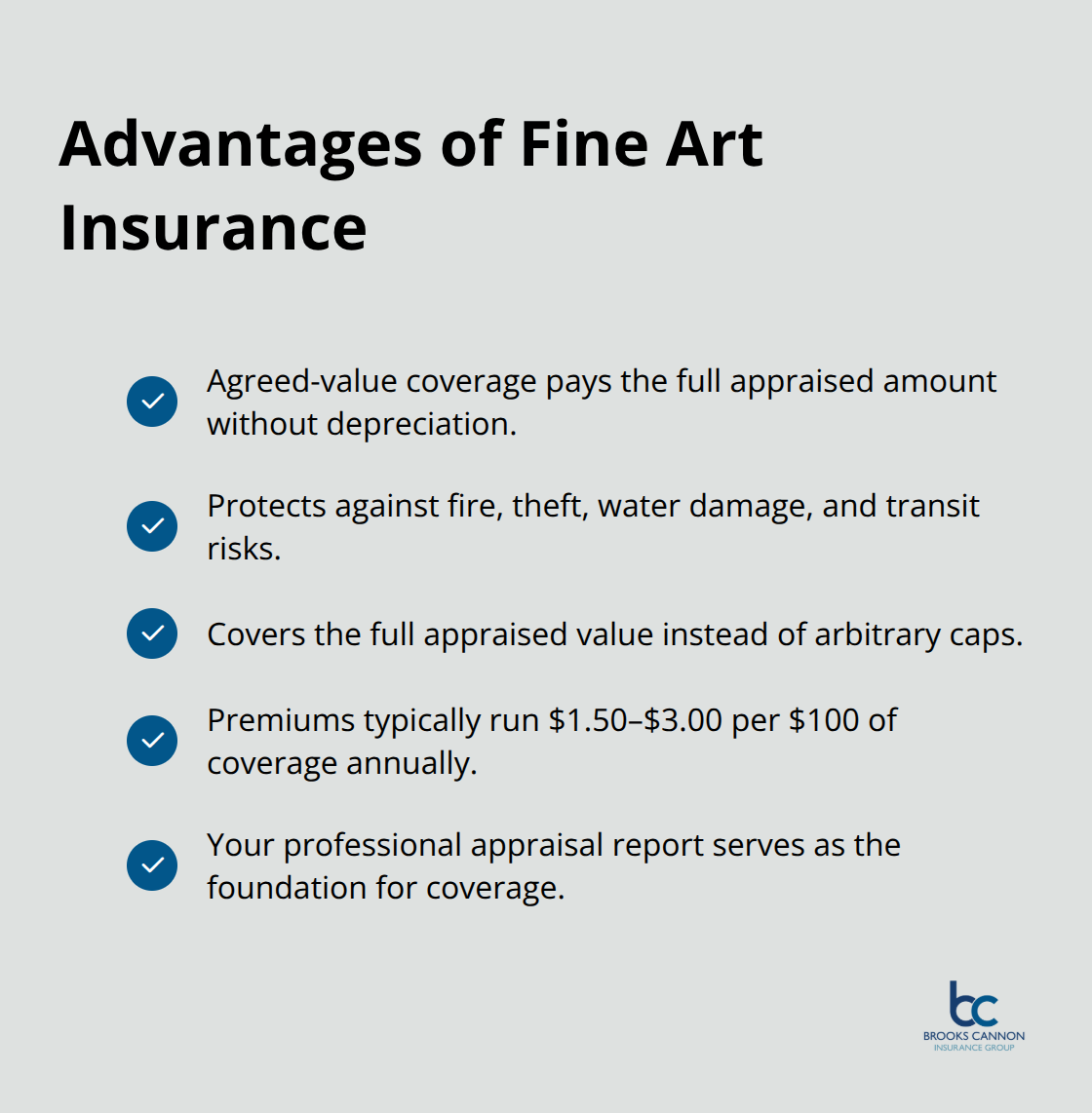
Fine art insurance policies eliminate these gaps through coverage specifically designed for collections. These specialized policies offer agreed-value coverage, meaning the insurance company accepts your appraiser’s valuation and pays that full amount if damage or theft occurs without deducting depreciation. Fine art policies typically cover damage from fires, theft, water damage, and transit damage if you move pieces between locations or loan them to galleries.
Coverage limits extend to the full appraised value rather than arbitrary caps, and premiums typically range from $1.50 to $3.00 per $100 of coverage annually depending on your collection’s total value and security measures. The key advantage is that your detailed appraisal report becomes the foundation for this coverage, eliminating disputes about value after a loss happens.
Working with an Independent Agency for Specialized Coverage
As an independent insurance agency based in Dallas, Brooks Cannon Insurance Group works with multiple carriers to match your specific collection needs with appropriate fine art policies. Our team reviews your appraiser’s documentation and coordinates coverage that reflects your collection’s true market value, helping you avoid both underinsurance and overpaying for unnecessary limits. Your appraiser’s detailed findings form the basis for comprehensive protection tailored to your collection’s unique characteristics and value.
Final Thoughts
Art collection valuation through professional appraisal creates the foundation for insurance coverage that actually protects your investment. The three-part process-professional assessment, comparative market analysis, and condition documentation-transforms your collection from an unverified asset into a precisely documented portfolio. Market values shift constantly, especially for contemporary artists, so you should obtain updated appraisals every three to five years to keep your coverage aligned with current reality.
Standard homeowners policies cap individual item coverage at $1,500 to $2,500, leaving valuable pieces completely unprotected when losses occur. Fine art insurance eliminates this gap by accepting your appraiser’s valuation and providing agreed-value coverage that pays the full amount if damage or theft happens. This specialized protection reflects what your collection actually costs to replace rather than forcing you to absorb the difference between inadequate coverage and real market value.
Contact a certified appraiser through the American Society of Appraisers to get your collection professionally valued. Once you have that detailed appraisal report, reach out to Brooks Cannon Insurance Group to explore fine art insurance options tailored to your specific needs and budget. As an independent agency based in Dallas, we work with multiple carriers to find coverage that matches your collection’s true value.
Disclaimer: The information provided in this blog is for general informational purposes only and does not constitute legal, financial, or insurance advice. Coverage options, terms, and availability may vary. Please consult with a licensed professional for advice specific to your situation