

Many Dallas business owners believe workers compensation requirements don’t apply to their operation. This misconception costs them thousands in penalties and exposes their company to serious legal trouble.
At Brooks Cannon Insurance Group, we’ve seen firsthand how gaps in coverage damage businesses. The good news is that understanding your workers compensation Dallas obligations takes just a few minutes.
Why Business Owners Miss Workers Compensation Requirements
The Size Misconception
Many Dallas business owners operate under outdated assumptions about who actually needs workers compensation coverage. The Texas Department of Insurance doesn’t make this optional for most operations, yet owners routinely skip it based on faulty logic. One of the biggest culprits is the belief that workers compensation only applies to large corporations with hundreds of employees. This couldn’t be further from the truth. Private employers have different workers compensation requirements depending on their circumstances, particularly if they contract with government entities.
The only real exemptions are sole proprietors with no employees and certain agricultural operations. What makes this worse is that business owners often confuse workers compensation requirements with federal OSHA standards, thinking they’re the same thing. They’re not. Missing OSHA compliance and missing workers compensation coverage are two separate violations that both carry penalties.
The Cost Reality Check
The second major oversight stems from underestimating what a single workplace injury actually costs. A worker hospitalized for a serious back injury can generate medical bills exceeding $50,000 within weeks. Without workers compensation coverage, you’re personally liable for those bills, lost wages, and potential additional damages if an employee sues.
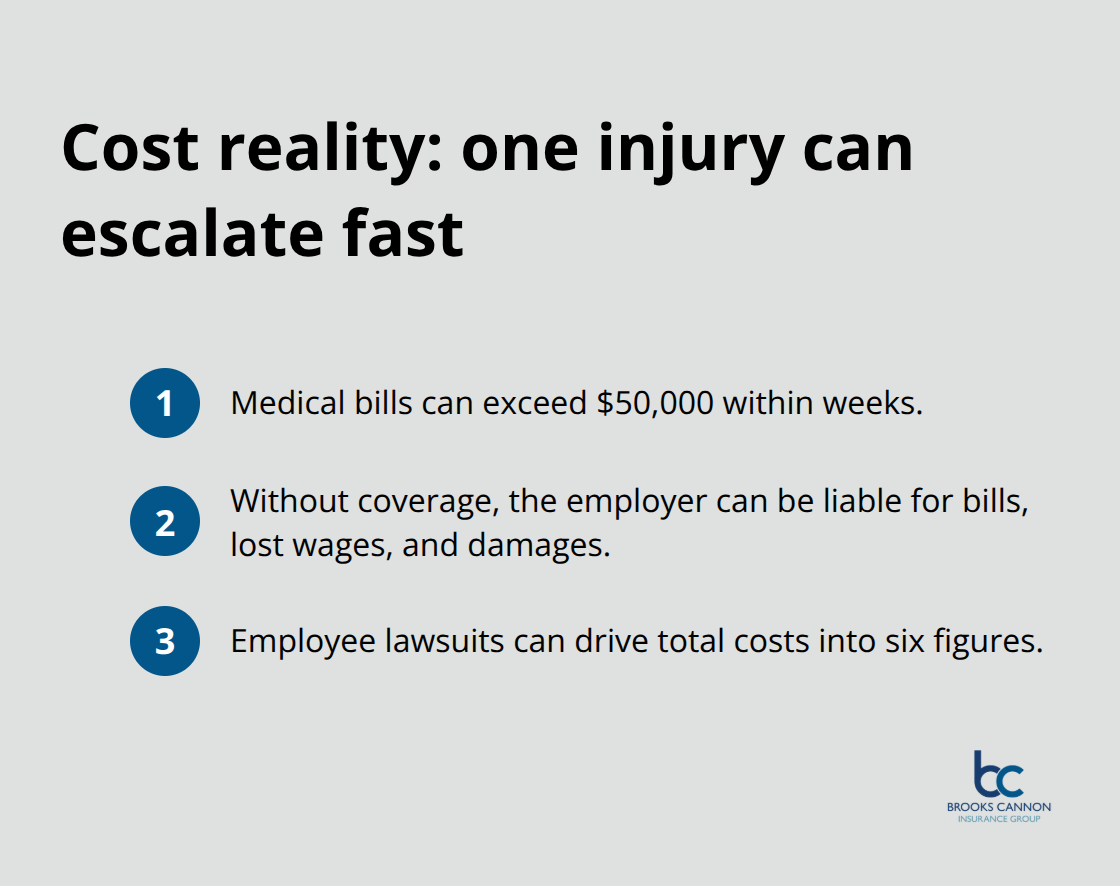
Texas allows injured workers to sue their employers directly if coverage isn’t in place, which opens the door to settlements reaching six figures. Many owners think they’ll self-insure or handle claims out of pocket, but one significant injury bankrupts that strategy instantly. The financial impact extends beyond immediate medical costs too. An injured employee filing a lawsuit means legal fees, lost productivity, and potential business disruption that can stretch across months.
Why Delays Create Danger
Some owners postpone purchasing coverage, thinking they’ll add it next quarter or after the busy season ends. That delay creates a dangerous gap where one accident becomes a catastrophic financial event. The reality is that workers compensation premiums for small Dallas businesses typically range from $500 to $3,000 annually depending on your industry and payroll, making it far cheaper to carry coverage than to face the consequences of operating without it.
Understanding these gaps in coverage is only half the battle. The legal consequences of operating without proper workers compensation protection extend far beyond financial exposure.
What Happens When Dallas Businesses Skip Workers Compensation
State Penalties Add Up Fast
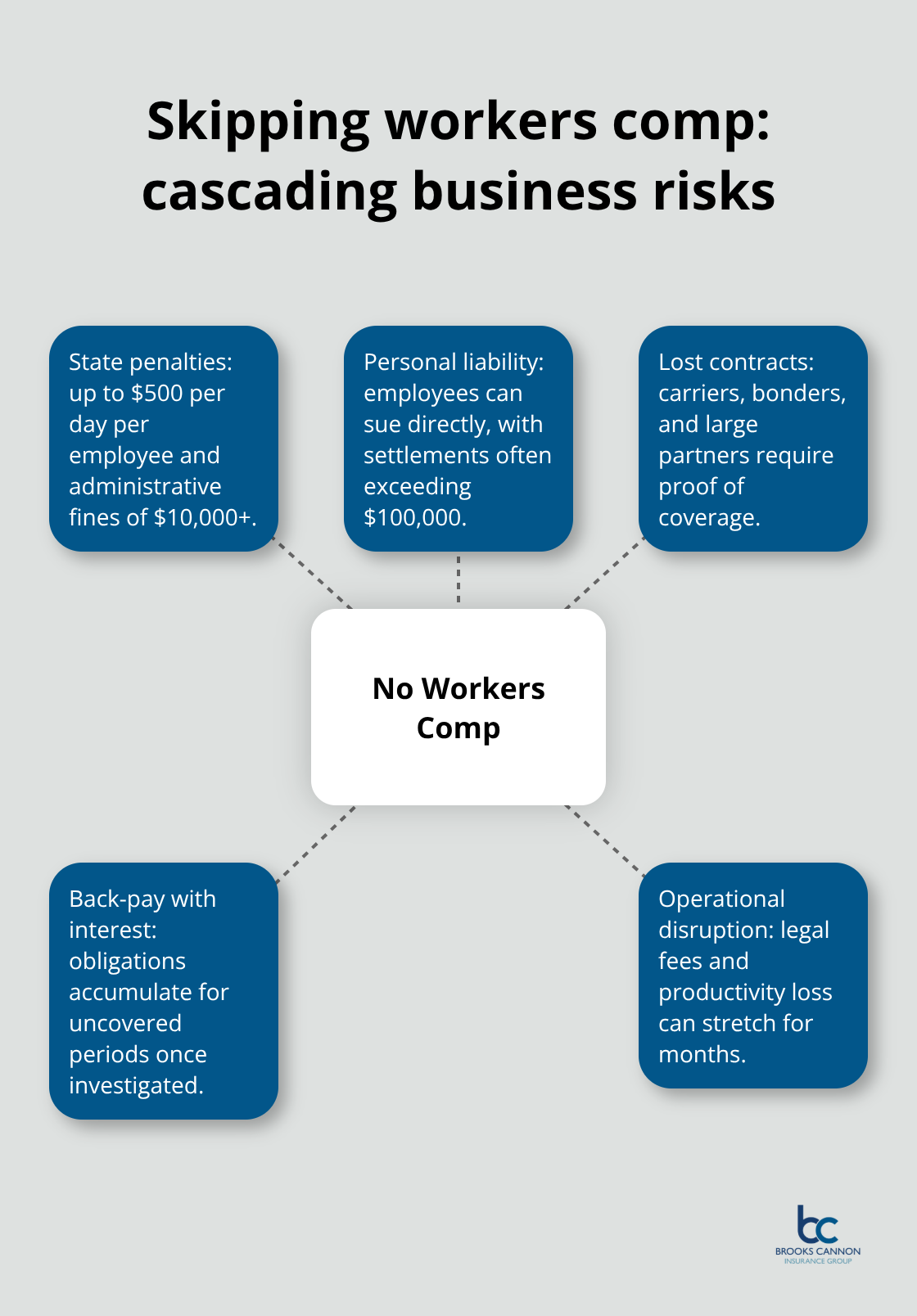
Texas imposes strict financial penalties on businesses operating without workers compensation coverage. The Texas Department of Insurance can fine employers up to $500 per day for each employee not covered, meaning a business with five employees faces potential daily penalties of $2,500. These aren’t theoretical numbers-the state assesses them regularly against Dallas-area companies caught without proper coverage. Beyond daily fines, the state imposes administrative penalties reaching $10,000 or more for willful violations. Once the Texas Department of Insurance opens an investigation, the financial damage extends far beyond the initial fine. Back-payment obligations accumulate for all periods you operated without coverage, plus interest calculated from the date coverage should have begun.
Personal Liability From Employee Claims
If an employee files a workers compensation claim during an uninsured period, you become personally responsible for all medical expenses, rehabilitation costs, and wage replacement benefits that insurance would have covered. Texas workers can sue their employers directly when workers compensation coverage doesn’t exist, and juries in Dallas County take these cases seriously. An employee suffering permanent disability from a workplace injury can pursue damages for past and future lost wages, pain and suffering, and permanent impairment-settlements regularly exceed $100,000 and sometimes reach $500,000 or more depending on injury severity and the employee’s earning capacity.
Business Relationships and Contracts Disappear
Your business liability extends to third parties if an injured employee’s condition affects operations or client relationships. Losing major clients due to operational disruption or reputational damage compounds the financial disaster. Insurance carriers and bonding companies often require proof of workers compensation coverage before they’ll work with you, meaning an uninsured status disqualifies you from contracts, government bids, and partnerships with larger corporations. Your business becomes uninsurable in their eyes, effectively locking you out of growth opportunities while you’re simultaneously exposed to catastrophic financial loss from a single workplace incident.
These financial and legal consequences make the cost of proper coverage look trivial by comparison. Understanding what coverage you actually need is the next critical step toward protecting your Dallas operation.
Getting Your Coverage Right
Texas Requirements Vary by Industry
Texas workers compensation rules differ dramatically by industry, and that variation explains why so many Dallas business owners misunderstand their obligations. Construction companies face stricter requirements than retail operations, and healthcare providers operate under different thresholds than manufacturing facilities. The Texas Department of Insurance sets requirements that vary by industry, with private employers who contract with government entities facing mandatory coverage obligations.
Construction businesses must carry coverage regardless of employee count because the state considers it too high-risk for exceptions. Retail and office-based businesses with just one employee still need coverage in most cases. The only way to know your exact obligation is to match your specific industry to state requirements, not guess based on what your competitor down the street carries.
Identify Your Actual Coverage Needs
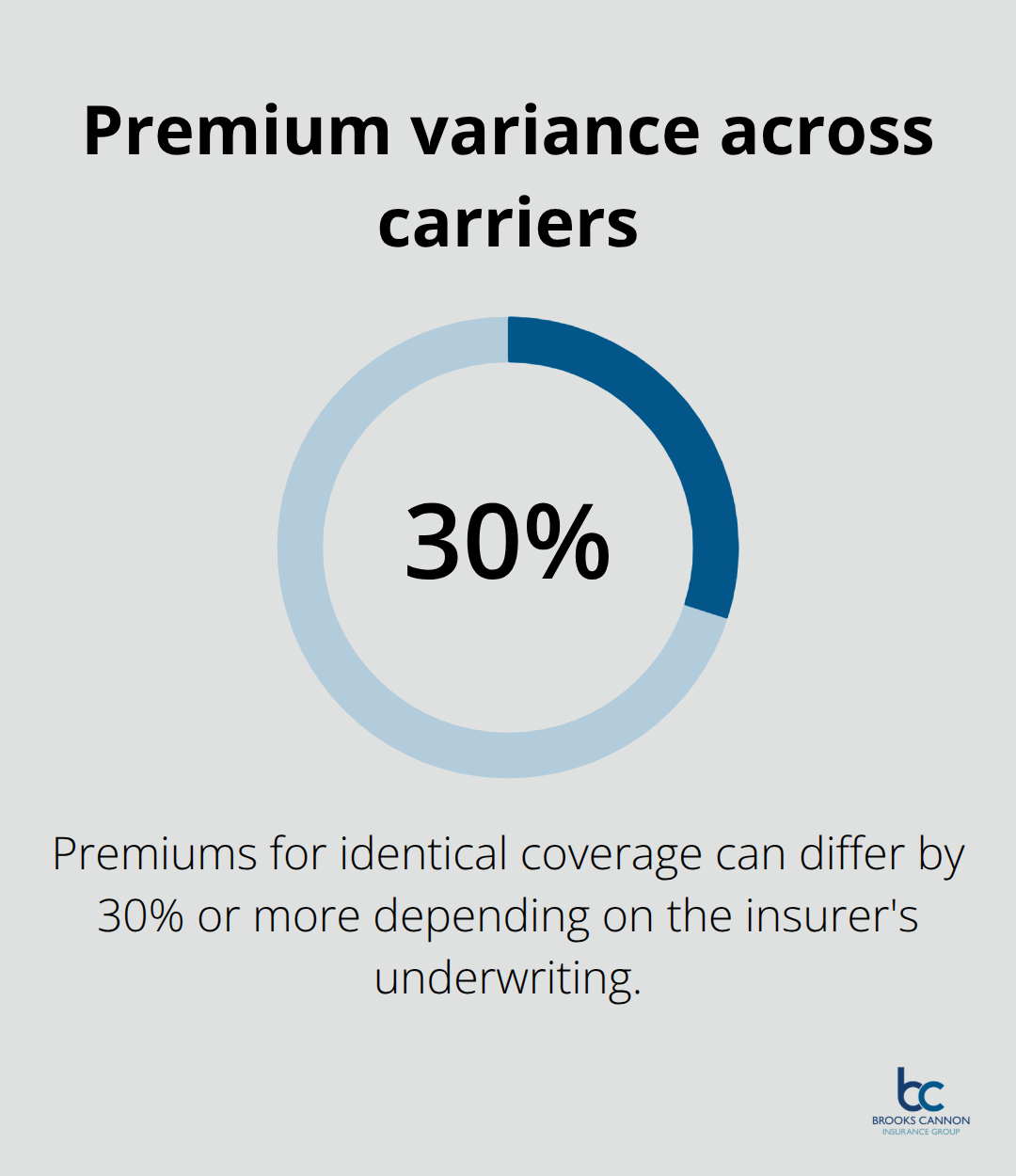
Three concrete factors determine your actual coverage needs: your current payroll, the specific tasks your employees perform, and your claims history. A business with $400,000 in annual payroll and no prior claims will have vastly different premium costs than one with $400,000 in payroll and a history of workplace injuries. Request quotes from multiple carriers because premiums for identical coverage can differ by 30 percent or more depending on the insurer’s underwriting approach.
Your experience modification rate (often called your “mod rate”) directly impacts your premium. A business that hasn’t had claims in five years qualifies for better rates than one with recent injury history. This rate reflects your actual safety record, not industry averages.
Prepare Documentation for Accurate Quotes
When you contact an insurance professional, have your payroll documentation, job descriptions, and any previous workers compensation records ready. This information determines your final premium and helps carriers assess your actual risk profile. Online quotes often miss industry-specific risk factors that dramatically affect your final premium, so treat them as starting points only, not definitive pricing.
The right policy matches your actual operations, not a generic template that sounds reasonable. Each Dallas business operates differently, and your coverage should reflect those differences.
Final Thoughts
Operating without workers compensation Dallas coverage exposes your business to penalties that start at $500 per day per employee and escalate quickly. The financial and legal consequences far outweigh the cost of proper protection, yet many business owners delay action because they’re uncertain about their specific requirements. Your next step is straightforward: contact an insurance professional who understands workers compensation requirements for your specific industry and will review your payroll, job descriptions, and operations to identify exactly what coverage you need.
An insurance professional accesses multiple carriers and negotiates rates based on your actual risk profile, often saving you hundreds annually compared to direct quotes. They handle the paperwork, manage renewals, and step in immediately if a claim occurs (protecting both your business and your employee when an injury happens). When you work with someone who understands the claims process, you eliminate the guesswork that leads most business owners astray.
At Brooks Cannon Insurance Group, we work with multiple top-rated insurance carriers to find coverage that matches your operation and budget. Contact Brooks Cannon Insurance Group to review your workers compensation coverage today. One conversation prevents the financial disaster that catches unprepared business owners off guard.
Disclaimer: The information provided in this blog is for general informational purposes only and does not constitute legal, financial, or insurance advice. Coverage options, terms, and availability may vary. Please consult with a licensed professional for advice specific to your situation