Most Dallas rental property owners think their homeowners insurance covers liability on investment properties. It doesn’t, and that gap costs investors thousands in legal fees and settlements every year.
At Brooks Cannon Insurance Group, we’ve seen landlord liability in Dallas become the most overlooked protection in rental portfolios. A single injury claim or property damage lawsuit can wipe out years of rental income if you’re uninsured.
What Happens When a Liability Claim Hits Your Rental Property
A Single Injury Claim Can Wipe Out Years of Profit
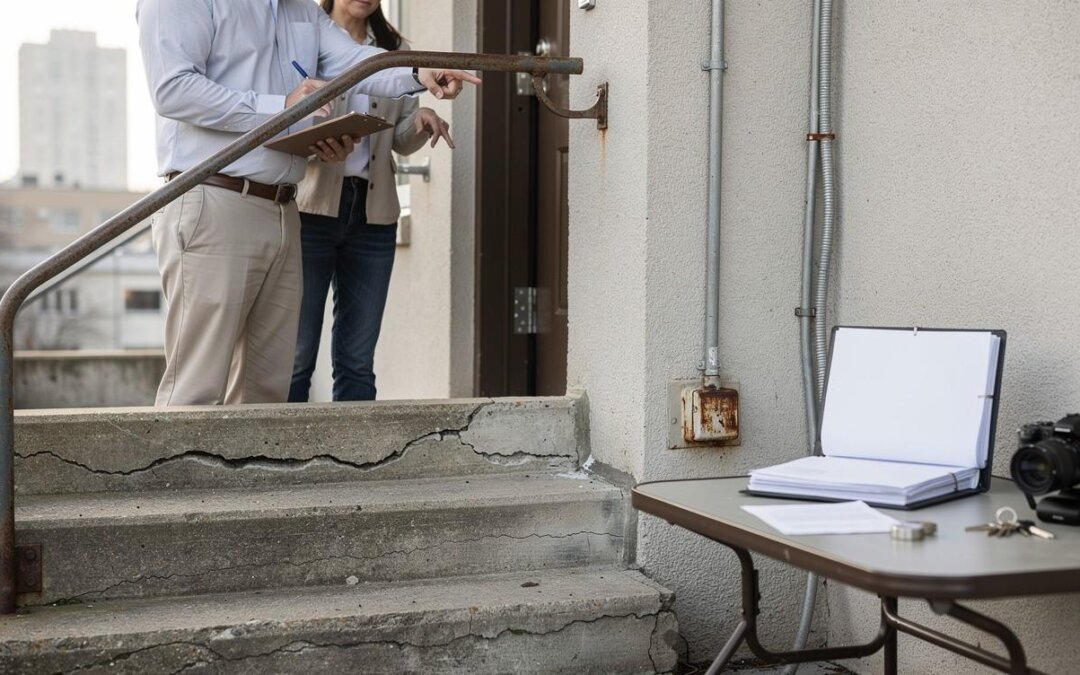
A tenant slips on your stairs and breaks their leg. The medical bills total $87,000, and they hire an attorney. Without landlord liability coverage, you pay every penny of that settlement plus your legal defense costs from your personal funds. Homeowners policies explicitly exclude investment properties, and insurance companies will deny your claim outright when you file. The average premises liability settlement in Texas ranges from $25,000 to $1,500,000, depending on whether the property is residential or commercial, and that figure excludes attorney fees, court costs, and lost rental income during litigation. A single uninsured claim consumes years of profit from your rental business. Legal defense alone runs $10,000 to $50,000 before a case reaches trial, and you pay this out of pocket while your property generates no income during the dispute.
Property Damage From Tenant Activities Creates Hidden Exposure
A guest causes a fire in your duplex, and the damage spreads to the adjacent unit you don’t own. You become liable for repairs to your neighbor’s property plus their lost rent. Without coverage, you write a check for $75,000 or more. Tenant activities that damage your building or neighboring properties create financial traps that most Dallas landlords underestimate. Your rental income disappears into legal battles and settlements before you even realize the exposure existed.
Medical Expenses From On-Property Injuries Multiply Quickly
Medical expenses from injuries on your property compound this exposure dramatically. A contractor falls through rotted flooring while making repairs, or a guest is injured by a pool or trampoline you failed to maintain properly. These incidents generate six-figure claims routinely. Property owners without adequate liability coverage absorb these costs directly, leaving your entire financial picture at risk. Creditors can pursue your personal assets if the judgment exceeds your policy limits, creating exposure far beyond your initial investment.
Coverage Limits Matter More for Multi-Unit Properties
Multi-unit buildings multiply your exposure with every additional tenant and guest on your property. A duplex or fourplex exposes you to liability claims from multiple households simultaneously, and standard coverage limits prove inadequate when multiple incidents occur. The complexity of managing liability across multiple units demands higher coverage thresholds than single-family rental investors typically carry. This exposure intensifies when you consider that each tenant brings their own guests, contractors, and service providers onto your property regularly. Understanding what landlord liability actually covers becomes the foundation for protecting your investment from these compounding risks.
What Landlord Liability Actually Covers
Landlord liability coverage protects you against the three financial threats that destroy rental portfolios faster than anything else: injuries on your property, damage caused by tenant activities, and the legal machinery that cranks into motion when someone gets hurt. When a tenant, guest, or contractor is injured at your rental property and files a claim, landlord liability pays their medical expenses, rehabilitation costs, and pain-and-suffering awards up to your policy limit. This coverage also handles property damage claims when tenant activities damage neighboring properties or common areas you’re responsible for maintaining. Without this protection, you’re personally liable for every dollar of these claims, and creditors can pursue your personal assets, your bank accounts, and your future wages to satisfy a judgment.
Legal Defense Costs Start Immediately
The legal defense component matters just as much as the damage payout itself. Insurance carriers cover your attorney fees, court costs, and expert witnesses from day one of a claim, not just if you lose the case. This means legal defense costs don’t come from your pocket while you’re waiting months or years for a settlement decision. Most Dallas landlords dramatically underestimate how quickly legal defense costs in premises liability claims accumulate, and many discover too late that their coverage limits don’t account for both defense costs and settlement amounts running simultaneously.
Coverage Limits Must Match Your Property Type and Tenant Count
Standard landlord liability policies in Texas typically offer $300,000 to $1,000,000 in coverage, but this baseline doesn’t account for the complexity of your specific rental business. A single-family home in a Dallas suburb presents vastly different exposure than a fourplex in an urban neighborhood or a property with a pool or trampoline on the grounds. Insurance underwriters evaluate your risk based on the number of units, the number of occupants per unit, the age of the building, and the presence of high-liability features like pools or water features. A duplex or fourplex multiplies your exposure because multiple households mean multiple guests, contractors, and service providers enter your property regularly, each representing a potential injury claim. If you manage multiple properties across the Dallas area, your total liability exposure compounds across all locations, and a single catastrophic claim at one property could exhaust your per-property limit while other properties remain unprotected.
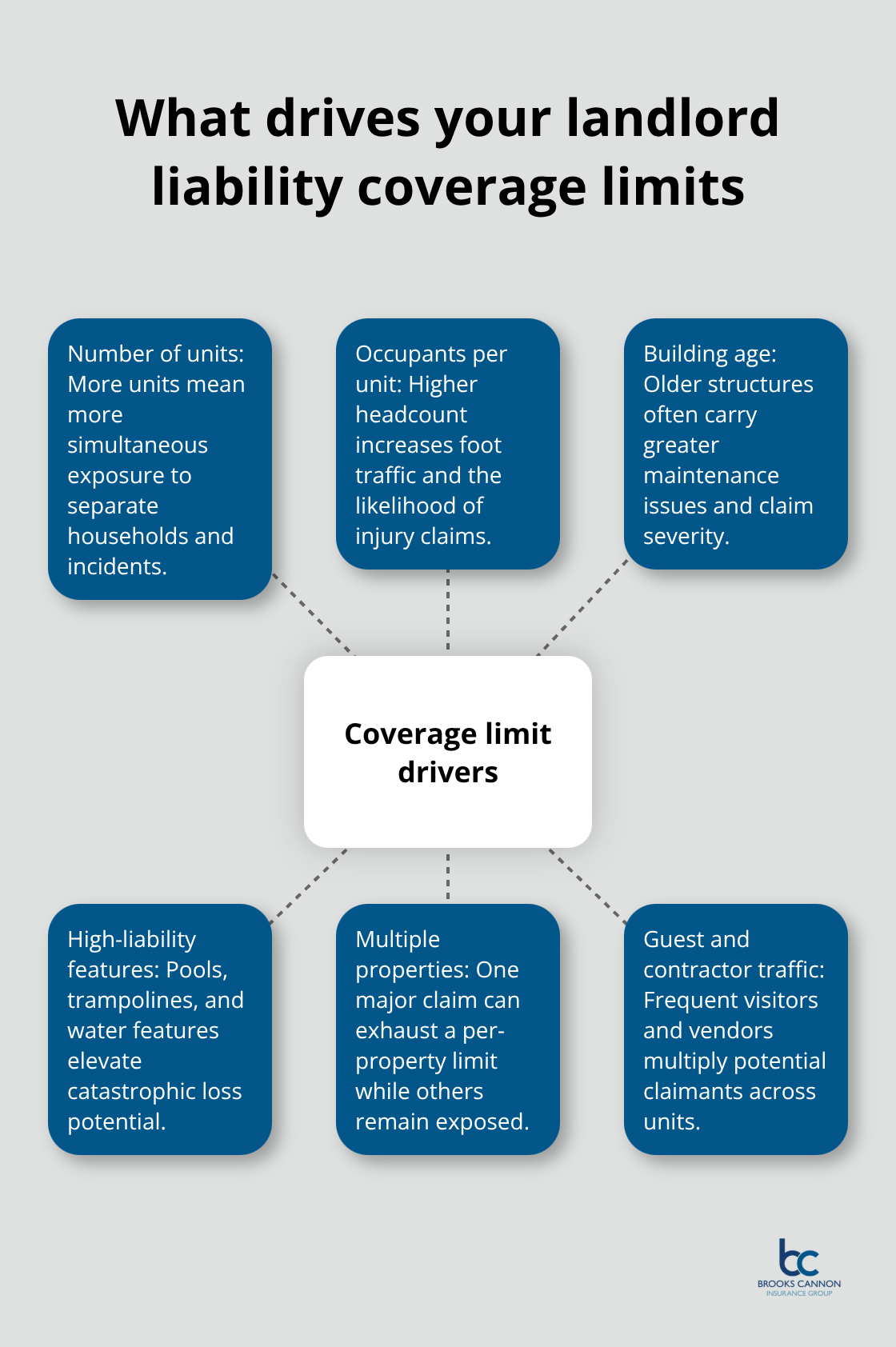
Landlords with multi-unit properties or properties with additional liability hazards should carry minimum limits of $500,000 to $1,000,000, depending on local market conditions and the specific characteristics of each building.
Standard Policies Exclude Critical Claims
Landlord liability policies explicitly exclude certain types of claims, and Dallas investors who misunderstand these gaps end up financially exposed exactly when protection matters most. Intentional acts never receive coverage, meaning if you knowingly allow unsafe conditions to persist, the insurer will deny your claim and you’ll pay out of pocket. Policies also exclude claims arising from your own negligence in maintaining the property, though this exclusion varies significantly between carriers and policy forms. Worker’s compensation claims from employees fall outside landlord liability because those require separate workers compensation insurance. Sexual abuse and molestation claims often fall outside standard landlord liability policies, requiring separate endorsements or specialized coverage that most Dallas landlords don’t know to purchase. Mold damage and mold-related claims are frequently excluded or severely limited in standard policies, creating significant exposure in Texas properties where moisture damage occurs regularly.
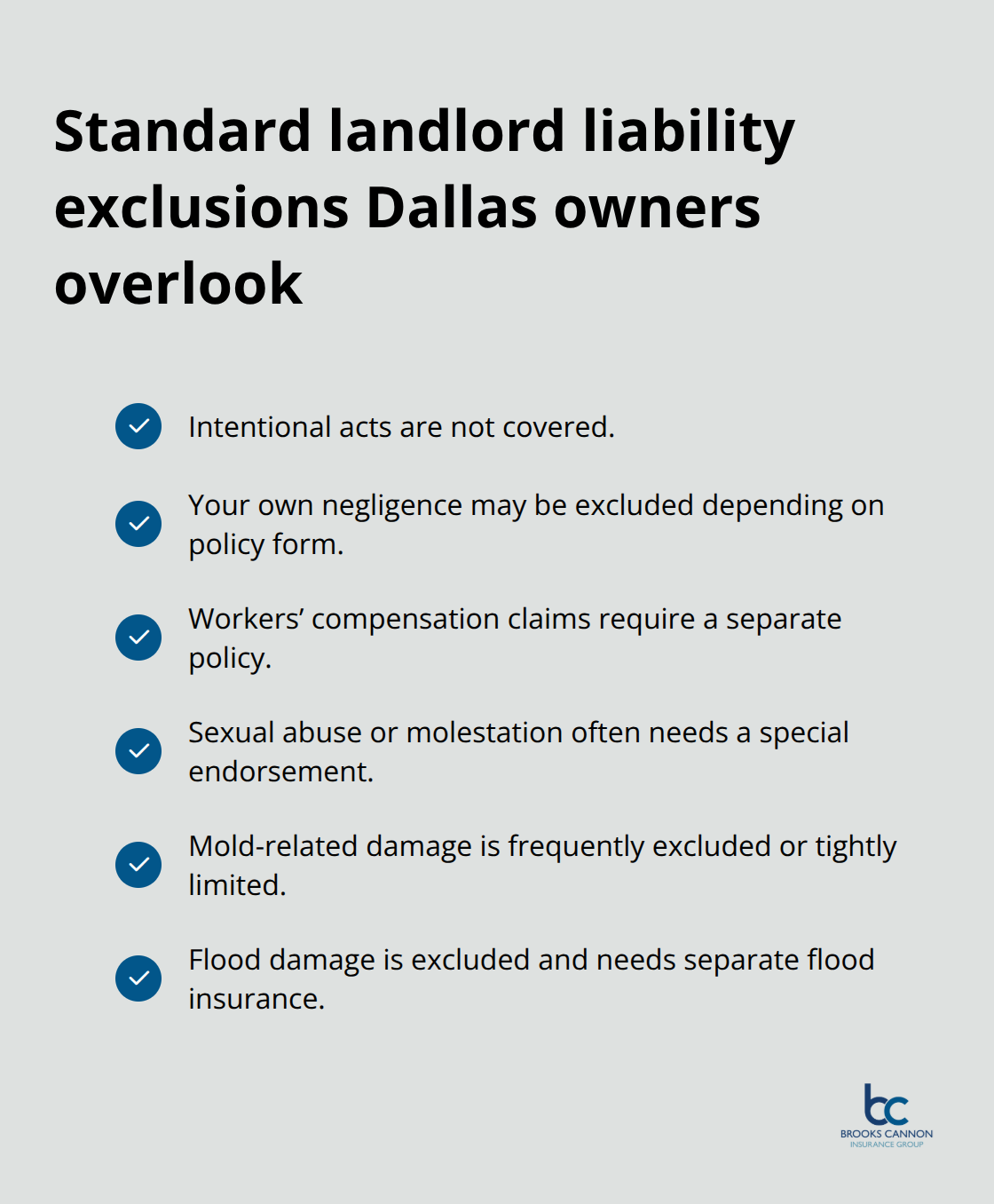
Flood damage is almost universally excluded from landlord liability policies, requiring separate flood insurance if your property sits in a high-risk flood zone.
Gaps Between What You Think You’re Covered For and What You Actually Are
Understanding exactly what your policy excludes prevents the devastating discovery that you’re uninsured for the specific claim you’re facing. Many landlords assume their coverage extends to situations it simply doesn’t, and this misalignment between expectations and actual protection creates the blind spots that cost investors thousands. The difference between adequate coverage and inadequate coverage often comes down to whether you’ve had a detailed conversation with an insurance professional who understands rental property exposure. As an independent agency, Brooks Cannon Insurance Group works with multiple top-rated insurance carriers to identify coverage options that address the specific gaps in your rental portfolio. Your next step involves reviewing your current policy against the exclusions and limitations that actually apply to your properties.
Common Gaps Dallas Landlords Miss in Their Coverage
Homeowners Policies Explicitly Exclude Rental Properties
Your homeowners policy will not cover your rental property, yet this remains the single biggest coverage mistake Dallas investors make. Homeowners policies explicitly exclude rental properties, and insurance companies deny claims on investment properties outright during underwriting or claims investigation. This gap matters because many landlords purchase their first rental property, assume their existing homeowners coverage extends to it, and never discover the exclusion until a claim forces the issue. The Texas Department of Insurance receives complaints from property owners who believed they were covered only to learn their claim was denied because the property was rented. Your homeowners insurer will investigate your claim and determine whether the property was occupied as a rental at the time of loss. If it was, they deny everything, leaving you personally liable for the full amount. This isn’t ambiguous or negotiable-your homeowners policy simply does not cover rental properties under any circumstances.
Multi-Unit Buildings Demand Higher Coverage Limits Than Single-Family Homes
Multi-unit buildings create exposure that grows with every additional unit you add to your portfolio, yet most Dallas landlords carry coverage limits designed for single-family homes. A fourplex exposes you to injury claims from four separate households, plus their guests, contractors, and service providers. Each tenant brings different traffic patterns, maintenance demands, and liability risks. If one injury claim exhausts your policy limit, your other three units remain unprotected against future claims that same year. Texas property managers managing multiple units typically carry higher coverage limits, yet many still default to standard limits that prove inadequate when multiple claims occur in the same policy period. Underinsuring multi-unit properties is not cautious-it’s gambling with your financial future.
Pools and Trampolines Create Catastrophic Liability Exposure
Properties with pools, trampolines, or other attractive nuisances require separate endorsements or significantly higher limits because these features generate disproportionate injury claims. A child drowns in your pool, and the wrongful death settlement reaches substantial amounts easily. A teenager is paralyzed on your trampoline, and medical costs plus pain-and-suffering awards can exceed that figure substantially. Standard landlord liability policies often exclude these hazards entirely or impose coverage limits so low they’re essentially worthless. Dallas investors with pools or trampolines need explicit coverage specifically endorsing these features, with limits matching the catastrophic exposure they create.
Final Thoughts
The gap between what Dallas landlords think they’re covered for and what they actually are protected against costs investors thousands every year. Closing that gap requires a straightforward conversation with someone who understands rental property exposure and can match your coverage to your specific situation. We at Brooks Cannon Insurance Group work with multiple top-rated insurance carriers to build landlord liability Dallas coverage that addresses the real risks in your portfolio.
An independent agent reviews your current policies against the exclusions and limits that actually matter for your properties. This conversation identifies whether your homeowners policy incorrectly covers a rental unit, whether your multi-unit building carries adequate limits, and whether high-liability features like pools or trampolines have proper endorsements in place. Bundling landlord liability with property damage coverage and loss of rents protection creates a comprehensive shield for your investment (loss of rents coverage pays your mortgage and expenses when a covered loss makes your property temporarily uninhabitable).
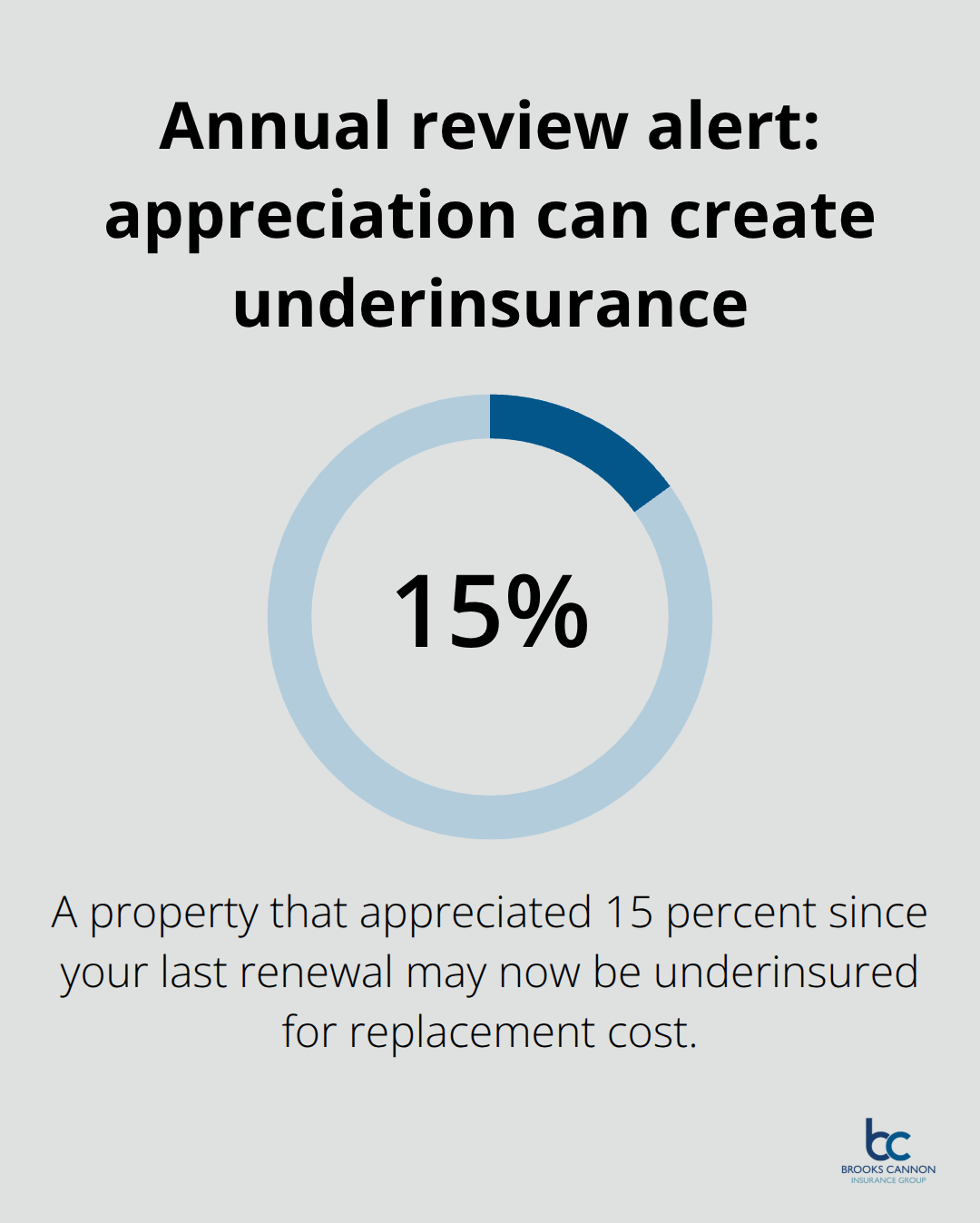
Your coverage needs change as your properties appreciate and your rental income grows. Annual reviews with your agent catch these shifts before they create gaps in protection, and a property that appreciated 15 percent since your last policy renewal may now be underinsured for replacement cost.
Contact Brooks Cannon Insurance Group to review your landlord liability coverage and identify the gaps that could cost you everything.
Disclaimer: The information provided in this blog is for general informational purposes only and does not constitute legal, financial, or insurance advice. Coverage options, terms, and availability may vary. Please consult with a licensed professional for advice specific to your situation