
Most builders in the Dallas area start their projects without realizing their builders risk timeline is already behind schedule. We at Brooks Cannon Insurance Group see this mistake repeatedly-coverage that begins too late leaves materials, equipment, and work-in-progress exposed to theft, weather damage, and liability claims.
Getting your policy active before the first nail goes in isn’t optional. It’s the difference between protecting your investment and facing thousands in uninsured losses.
When Should Coverage Start
The moment materials arrive at your job site, your builders risk coverage needs to be active. We at Brooks Cannon Insurance Group recommend binding your policy at least three to five business days before delivery begins, which gives you a buffer if documents need adjustment or questions arise. Many contractors wait until construction officially starts, but that’s a mistake that exposes your project to serious risk. Lumber, drywall, HVAC units, and electrical fixtures sitting on an uninsured property become targets for theft and weather damage. In Dallas, spring hail and summer storms hit quickly. 58 tornadoes were reported across eastern Texas, northern Louisiana and southern Arkansas due to the remnants of Hurricane Beryl, and North Texas sees large hail events regularly during construction season. Your materials aren’t protected under a homeowners policy or your general liability coverage, so an uninsured loss can wipe out thousands in materials before a single wall goes up. The policy effective date must align with the actual date materials are at risk or site work begins, not the date you sign paperwork two weeks later.
Why Effective Dates Matter More Than You Think
Understanding the difference between when you apply for coverage and when it actually starts is essential. Most ISO policy forms used by carriers like Zurich begin coverage either when materials arrive on site or when you become legally responsible for the property, whichever comes first. If your contract states you own materials once they’re delivered, your coverage must start on that delivery date. If the lender requires coverage before releasing construction funds, you need the policy bound before the draw request. Dallas lenders consistently require active builders risk before releasing any construction money, and they often name themselves as loss payee on the policy. Missing this timing means the lender won’t release funds, which halts your project immediately.
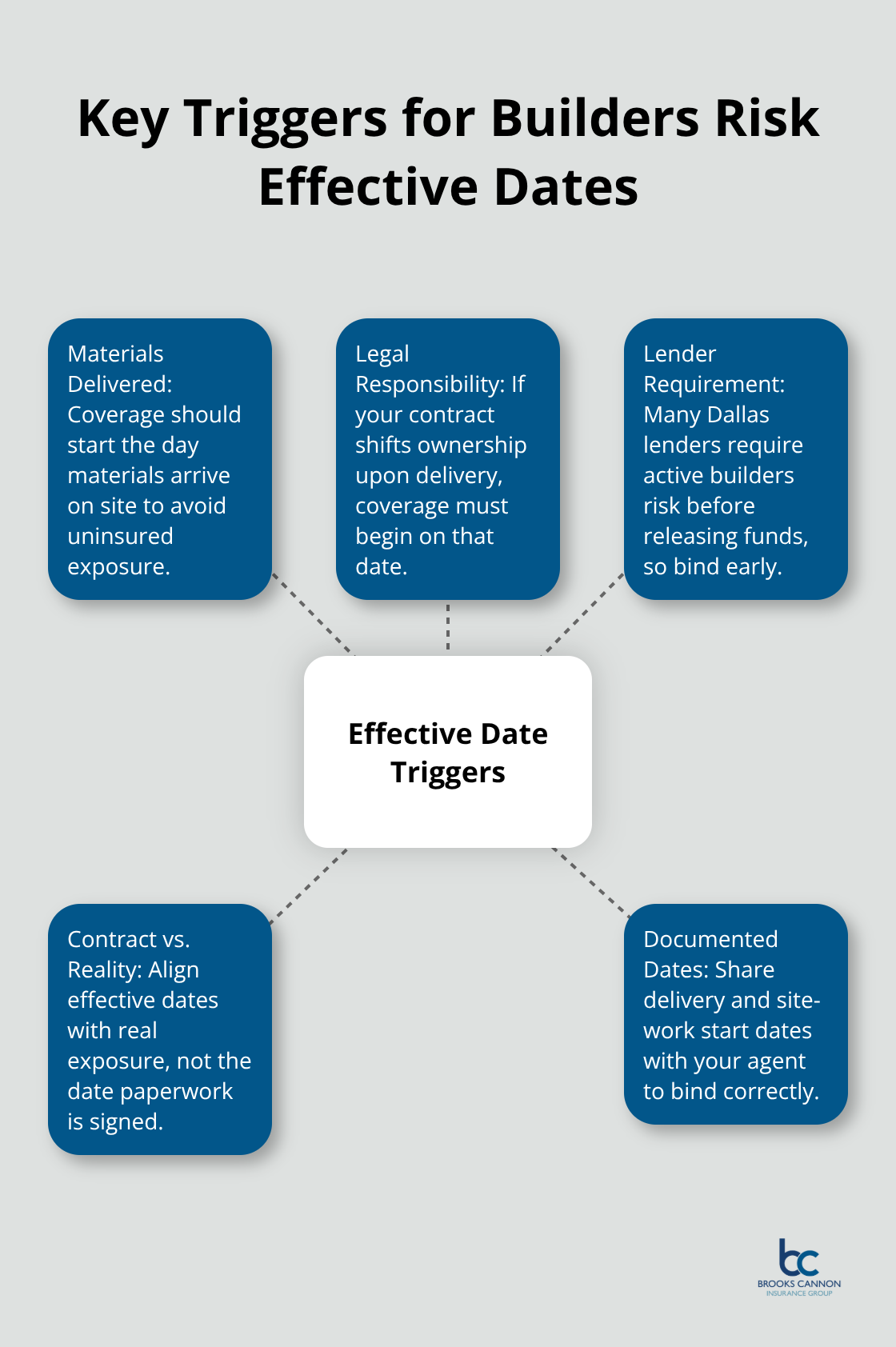
Document the exact date materials will arrive and the date site work begins, then provide both dates to your insurance agent so the policy effective date matches reality, not a guess.
Common Gaps That Derail Projects
Contractors often purchase builders risk coverage after materials have already been delivered or partially unloaded, creating a coverage gap of days or even weeks. If theft or weather damage occurs during that gap, you pay out of pocket. Another frequent problem is misalignment between the policy effective date and the construction contract date. Your contract might require coverage to start on the first of the month, but materials arrive on the fifteenth. The policy effective date must match when your actual exposure begins, not when the contract says construction officially starts. A third mistake is failing to notify your agent of schedule changes. If your project gets delayed by two months due to permit issues, your original coverage timeline no longer matches your construction timeline. Policies typically cover three to twelve months depending on project size, and if your timeline shifts, you need to adjust the policy end date or extend coverage. Contact your agent at least thirty days before the policy expires to arrange an extension or renewal, giving the carrier time to approve and bind the updated coverage without gaps.
What Happens When Coverage Ends
Understanding when your builders risk policy terminates is just as important as knowing when it starts. Most policies end at the earliest of several triggers: when the property reaches occupancy (50% occupancy for residential multi-family, 75% for commercial), when ownership transfers to a new buyer, when the project is abandoned, or when the policy expires. Under ISO form 40471, coverage ends within 90 days after initial occupancy unless exceptions apply. Under form 40660, coverage ends 60 days after the property is placed to its intended use.
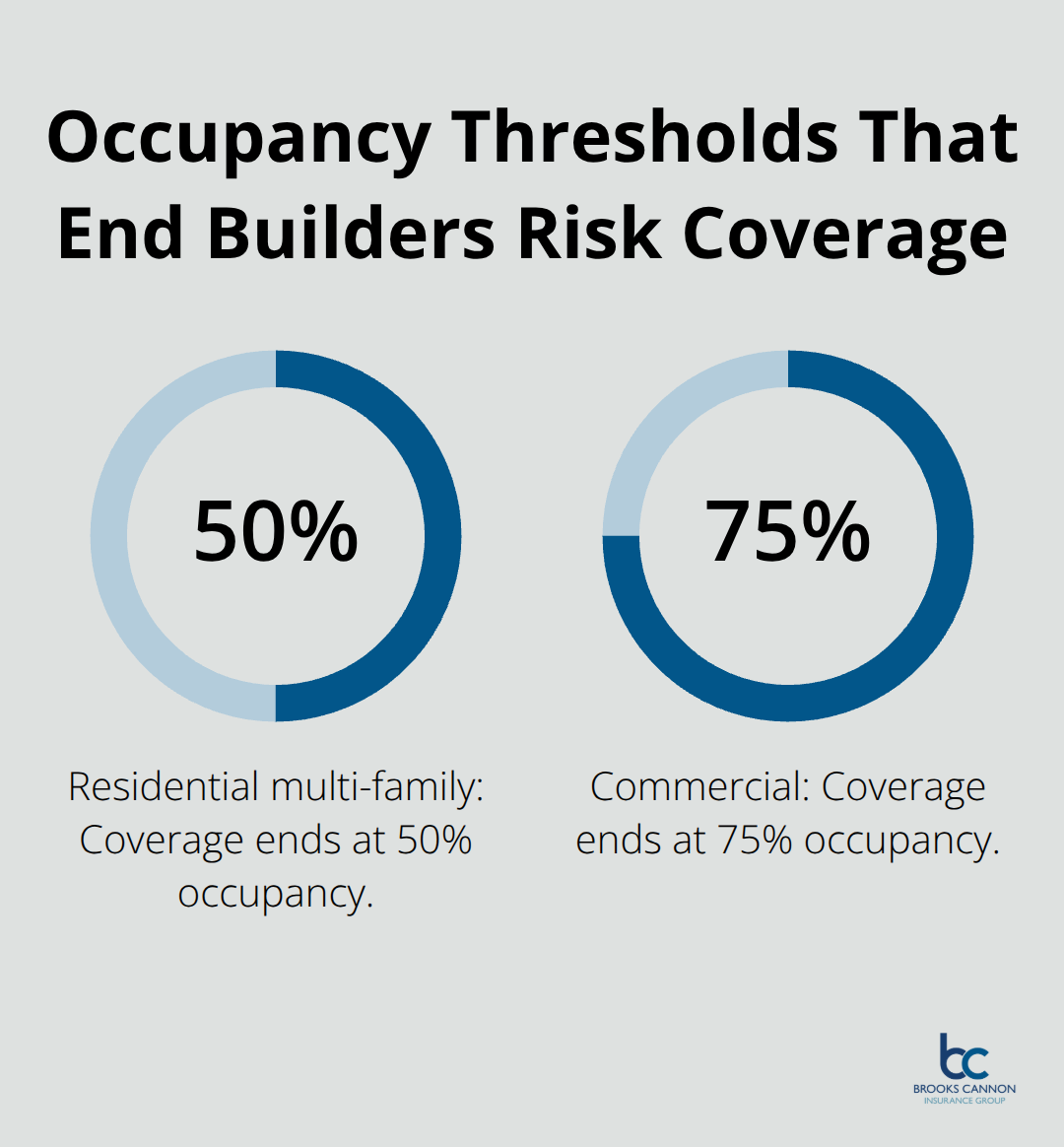
If a completed home’s ownership transfers to a new buyer, coverage ends immediately, and the new owner must obtain permanent homeowners insurance. A commercial warehouse near completion ends coverage once the tenant begins storing goods and the property is put to its intended use. These end-date rules prevent coverage from extending indefinitely, so you must coordinate with your agent to transition to permanent property coverage before the builders risk policy lapses.
What Your Coverage Protects During Construction
Foundation and Framing: Your Most Vulnerable Phase
Foundation and framing represent the most vulnerable phase of any residential or commercial project in the Dallas area. During this stage, your builders risk policy covers the structural skeleton of the building as it takes shape, protecting against wind damage, theft of materials, and weather-related losses that can halt progress for weeks. In North Texas, spring hail events and summer storms pose real threats to exposed framing. Your policy covers the cost to repair or replace damaged framing members, sheathing, and temporary protective coverings installed to shield the structure during construction. If a hail event damages roof decking before permanent roofing is installed, your builders risk policy pays for replacement, not your general liability coverage.
The protection extends to temporary structures on site, such as job trailers, material storage sheds, and scaffolding systems. These temporary installations are often overlooked by contractors who assume general liability will cover them, but it won’t. Your builders risk policy specifically includes these temporary assets, which is critical because a single theft of scaffolding or a job trailer can cost $5,000 to $15,000 to replace.
Materials and Equipment: Constant Exposure Demands Active Coverage
Materials and equipment sitting on your property represent significant cash exposure before installation occurs. Lumber, HVAC units, electrical fixtures, plumbing supplies, and windows stored on site are covered under your builders risk policy as long as the policy is active and materials are documented in your reporting. If you’re using a reporting form policy, you must report inventory within five days of the policy effective date-delay in reporting creates a gap in protection. Theft of materials ranks among the most common claims in the Dallas area, and construction material theft rates remain steady throughout the year.
Your policy covers materials in transit to the site and materials stored in off-site locations (such as a contractor’s warehouse or supplier yard) as long as those locations are identified on the policy. Many contractors don’t realize this coverage exists and assume they’re unprotected once materials leave the job site. Equipment like generators, compressors, and power tools sitting on site are also covered, but portable tools under $500 are often excluded unless you purchase a higher sub-limit. Document serial numbers and take photos of valuable equipment to simplify the claims process if theft occurs.
The Critical Transition to Permanent Coverage
Final inspection and the transition to permanent homeowners or commercial property insurance happen once the structure reaches occupancy or the building is ready for use. Under ISO form 40471, coverage ends within 90 days after initial occupancy unless you negotiate an exception with your carrier. This means a completed home with a new family living inside is no longer protected by builders risk after 90 days, and the homeowners policy must take over before that deadline. Coordinate with your lender and the new owner’s insurance agent to confirm permanent coverage binds before the builders risk policy lapses.
For commercial properties, coverage ends 60 days after the property is placed to its intended use, such as when a tenant begins moving goods into a completed warehouse. Missing this transition window leaves the property uninsured for days or weeks, which creates exposure to theft, vandalism, or weather damage during the critical handoff period. Your next step involves understanding how project duration, weather patterns, and permit schedules affect your coverage timeline and when you need to adjust your policy to match your actual construction schedule.
How Project Timelines, Weather, and Permits Shape Your Coverage Needs
Your builders risk coverage timeline shifts the moment construction delays, seasonal weather patterns, or permit inspection schedules alter your actual exposure window. In Dallas, a project originally scheduled for six months can stretch to nine months due to permit delays or material backlogs, which means your initial policy term no longer matches your construction reality. When you purchase a six-month builders risk policy expecting completion by month six, but inspections delay your final sign-off until month nine, your coverage expires before your project finishes. At that point, you face either an uninsured gap or rush extension fees that inflate your costs. Project duration directly determines your policy term length. A $250,000 residential remodel typically needs six months of coverage, while a $1 million commercial build requires twelve months. Add one to two months of buffer time to your estimated completion date when you purchase your initial policy term. This buffer accounts for permit delays, weather shutdowns, and inspection scheduling issues that routinely extend Dallas projects beyond their original timeline.
Extending Coverage Before Expiration
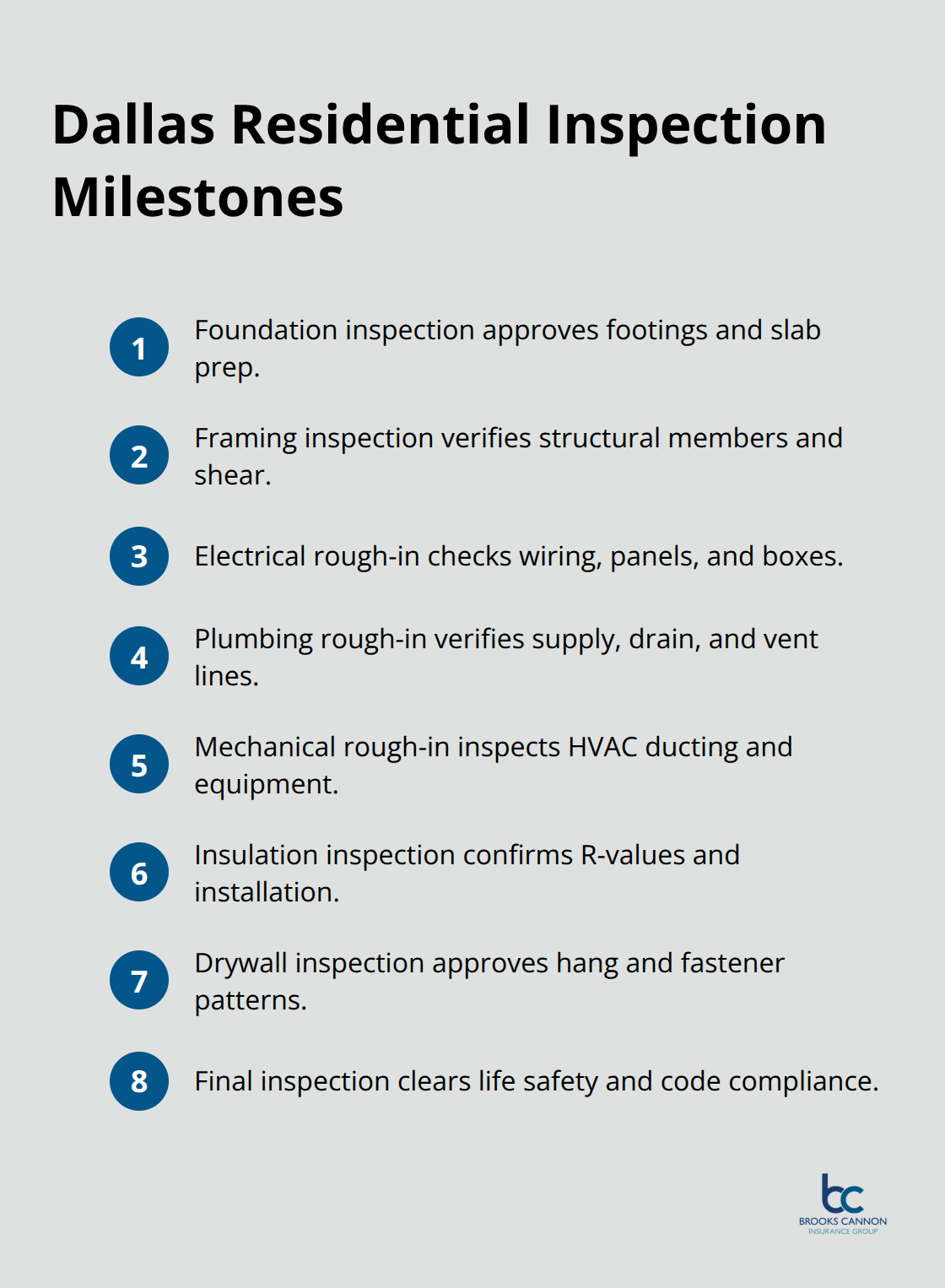
If your project runs longer than expected, contact your insurance agent at least thirty days before your policy expires to arrange an extension. Most carriers approve extensions through underwriting, but waiting until the final week creates unnecessary risk and higher costs. Permit requirements and inspection schedules often drive project delays that contractors underestimate when setting coverage timelines. A Dallas residential project requires multiple inspections: foundation, framing, electrical rough-in, plumbing rough-in, mechanical rough-in, insulation, drywall, and final. Each inspection can be delayed by inspector availability, contractor scheduling conflicts, or code violations that require rework. A single failed framing inspection that requires structural corrections can delay your project by two to four weeks.
Weather Seasonality and Coverage Demands
Weather seasonality in North Texas directly impacts both your coverage needs and your project timeline. Spring and early summer bring tornado and hail risk that can destroy framing and materials, forcing costly repairs and schedule delays. NOAA recorded 118 tornadoes across Texas in 2023, with North Texas experiencing large hail events regularly during construction season. If your project timeline spans March through June, your builders risk policy must account for the increased severity of weather-related claims during that window. Contractors who start framing in April and plan to close walls by June face genuine hail exposure that demands active coverage throughout that period.
Commercial Projects and Extended Timelines
Commercial projects face even longer inspection cycles and permit approval timelines than residential work. Your coverage must remain active through every inspection phase, not just the original completion date. Build your policy term around the longest realistic timeline, not the optimistic one, because an expired policy during a delayed final inspection leaves your nearly completed structure unprotected from theft, vandalism, and weather damage.
Final Thoughts
Your builders risk timeline determines whether your project stays protected from start to finish or faces costly gaps in coverage. The timing mistakes we see repeatedly in Dallas come down to three core issues: starting coverage too late, misaligning policy end dates with actual project completion, and failing to extend coverage when schedules slip. Each of these errors leaves your materials, equipment, and structure exposed to theft, weather damage, and liability claims that your general liability or homeowners policy won’t cover.
Before breaking ground, sit down with your insurance agent and map out your actual construction schedule, not the optimistic one. Include permit inspection timelines, seasonal weather risks, and realistic completion dates. Your policy effective date must match the day materials arrive on site or site work begins, not the day you sign paperwork, and your policy end date must account for permit delays, inspection scheduling, and the transition window to permanent coverage.
If your project timeline shifts by more than a few weeks, contact your agent immediately to arrange an extension rather than waiting until the policy expires. We at Brooks Cannon Insurance Group work with multiple carriers to find coverage that matches your specific project timeline and budget, and our team understands Dallas construction schedules, North Texas weather risks, and lender requirements that drive coverage decisions. Reach out to Brooks Cannon Insurance Group to review your builders risk timeline before your next project starts.
Disclaimer: The information provided in this blog is for general informational purposes only and does not constitute legal, financial, or insurance advice. Coverage options, terms, and availability may vary. Please consult with a licensed professional for advice specific to your situation