Construction projects in the Dallas area face real financial exposure before the first shovel hits the ground. Weather, theft, and liability claims can derail even well-planned builds, which is why builders risk insurance isn’t optional-it’s essential.
At Brooks Cannon Insurance Group, we’ve seen too many contractors skip this protection and pay the price. This guide walks you through what builders risk covers, why it matters, and how to select the right policy for your project.
What Builders Risk Actually Protects
Direct Physical Damage Coverage
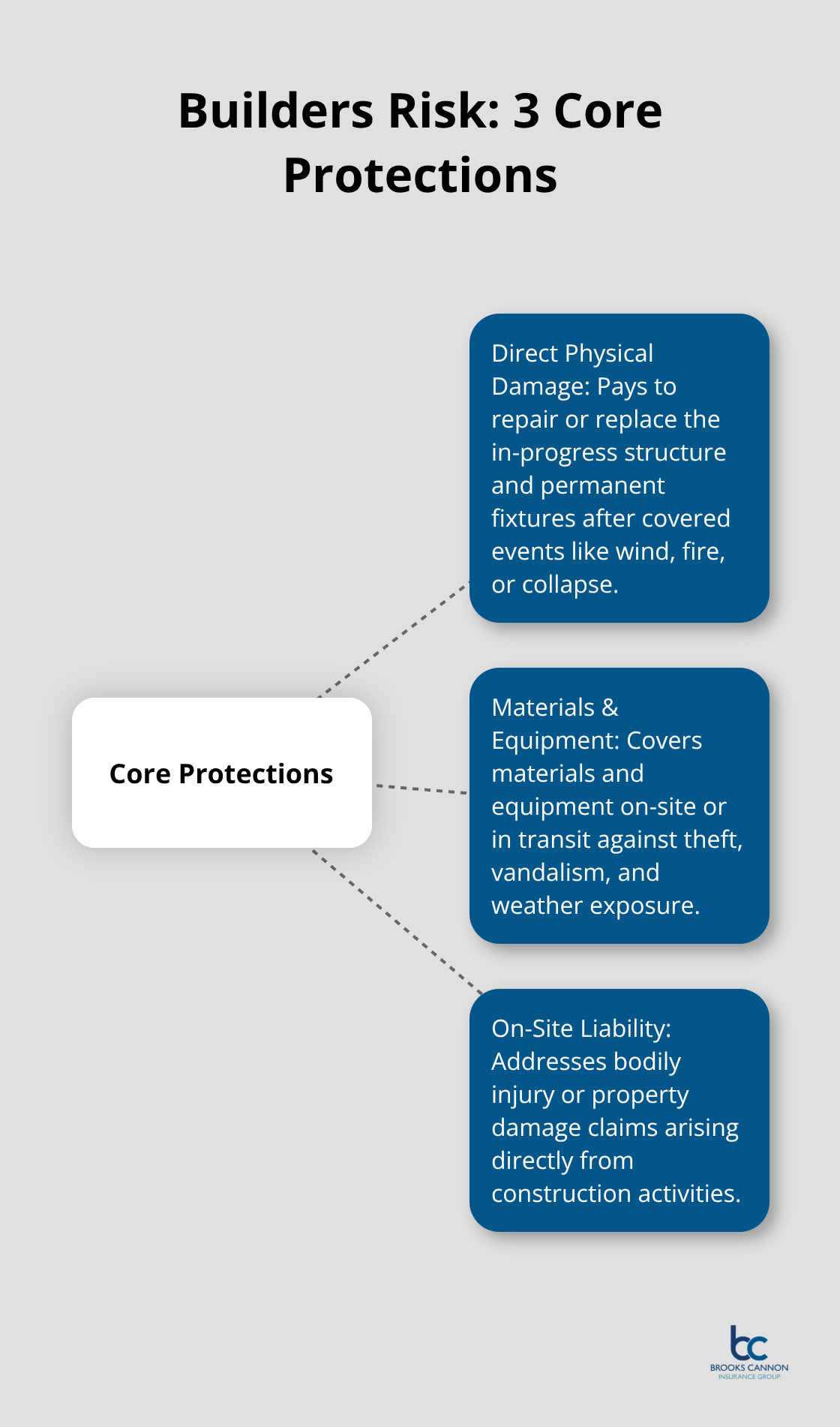
Builders risk insurance covers three distinct areas of exposure that standard property policies won’t touch. The first is direct physical damage to the structure itself during construction. If a Dallas-area project experiences wind damage, fire, or collapse before completion, builders risk pays for repairs or replacement of the building frame and permanent fixtures. This coverage applies whether you build from the ground up or substantially renovate an existing structure.
Materials, Equipment, and On-Site Assets
The second protection layer covers materials, equipment, and fixtures staged on-site or in transit to the job. Steel beams, HVAC units, lumber, electrical panels, and plumbing supplies all face protection against theft, vandalism, and weather exposure. Recent tariffs on steel and aluminum have sharply raised construction material costs, reaching up to 50 percent increases. Protecting these materials from loss becomes financially critical when replacement costs spike this sharply.
Liability Protection on the Job Site
The third component is liability protection for bodily injury or property damage claims that arise from construction activity on your site. You’ll still need a separate premises liability policy for slip-and-fall incidents unrelated to active construction work, but builders risk handles exposure tied directly to the construction process itself.
Policy Costs and Coverage Limits
Standard builders risk policies in Texas start at $375 in most cases, though your actual premium depends on project value, construction type, location factors like proximity to flood zones, and building materials. A wood-frame residential project in Dallas costs more to insure than a fire-resistive commercial build because wood structures carry higher total-loss risk. Coverage is available for projects up to $75 million, and you can structure policies to cover the existing structure alone, the renovation alone, or both (depending on your needs).
Timing and Coverage Gaps
If your project faces delays or if construction activity pauses for 60 consecutive days, coverage shifts to named perils only, meaning you lose protection for certain risks like weather damage. This timing issue makes early policy purchase essential-you want coverage in place before materials arrive and work starts. The next step involves understanding how to assess your specific project needs and select the right policy structure for your Dallas-area build.
What Happens When Builders Risk Is Missing
Weather Damage Strikes Fast
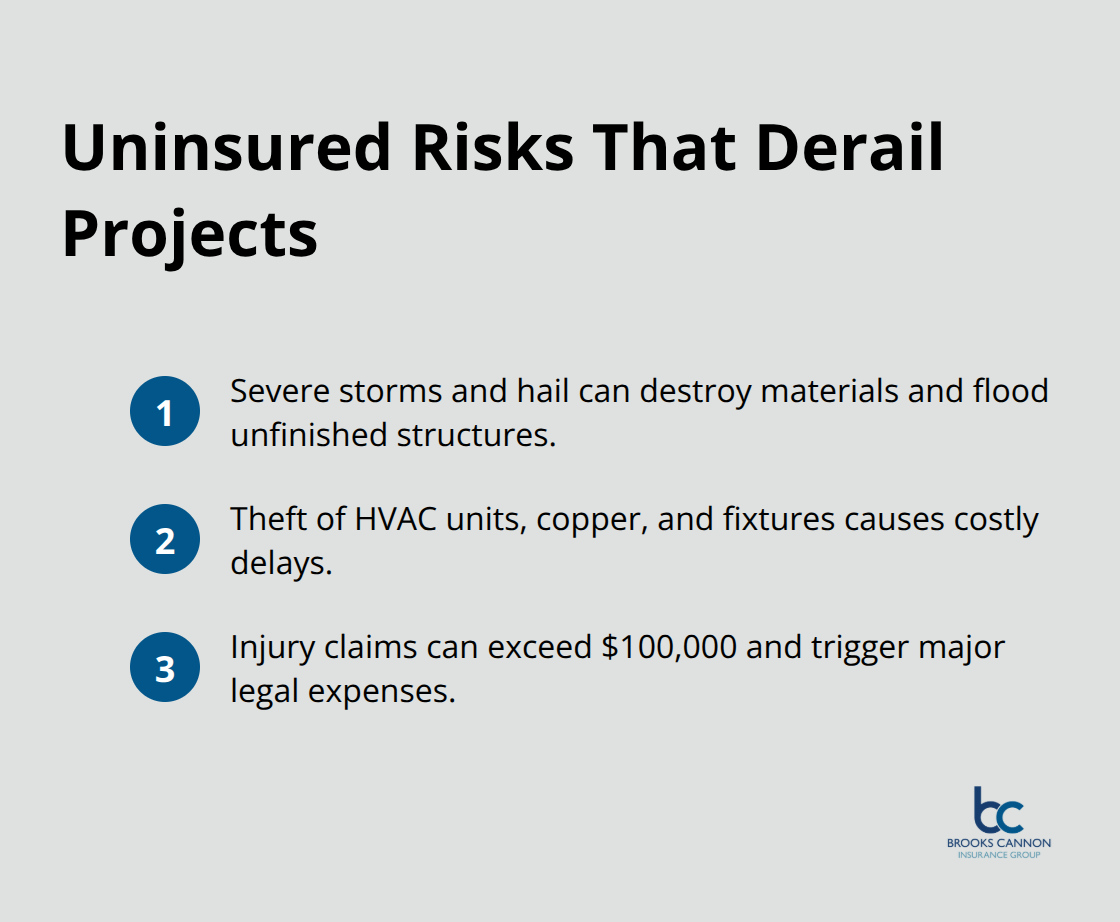
Dallas-area contractors face immediate financial threats when builders risk coverage is absent. Severe thunderstorms and hail events destroy roofing materials, damage HVAC equipment staged on-site, and cause water intrusion into framed structures before weatherproofing is complete. Texas experiences significant hail activity, particularly in the Dallas metroplex, and uninsured water damage during construction costs tens of thousands in repairs and project delays. A single weather event can halt work for weeks while contractors source replacements and manage water mitigation.
Theft and Vandalism Drain Project Budgets
Material theft and vandalism add another layer of exposure that grows as project value increases. Copper wiring, appliances, fixtures, and high-end finishes disappear regularly from Dallas-area construction sites, especially during evening hours and weekends when security is minimal. A single theft of HVAC equipment or electrical panels delays a project by weeks while replacements are sourced and installed. Contractors absorb these losses directly when builders risk coverage is not in place.
On-Site Injuries Create Unlimited Liability
Liability from on-site injuries creates potentially unlimited financial exposure. If a worker, subcontractor, or site visitor sustains injury during construction work, medical bills, lost wages, and legal judgments quickly exceed $100,000. Construction-related bodily injury claims expose property owners and general contractors to significant defense costs and settlement obligations that personal or standard commercial liability policies exclude (because they don’t cover active construction operations). A single injury claim can devastate project finances.
The Real Cost of Going Uninsured
Skipping builders risk before groundbreaking shifts all construction-phase risk directly onto your balance sheet. A single weather event, theft incident, or injury claim wipes out project profit margins or forces you into debt. Project abandonment jumped 88.2 percent year over year in August 2025 according to Deloitte’s 2026 Engineering and Construction Industry Outlook, largely due to rising costs and unexpected losses. The policy cost-typically starting at $375-is negligible compared to the financial devastation of an uninsured loss during construction.
Understanding these risks clarifies why coverage matters, but selecting the right policy requires careful assessment of your specific project needs and timeline.
Selecting the Right Coverage for Your Dallas Project
Document Your Actual Project Value
Start with your detailed budget, not an estimate. Contractors often understate project value to save on premiums, then face massive coverage gaps when costs rise due to material delays or design changes. Pull your complete budget, list every material category with current pricing, and account for tariff impacts. Steel and aluminum tariffs are reshaping cost structures in the construction sector, so your initial material cost estimate from six months ago is already outdated. Update valuations as you move closer to groundbreaking, especially if your project timeline extends beyond six months. A $500,000 renovation becomes a $550,000 exposure once tariffs and labor cost inflation are factored in, and your policy limits must reflect that reality.
Choose Your Coverage Structure
Establish whether you need coverage for the existing structure, the new construction or renovation work, or both. Most Dallas-area property owners insuring a major remodel want to protect the existing structure from construction-related damage while also covering the new work. Your policy structure determines what gets covered and what doesn’t, so this decision directly impacts your financial exposure during construction.
Set Your Deductible Realistically
Assess your deductible tolerance honestly. Higher deductibles lower your premium, but they shift more risk onto your project budget. A $2,500 deductible works fine for a large commercial project with substantial contingency reserves, but it creates serious cash-flow problems on a $250,000 residential renovation where profit margins are tight. Water damage and severe weather remain the most common loss drivers, and many Dallas-area policies now include higher water-damage deductibles on high-value projects, sometimes running $10,000 or more on large commercial builds. Know this upfront so you’re not shocked during claims.
Plan Your Construction Timeline
Your timeline influences deductible selection and coverage continuity. If construction activity pauses for 60 consecutive days, your policy coverage shifts to named perils only, meaning weather damage protection disappears.
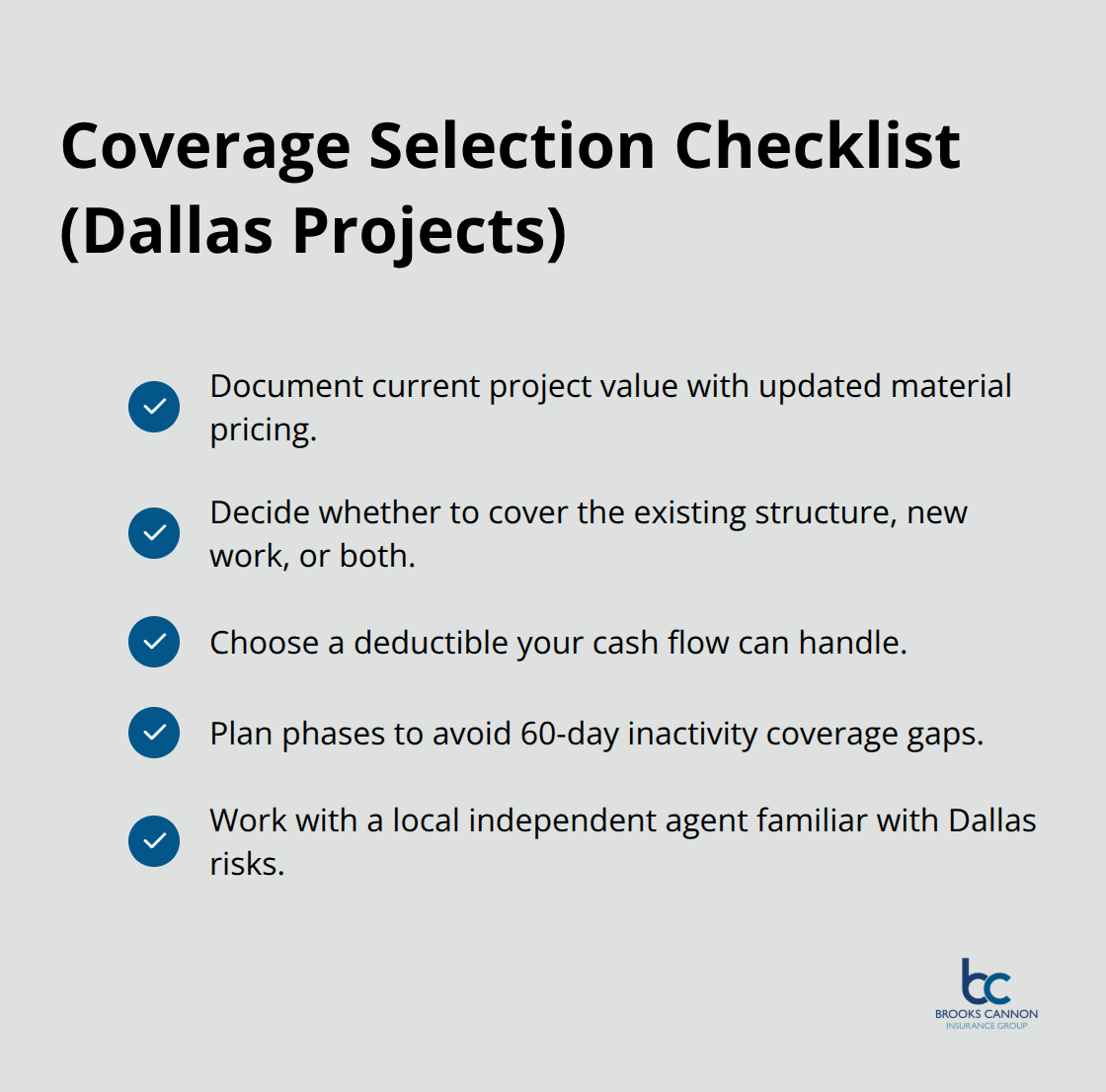
Schedule your construction phases tightly to avoid gaps, and discuss project phasing with your agent before binding coverage.
Work with a Local Agent
An independent agent who understands Dallas-area construction risk provides far more value than online quotes. An agent who has placed coverage on similar projects in your neighborhood knows local flood zones, wind exposure, and underwriting preferences that automated systems miss. We at Brooks Cannon Insurance Group work with multiple top-rated insurance carriers to find the best coverage and pricing for each client’s unique situation, and our team of licensed experts can help you structure a policy that matches your actual project timeline and financial capacity, not a generic template.
Final Thoughts
Builders risk insurance protects your Dallas-area construction project from day one, and skipping this coverage exposes you to devastating financial losses. Weather damage, theft, material loss, and liability claims strike regularly on job sites, and a single hail storm or equipment theft can cost tens of thousands of dollars while halting your project for weeks. Construction delay insurance and builders risk coverage work together to shield both your physical assets and your financial timeline, keeping your project moving forward when unexpected losses occur.
Your project valuation must reflect current tariff impacts and material costs, so update your budget as you approach groundbreaking rather than relying on estimates from months ago. Set your deductible based on your actual cash-flow capacity, not just premium savings, and plan your construction timeline to avoid coverage gaps from extended inactivity periods. The Dallas-area construction market moves fast, and securing coverage before materials arrive protects your investment from the moment work starts.
We at Brooks Cannon Insurance Group work with multiple top-rated insurance carriers to find the best builders risk coverage and pricing for your specific project, and our licensed experts understand the unique risks Dallas contractors face. Contact us today to secure your policy and protect your project before groundbreaking.
Disclaimer: The information provided in this blog is for general informational purposes only and does not constitute legal, financial, or insurance advice. Coverage options, terms, and availability may vary. Please consult with a licensed professional for advice specific to your situation