
Your Dallas business handles sensitive customer data every day. A single breach can cost hundreds of thousands of dollars in recovery, legal fees, and lost revenue.
Data protection insurance fills the gap that standard business policies leave open. We at Brooks Cannon Insurance Group help Dallas business owners understand what coverage they actually need to stay protected.
How Severe Is the Cyber Threat for Dallas Businesses Right Now
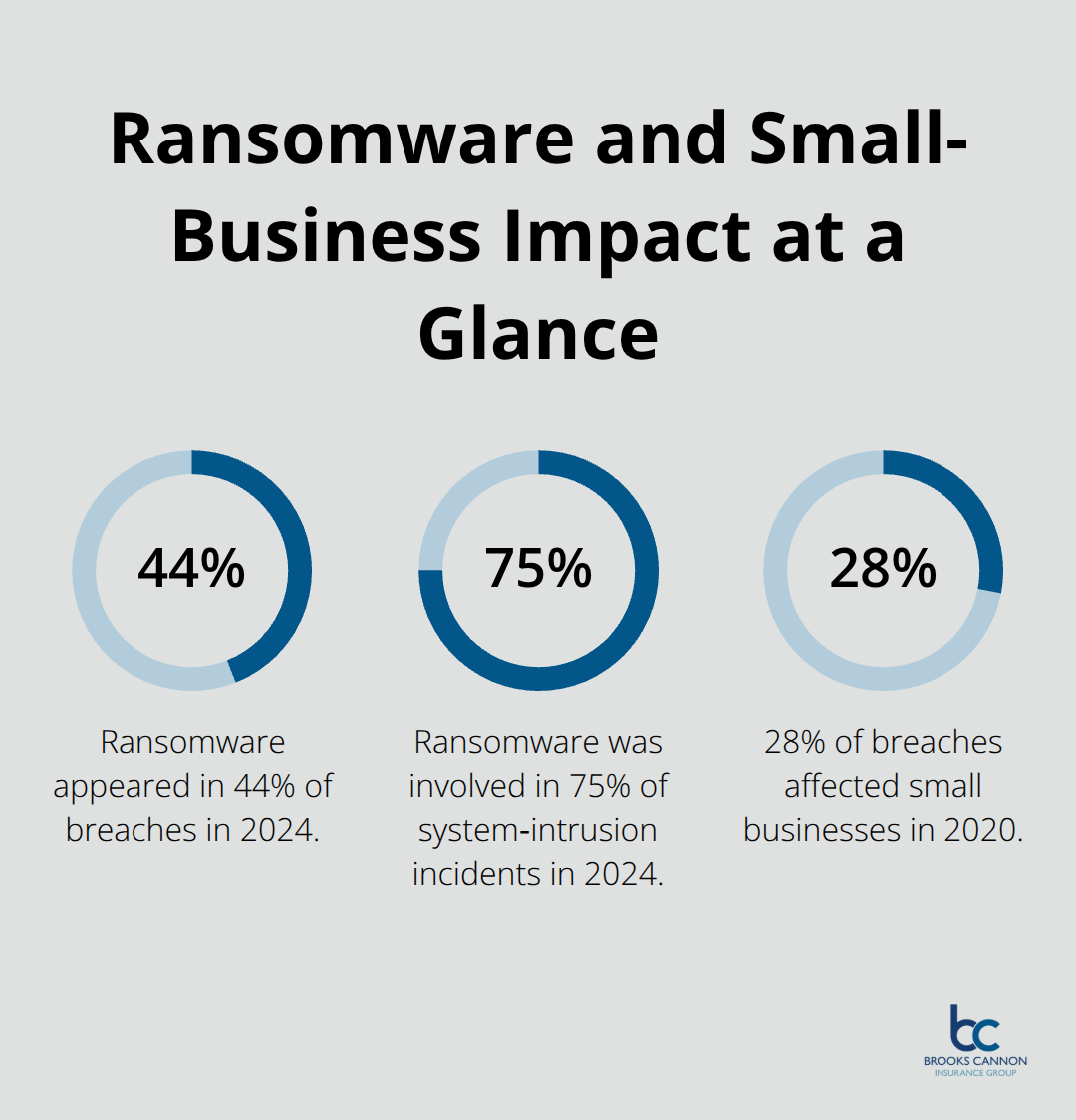
Ransomware and data breaches pose immediate, expensive risks for Dallas companies. The numbers confirm this threat is real and costly. The FBI’s Internet Crime Complaint Center logged approximately 880,000 cybercrime complaints in 2023 with losses exceeding 12.5 billion dollars. Ransomware appeared in 44 percent of breaches in 2024 and involved itself in 75 percent of system-intrusion incidents, according to the Verizon Data Breach Investigations Report. When a breach strikes, the financial impact stuns most business owners.
The global average cost per breach reaches around 3.86 million dollars, with U.S. breaches averaging 8.64 million dollars according to IBM’s Cost of a Data Breach Report. Recovery consumes months. Companies typically require 280 days on average to identify and contain a breach, meaning operational disruption extends far longer than most owners anticipate. In 2023 alone, nearly 350 million victims fell victim to data breaches, with losses rising 72 percent year over year according to the Identity Theft Resource Center.
Why Dallas Businesses Face Growing Exposure
Dallas’s digital economy attracts attackers seeking valuable targets. Businesses here depend heavily on cloud platforms, online transactions, and digital customer data. This infrastructure creates multiple entry points for criminals to exploit. Small and mid-size businesses in the Dallas area face particular vulnerability because they often lack dedicated cybersecurity staff yet hold valuable customer information. About 28 percent of breaches affected small businesses in 2020, proving that size offers no real protection. Texas has responded by passing HB 8, the Texas Cybersecurity Act, which establishes comprehensive state-level requirements for cybersecurity practices and data breach notifications. This legislation directly impacts Dallas businesses by expanding their obligations to report breaches to the state and implement specific security measures. The regulatory environment itself now creates financial exposure beyond the breach itself. Companies that fail to meet these requirements face penalties and fines, adding another layer of financial risk to cyber incidents.
What Actually Happens When a Breach Occurs
The immediate aftermath of a breach demands rapid action and significant resources. Data breach response coverage includes notification costs, credit monitoring services, and public relations efforts to protect your reputation. Legal expenses mount quickly when affected customers file lawsuits or regulators launch investigations. Business interruption coverage compensates for lost income when network outages disrupt operations after a cyberattack. Ransomware incidents create additional pressure because attackers demand payment for data release or system restoration, and cyber extortion coverage covers costs arising from an extortionist holding applications or data hostage or threatening a cyber attack. Regulatory defense and penalties coverage helps absorb the cost of regulatory investigations and fines under HIPAA, PCI-DSS, and Texas privacy laws (which now include expanded breach notification requirements under HB 8). Without this coverage, a single incident can drain operating budgets and threaten business survival.
The Real Cost of Inaction
Most Dallas business owners underestimate how quickly breach costs accumulate. A single incident triggers notification expenses, forensic investigation fees, legal defense costs, and potential regulatory penalties simultaneously. Identity fraud alone caused 23 billion dollars in losses in 2023, with the average victim spending about 10 hours resolving issues. Your business faces similar disruption when customers report fraudulent charges or compromised accounts. The longer a breach remains undetected, the more damage spreads. This reality makes data protection insurance not an optional expense but a necessary business decision that protects your operating budget and your ability to recover quickly.
What Data Protection Insurance Actually Covers
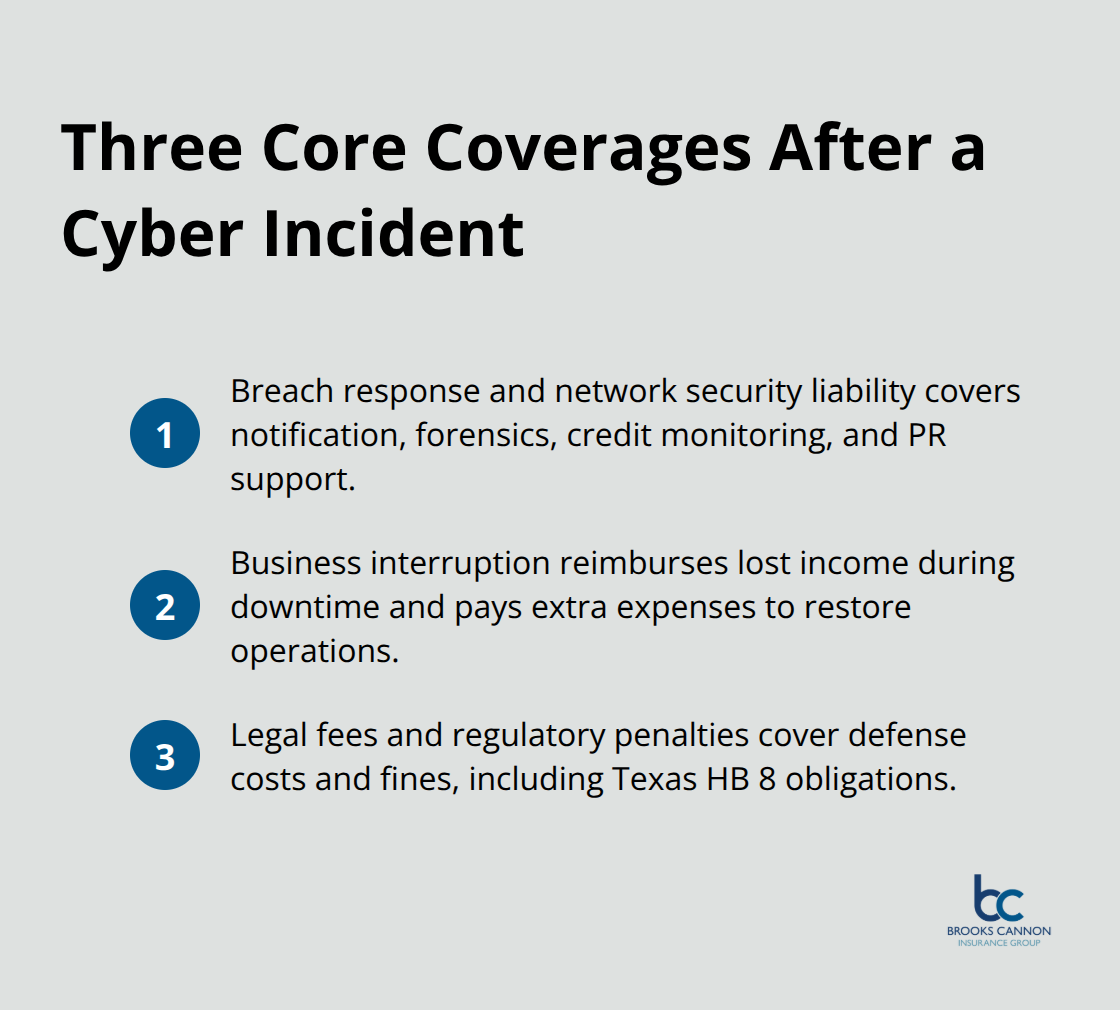
Data protection insurance separates into three critical coverage areas that address the financial chaos following a breach. First, breach response and network security liability covers the immediate expenses when criminals compromise your systems. This includes notification costs to alert affected customers, forensic investigation fees to identify how attackers entered your network, credit monitoring services you must provide to victims, and public relations support to manage reputation damage. Second, business interruption coverage compensates for lost income when a cyberattack forces you offline. If ransomware locks your systems and you cannot serve customers for days or weeks, this coverage reimburses the revenue you would have earned during downtime plus extra expenses incurred to restore operations. Third, legal fees and regulatory penalties coverage absorbs defense costs when customers sue or state regulators investigate. Texas’s HB 8 expanded breach notification requirements and created new compliance obligations, meaning Dallas businesses now face potential fines from the state itself if they mishandle a breach response.
Breach Response Coverage Handles Your Immediate Costs
Notification alone costs thousands of dollars. You must contact every affected customer through mail, email, or phone depending on the breach scope, and you typically must offer free credit monitoring for several years. Forensic investigation services determine exactly what data criminals accessed, which shapes your notification obligations and regulatory reporting requirements. Public relations firms help craft your messaging to prevent customers from abandoning your business after learning about the breach. Without coverage, these expenses hit your operating budget immediately while you simultaneously lose revenue from the incident itself.
Business Interruption Coverage Breaks the Ransom Leverage
Ransomware attackers know that downtime creates financial pressure forcing victims to pay ransom demands. Business interruption coverage breaks this leverage by providing income replacement while your team restores systems, reducing the financial incentive to pay criminals. This coverage also pays for extra expenses like emergency IT contractors working overtime to rebuild your network faster. The faster you restore operations, the less total revenue you lose and the weaker the attacker’s negotiating position becomes.
Legal and Regulatory Defense Protects Your Future
Lawsuits from customers and regulatory investigations from state agencies create legal fees exceeding hundreds of thousands of dollars. Texas now requires breach notification to the state, and failure to comply triggers penalties beyond customer lawsuits. Coverage for regulatory fines and defense costs ensures a single incident does not bankrupt your business through legal exposure alone. These three coverage areas work together to transform a catastrophic financial event into a manageable loss that your business can actually recover from.
Understanding what coverage exists is only half the battle. The real challenge lies in selecting the right policy limits and carrier support for your specific business operations-a decision that requires honest assessment of your vulnerabilities and realistic comparison of what different policies actually deliver.
Selecting the Right Coverage Limits for Your Dallas Business
Assess Your Data and Vulnerability Profile
Choosing data protection insurance requires three practical decisions that directly impact how well your business recovers from a breach. First, you must honestly assess what data your business holds and how attackers could exploit it. A healthcare practice storing patient medical records faces different risks than a retail business processing credit cards, yet both need coverage. The industry you operate in shapes your vulnerability profile. Healthcare businesses experienced significant data breaches in the healthcare industry in 2023, making robust coverage non-negotiable for medical practices and clinics. Restaurants handling customer payment information face ransomware threats that can shut down operations entirely. Technology service providers and IT consultants need specific errors and omissions cyber endorsements because their professional liability exposes them to client lawsuits when security failures harm third parties.
Your annual revenue and the volume of customer data you process determine appropriate coverage limits. Most policies offer limits ranging from one million to one hundred million dollars per claim according to Security.org analysis. A small business with fifty employees and basic customer contact information needs different limits than a mid-size company processing thousands of transactions daily. Start by inventorying exactly what sensitive data flows through your systems, who has access to it, and what financial damage would result if criminals compromised it.
Compare Carriers and Pricing Aggressively
Comparison shopping across multiple carriers reveals dramatic differences in price and coverage quality for identical business profiles. Premiums vary significantly based on industry, annual revenue, the types of data you handle, and your existing security measures, so obtaining quotes from multiple carriers helps find competitive rates while identifying coverage gaps. The global cyber insurance market reached approximately fifteen billion dollars in 2024 and is projected to reach twenty-nine billion dollars by 2027 according to Statista, reflecting intense competition that benefits buyers willing to shop around. Multiple carriers competing for your business means you gain leverage to negotiate better terms and lower premiums.
Evaluate Incident Response Capabilities
Prioritize carriers offering strong incident-response support because a breach response hotline available twenty-four hours per seven days per week can mean the difference between containing damage quickly and watching it spiral for weeks. Access to cybersecurity experts, legal counsel, and public relations professionals immediately after a breach minimizes damage far more effectively than handling response internally. After a cyberattack, most policies include rapid breach response hotlines to guide containment and begin the claims process, but the quality of those response teams varies dramatically between carriers.
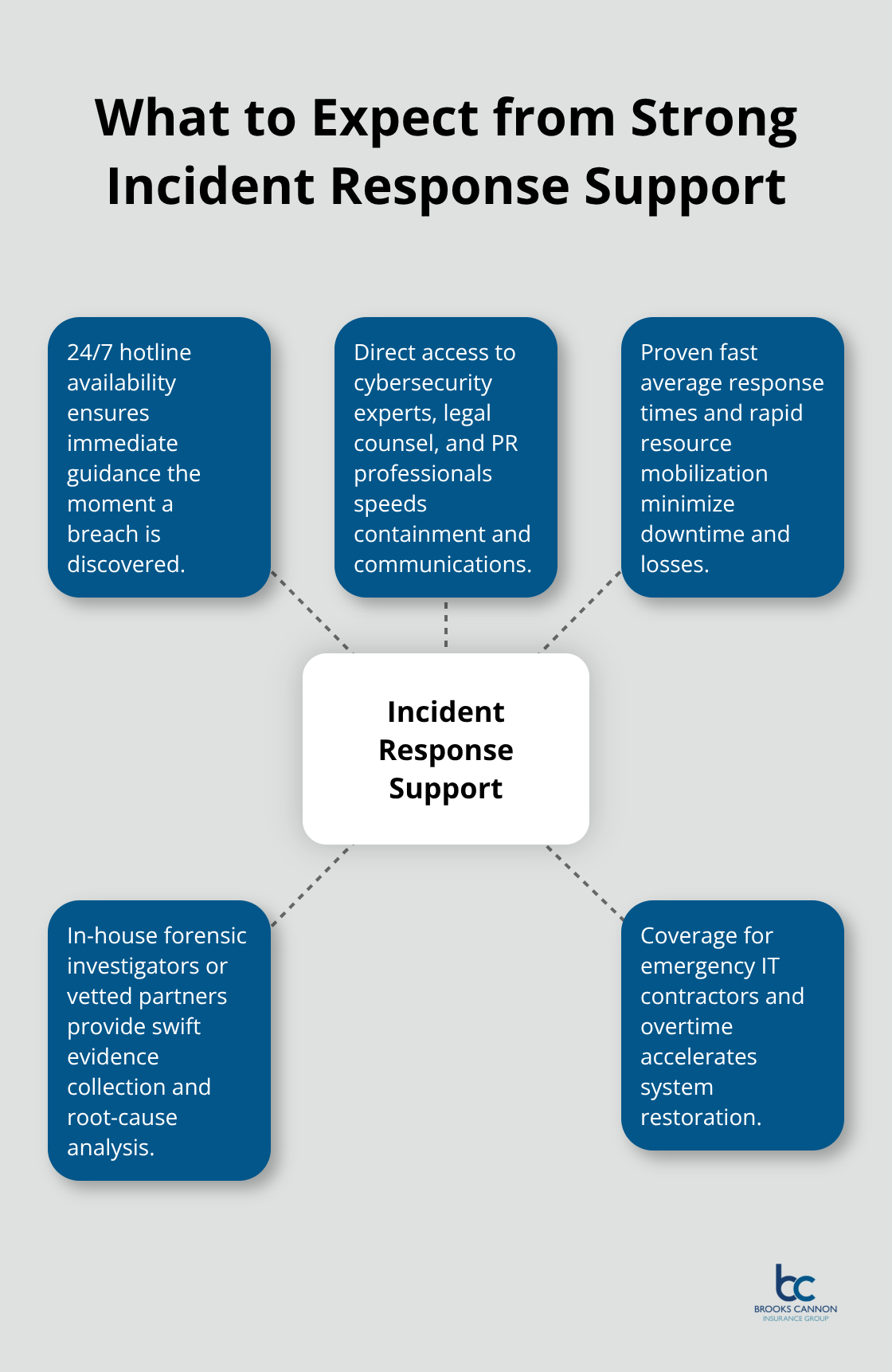
Ask potential insurers specifically about their average response time, whether they have in-house forensic investigators or contract with external firms, and whether they cover emergency IT contractors working overtime to restore systems faster. The speed at which your carrier mobilizes resources directly determines how quickly you regain operational control and stop revenue losses from mounting. A carrier with slower response times costs you money in extended downtime, even if the premium appears cheaper on paper.
Final Thoughts
Data breaches represent a genuine financial threat to Dallas businesses operating in today’s digital environment. Ransomware attacks accelerate, breach costs average millions of dollars, and recovery timelines stretch for months-yet standard commercial policies simply do not cover cyber incidents. This gap between what your current insurance protects and what a breach actually costs creates dangerous exposure that data protection insurance fills by covering notification expenses, forensic investigations, legal defense, regulatory fines, business interruption losses, and crisis management support.
The right policy depends on your specific business profile, the data you handle, and your industry’s regulatory environment. Texas’s expanded cybersecurity requirements under HB 8 make compliance obligations more complex and costly, particularly if your breach response fails to meet state standards. Selecting appropriate coverage limits, comparing carriers aggressively, and prioritizing incident response capabilities ensures you receive the support you need when a breach occurs.
Contact Brooks Cannon Insurance Group to assess your vulnerabilities and find data protection insurance that matches your business’s unique risk profile. Our team works with multiple top-rated carriers to explain what different policies actually cover and help you avoid the coverage gaps that leave businesses exposed. Reach out today to protect your Dallas business from financial catastrophe.
Disclaimer: The information provided in this blog is for general informational purposes only and does not constitute legal, financial, or insurance advice. Coverage options, terms, and availability may vary. Please consult with a licensed professional for advice specific to your situation