Most Dallas businesses think their basic commercial property insurance is enough. It’s not.
Standard policies leave significant gaps that can cost you thousands when disaster strikes. We at Brooks Cannon Insurance Group see this problem constantly-businesses discover too late that their coverage doesn’t protect their actual assets or lost income.
This guide shows you what’s missing from basic policies and how to build real protection for your business.
What Your Basic Policy Actually Leaves Unprotected
The Narrow Scope of Standard Coverage
Basic commercial property policies cover the building structure and some contents, but they’re far narrower than most Dallas business owners realize. A standard policy typically pays to repair or rebuild the physical building after fire, wind, or theft-but that’s where the protection often stops. The Texas Department of Insurance confirms that basic forms cover core perils like fire and lightning, while broad forms add water damage from leaks and ice or snow weight. However, most basic policies exclude floods entirely, earthquakes, wear and tear, and gradual deterioration.
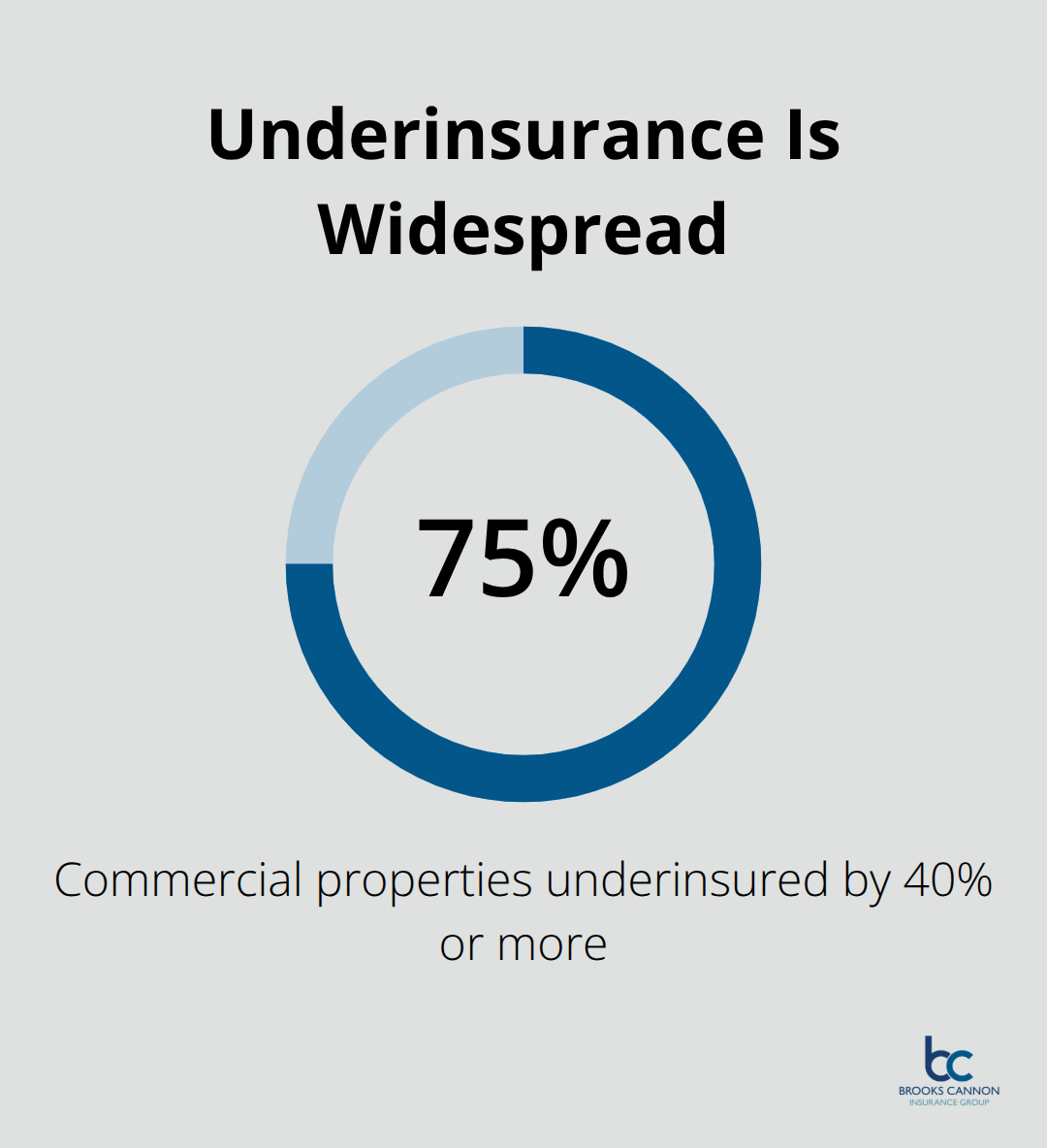
This matters because an estimated 75% of commercial properties are underinsured by 40% or more, meaning the coverage limit itself may not match what you’d actually need to rebuild. In Dallas, where hail and tornado damage strike regularly-the National Weather Service reports Dallas County averages 2 to 3 tornadoes annually-a basic policy won’t cover windstorm or hail damage unless you add a specific endorsement through the Texas Windstorm Insurance Association.
What Basic Policies Ignore
Basic coverage ignores your lost income if the building becomes unusable. A fire that forces you to close for three months doesn’t just damage property; it destroys revenue, payroll obligations, and customer relationships. If your business relies on equipment like HVAC systems, manufacturing machinery, or server infrastructure, equipment breakdown isn’t covered by standard property insurance either. Insurers design basic policies to be affordable entry points, not comprehensive protection.
The Real Danger: Coinsurance Penalties
The real danger emerges when you face a claim. Coinsurance clauses punish underinsurance severely. If your policy includes an 80 percent coinsurance requirement, you must carry coverage equal to at least 80 percent of your property’s replacement cost. Fall short, and the insurer calculates your payout as a proportion of what you should have carried.
For example, if your building truly costs $1,000,000 to replace but you only insured it for $600,000, and you suffer a $200,000 loss, the insurer pays only $150,000-not the full $200,000. You absorb $50,000 out of pocket. Dallas construction costs have inflated significantly due to supply chain disruptions and labor shortages, making accurate valuations critical. A professional property appraisal costs between $500 and $1,500 but can prevent six-figure claim disasters.
Silent Exposures That Cost Thousands
Beyond coinsurance, exclusions create silent exposures. Flood damage alone affects thousands of Dallas properties, especially those near the Trinity River or in designated flood zones. A separate National Flood Insurance Program policy carries a mandatory 30-day waiting period, so waiting until a storm is forecast leaves you unprotected. Crime coverage is separate too-theft, employee dishonesty, and forgery aren’t addressed in property policies.
Liability exposure extends beyond the building; customers injured on your premises or damage your operations cause to neighboring properties require general liability coverage, which basic property policies don’t include. The cost of these gaps compounds when you add inflation. Labor and material costs continue rising, and if your coverage limits haven’t been adjusted in three years, they’re likely outdated. Dallas businesses paying $1,000 to $2,000 annually for basic property coverage often spend another $500 to $1,500 to close the real gaps-but they spend nothing and lose everything if they skip it.
These gaps explain why many Dallas business owners turn to independent agents who can assess their actual exposures and recommend targeted solutions beyond basic coverage.
Additional Coverage Options That Protect Your Bottom Line
Business Interruption Insurance Replaces Lost Revenue
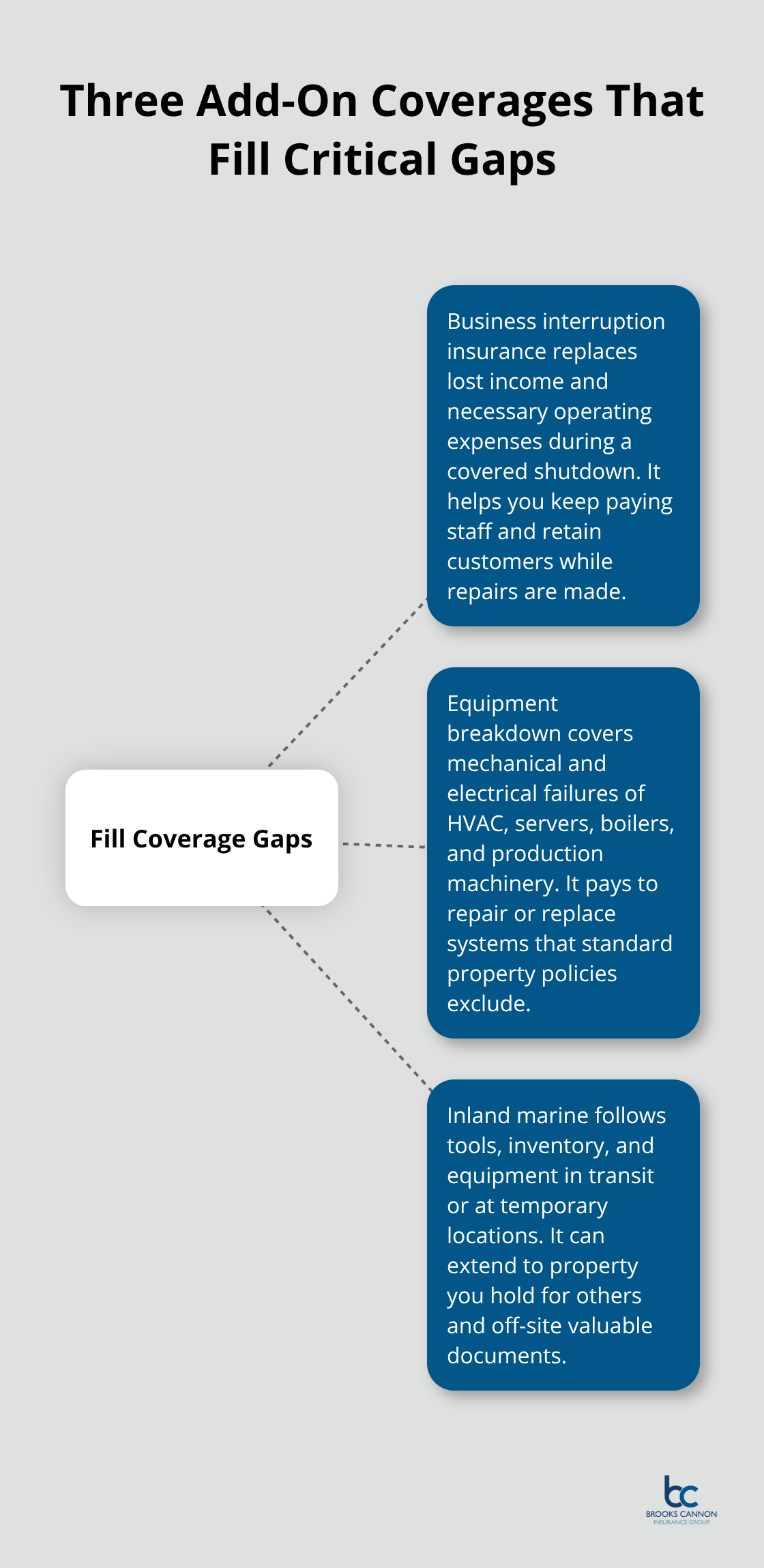
Your basic policy pays to rebuild the structure. Nothing more. The moment a fire forces you to close, revenue stops flowing while expenses continue. Your employees still expect paychecks. Your lease obligation doesn’t pause. Your competitors capture your customers. Business interruption insurance covers lost income and operating expenses during a shutdown caused by property damage.
In Dallas, where hail and tornado damage can force closures lasting weeks or months, this coverage transforms a catastrophic loss into a manageable one. A manufacturing business shut down for 60 days due to equipment damage faces not just repair costs but also lost production revenue. Without business interruption coverage, that $300,000 in lost sales comes entirely from your pocket.
With it, your policy reimburses the lost revenue minus what you would have spent on materials and direct labor. The Texas Department of Insurance confirms this coverage exists as a separate endorsement or standalone policy, not as part of basic property coverage.
Equipment Breakdown Coverage Protects Critical Systems
Equipment breakdown coverage addresses a specific vulnerability that surprises most Dallas business owners. Your HVAC system fails. Your server crashes. Your production machinery stops. Standard property policies exclude mechanical and electrical breakdowns-they cover sudden, accidental losses like fire or impact, not equipment failures.
If your business depends on refrigeration, compressed air systems, boilers, or computer infrastructure, equipment breakdown coverage pays repair or replacement costs when these systems malfunction. This protection matters because a single equipment failure can halt operations for days or weeks while you arrange repairs or replacements. The downtime alone can cost more than the repair bill itself.
Inland Marine Insurance Follows Your Assets Everywhere
Inland marine insurance handles a different problem entirely. Your tools, inventory, and equipment constantly move between job sites, warehouses, and client locations. A contractor’s power tools stolen from a truck bed. A retail business’s merchandise damaged in transit to a pop-up location. Valuable papers and records damaged by water. Standard property policies anchor coverage to your building’s address; anything away from that location falls outside protection.
Inland marine insurance follows your business assets wherever they go, covering property in transit, equipment at temporary locations, and accounts receivable. Dallas businesses operating multiple sites or managing mobile assets find this coverage eliminates a major exposure gap. The protection extends to property you hold for others and valuable documents stored off-site.
These three additions-business interruption, equipment breakdown, and inland marine-address the real vulnerabilities that basic policies ignore. They also represent the types of targeted solutions that independent agents recommend when they assess your actual business operations rather than applying a one-size-fits-all approach. Understanding what each covers prepares you to discuss your specific needs with an insurance professional who can match protection to your industry and location.
Industry-Specific Risks Unique to Dallas Businesses
Weather Threats Demand Specialized Coverage
Dallas weather creates exposures that basic property policies simply do not address adequately, and ignoring this reality costs businesses thousands annually. The National Weather Service documents that Dallas County averages 2 to 3 tornadoes each year, and hailstorms regularly damage roofs, windows, and outdoor equipment across the region. Standard commercial property policies exclude windstorm and hail damage entirely unless you add specific coverage through the Texas Windstorm Insurance Association. This is not optional protection for Dallas-it is fundamental. A single severe hail event destroys a roof system, damages HVAC units, shatters storefront windows, and compromises outdoor signage simultaneously. Repair costs for hail damage to commercial roofing alone typically range from $15,000 to $50,000 depending on building size and materials. Without windstorm and hail endorsements, you pay these costs from operating cash.
Dallas properties near the Trinity River and in designated flood zones face constant flood risk, but standard policies exclude water damage from rising water entirely. You must secure National Flood Insurance Program coverage before a storm approaches because policies carry a mandatory 30-day waiting period. Waiting until forecasts show rain means you have no protection when damage occurs.
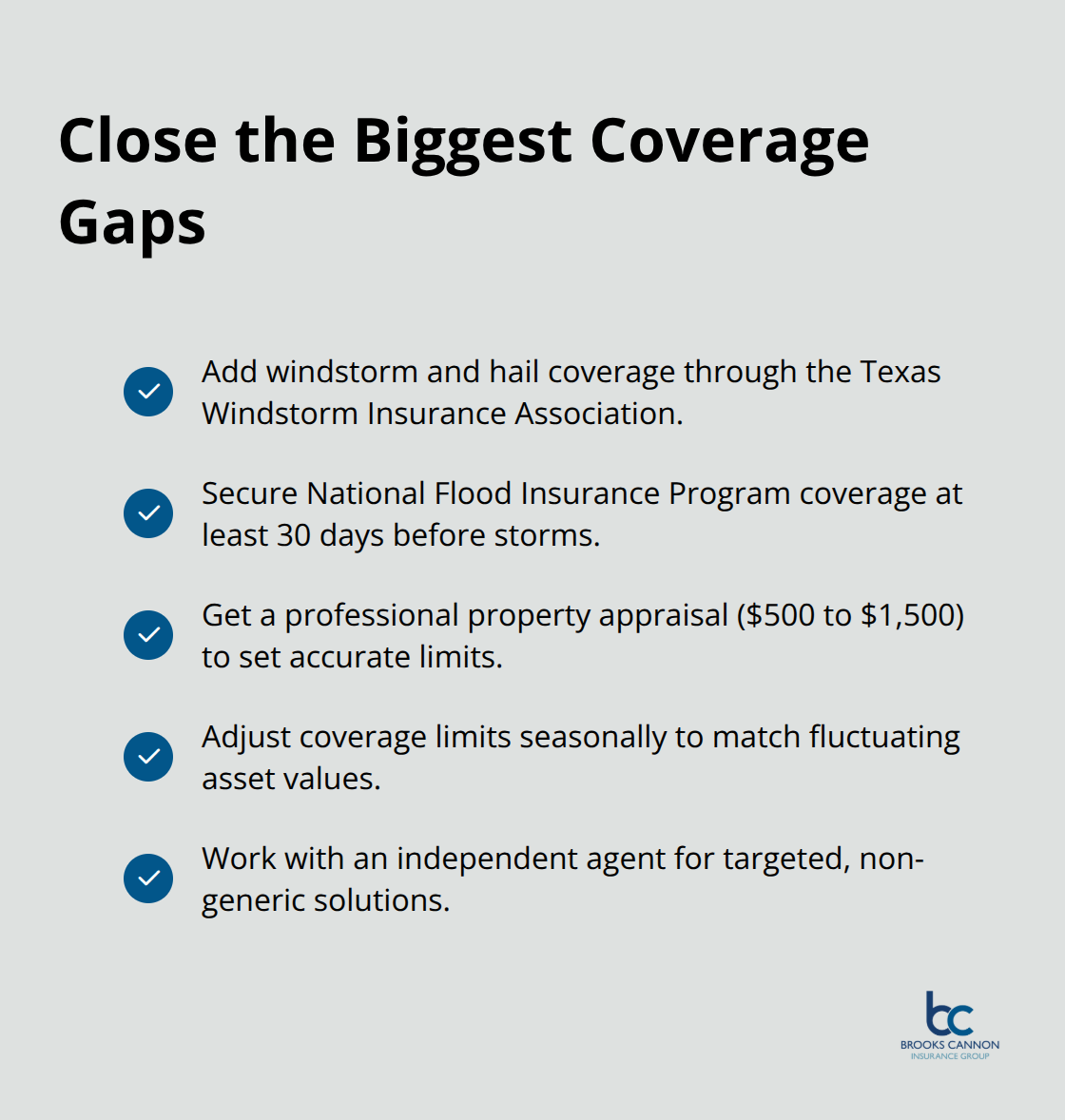
Weather-related liability extends beyond your property too-if a business operation causes water damage to neighboring properties during a storm, or if falling debris from your roof injures someone, your basic property policy provides no liability protection whatsoever.
Liability Exposures Beyond Property Damage
Your business operations create liability exposures that property insurance ignores completely. A customer injured on your premises, a delivery vehicle from your business damaging a parked car, or property damage your operations cause to neighboring buildings all require general liability coverage, which operates entirely separately from property policies. Manufacturing businesses face equipment liability if a malfunction causes injury or property damage. Contractors working at client sites create liability exposure at locations far from your main address. Retail businesses with high customer traffic face slip-and-fall claims regularly.
The cost of a single serious injury judgment can exceed $500,000 easily, and general liability coverage limits typically start at $300,000 and extend to $1,000,000 or higher depending on your industry and risk profile. These limits protect your business assets when someone claims you caused their injury or property damage. Without adequate limits, a major claim can force you to liquidate equipment, inventory, or real estate to satisfy a judgment.
Seasonal Business Fluctuations Require Coverage Adjustments
Seasonal business fluctuations in Dallas demand coverage adjustments most owners overlook. A retail business operating a seasonal pop-up location during the holidays needs inland marine coverage for inventory at that temporary site. A landscaping contractor with higher equipment value during spring and summer months should adjust coverage limits seasonally rather than maintaining flat annual limits. Construction businesses scale up workforce during peak seasons and face increased workers’ compensation exposure. Tourism-related businesses in Dallas see revenue and asset exposure shift dramatically between seasons, yet most owners maintain static coverage year-round.
This mismatch means you are either overinsured during slow months or underinsured during peak activity. An independent agent can help you adjust coverage timing to match your actual business cycle rather than paying for protection you do not need when you do not need it. Seasonal adjustments also prevent the coinsurance penalties that strike when your coverage falls short of your property’s actual replacement cost during high-value periods.
Final Thoughts
Building comprehensive coverage for your Dallas business starts with honest assessment of what basic policies actually protect and what they leave exposed. The gaps are real, the costs are measurable, and the solutions exist. An independent insurance agent brings access to multiple carriers and the expertise to match coverage to your actual exposures rather than applying generic templates.
Taking action means scheduling a risk assessment with an agent who understands commercial property Dallas businesses face. Bring your current policy, recent property appraisals, and details about your operations, equipment, and revenue streams. Discuss whether your coverage limits reflect current construction costs, whether you need windstorm and flood endorsements, and whether business interruption protection makes sense for your industry.
The cost of comprehensive coverage typically runs higher than basic policies, but the protection prevents catastrophic losses that can force business closure. A professional appraisal, policy review, and targeted endorsements represent investments that pay dividends when claims occur. Contact Brooks Cannon Insurance Group to discuss your commercial property insurance needs and build a strategy that actually protects your business.
Disclaimer: The information provided in this blog is for general informational purposes only and does not constitute legal, financial, or insurance advice. Coverage options, terms, and availability may vary. Please consult with a licensed professional for advice specific to your situation