
Running a small business in Dallas means facing real threats-from severe weather to liability claims to cyber attacks. The right small business coverage Dallas protects what you’ve built and keeps your growth on track.
At Brooks Cannon Insurance Group, we’ve helped countless local business owners find the exact protection they need. This guide walks you through the risks, coverage types, and strategy to secure your business properly.
Real Threats Dallas Small Businesses Face
Weather and Property Damage Hit Hard
Dallas small businesses operate in an environment where severe weather creates immediate, measurable risk. Texas recorded 190 billion-dollar disasters between 1980 and 2024, and 2025 brought grapefruit-sized hail and 100 mph winds that damaged roofs, equipment, and inventory across the region. A single severe weather event destroys months of work and drains cash reserves quickly. Property damage from hail creates significant financial exposure for Texas businesses, with repair costs and downtime compounding the impact.
If your Dallas business relies on physical assets, inventory, or a building you own or lease, weather protection becomes non-negotiable. Business interruption coverage matters equally because property damage often forces closure, and lost income during that period creates pressure on payroll and vendor payments.
Liability Claims From Customers and Employees
General liability claims represent another constant threat that many Dallas owners underestimate. Texas had 175,900 nonfatal private-industry injuries in 2023, and about 75 percent of small businesses report employee injuries occurring on their premises. A customer slipping on your floor or an employee getting hurt on the job creates immediate medical bills, potential legal fees, and wage replacement obligations that standard business operations cannot absorb.
Professional liability risk hits service-based businesses particularly hard, with more than 60 percent of similar-state claims involving deliverable errors or mistakes in client work. Defense costs for professional liability claims average around 125,000 dollars in roughly 20 percent of cases-a figure that would devastate most Dallas small operations without proper coverage.
Cyber Threats and Data Breaches
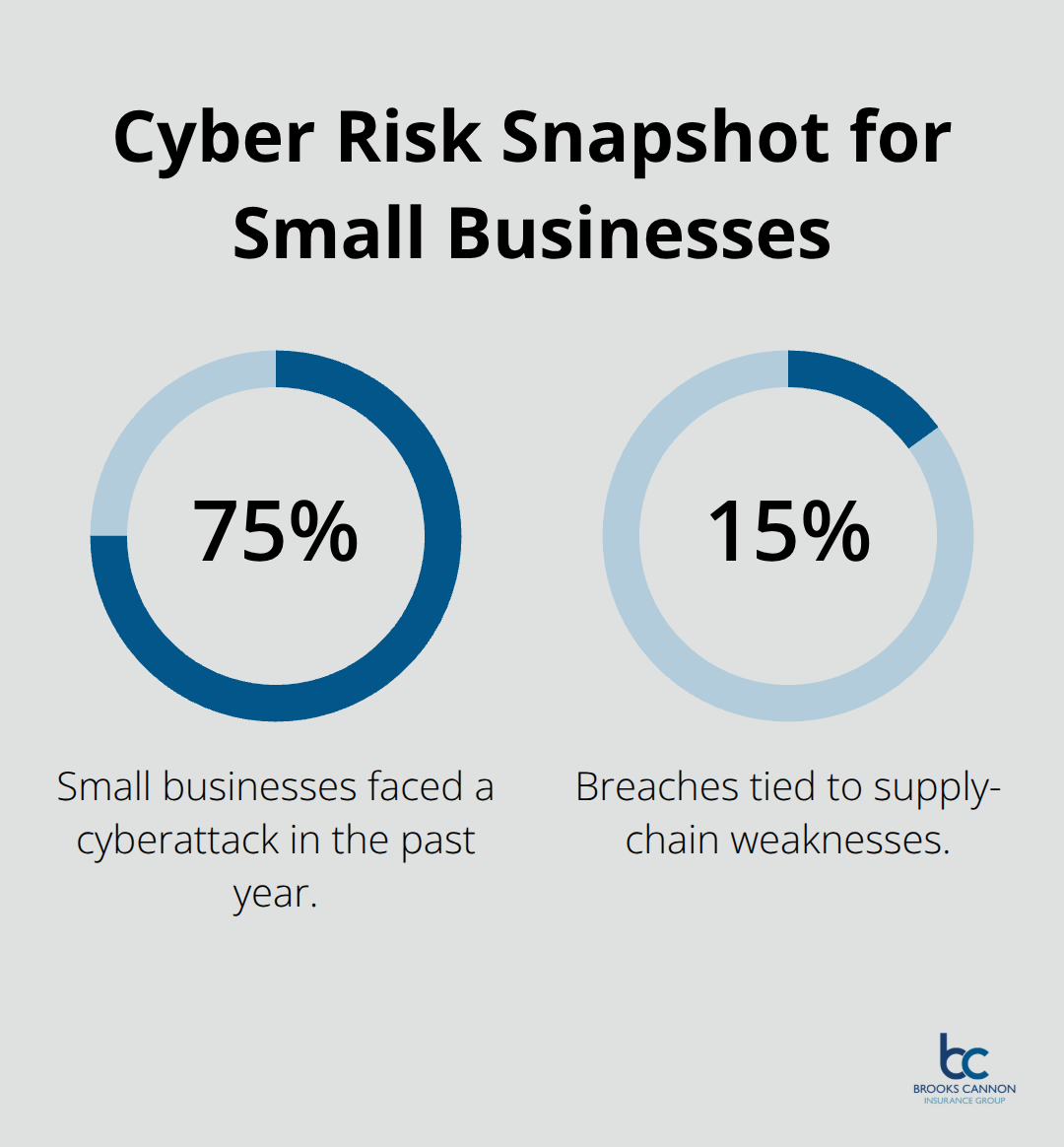
Cyber threats complete this risk triangle. Nationwide, 75 percent of small businesses faced a cyberattack in the past year, and the FBI reported 12.5 billion dollars in cybercrime losses in 2023. Dallas experienced a rise in ransomware activity in 2025, and supply-chain weaknesses account for 15 percent of breaches.
If your business stores customer credit card numbers, medical records, or employee data, a breach triggers notification costs, credit monitoring expenses, legal defense fees, and potential regulatory fines. Your general business account cannot cover these expenses, but cyber liability insurance does. These three risk categories shape how Dallas business owners must approach their coverage strategy.
What Coverage Every Dallas Small Business Actually Needs
General Liability: Your First Line of Defense
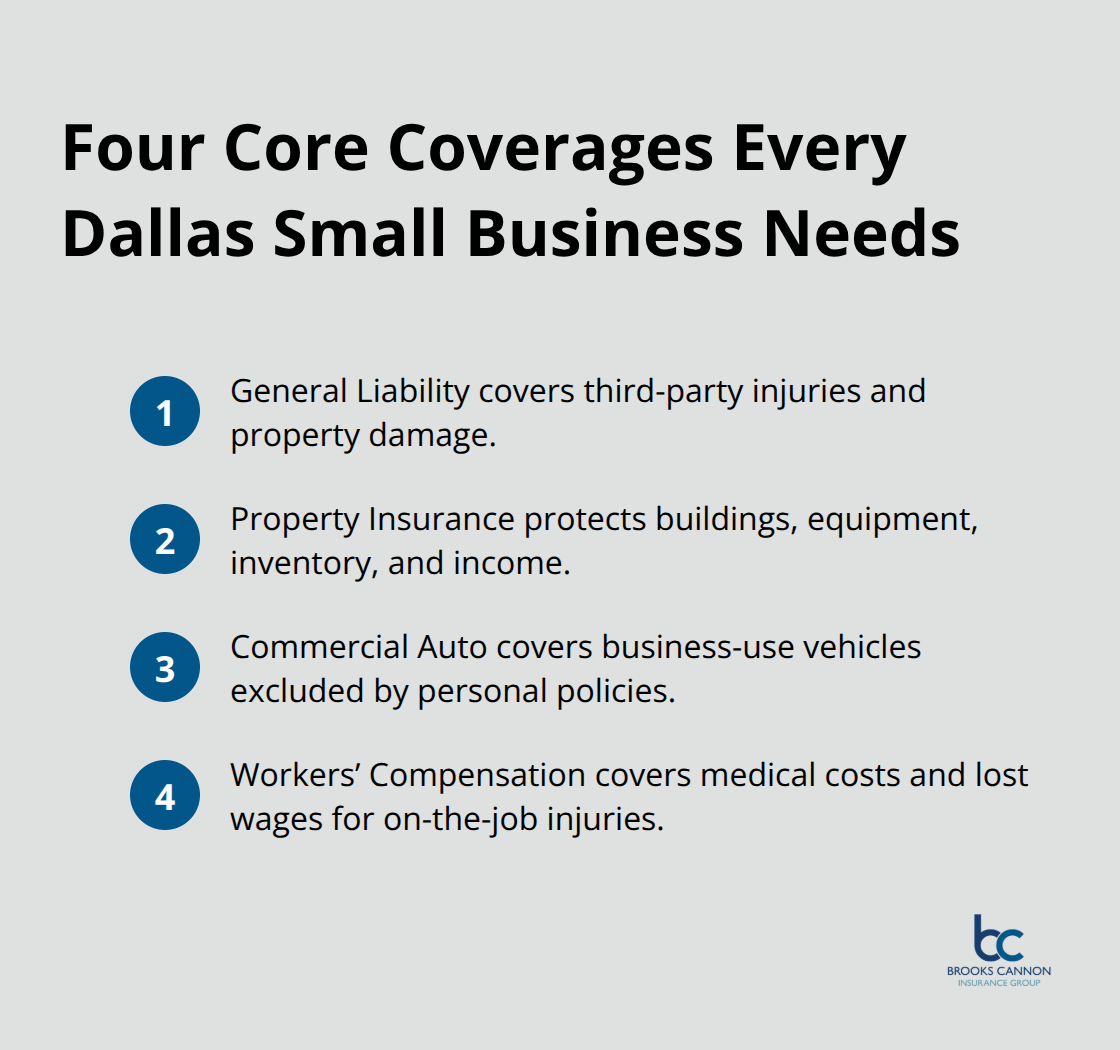
General liability insurance forms the foundation layer that protects your business when someone claims you caused them harm. This covers third-party bodily injury, property damage, and personal injury claims-situations where a customer sues after slipping in your facility or claims your work damaged their equipment. Without this coverage, legal defense costs alone drain your operating account. Dallas small businesses face general liability claims regularly because of high foot traffic, delivery operations, and service work. Most Texas small businesses pay between $42 and $122 per month for a standard general liability policy, making it the most affordable essential protection. Landlords and clients frequently require proof of general liability before allowing you to operate on their property or sign contracts, so this coverage becomes mandatory in practice even when it’s technically optional.
Property Insurance: Protecting Your Physical Assets
Property insurance protects your physical assets-the building, equipment, inventory, and signage that represent years of investment. Dallas experiences approximately $338.6 million in annual hail losses, and a single severe weather event destroys equipment and inventory that took months to accumulate. Property insurance covers repair and replacement costs after weather damage, theft, or fire, and business interruption coverage within a property policy pays your lost income during forced closures. This matters enormously because most Dallas small businesses operate month-to-month on thin margins, and lost revenue during repairs creates immediate cash flow problems.
Commercial Auto: Required Coverage for Business Vehicles
Commercial auto insurance covers vehicles you use for business purposes-delivery trucks, service vans, contractor vehicles. Texas requires liability coverage on all vehicles, and personal auto policies explicitly exclude business use. If an employee drives a company vehicle and causes an accident, your personal auto policy will deny the claim, leaving your business financially exposed. Commercial auto costs approximately $120 to $190 monthly per vehicle depending on driver records and vehicle type.
Workers’ Compensation: Protecting Your Team and Your Business
Workers’ compensation protects employees injured on the job and shields your business from liability lawsuits. While Texas does not require workers’ compensation for private employers, it becomes mandatory if you win government contracts, and most commercial leases and vendor agreements demand it as a condition of doing business. Medical expenses and wage replacement for injured workers create financial obligations that grow quickly without insurance. The Dallas area saw 175,900 nonfatal workplace injuries in 2023, confirming that injuries happen regularly across industries. Workers’ compensation costs vary significantly by industry and payroll but typically range from $85 to $140 monthly for small operations.
These four coverage types form the backbone of protection for Dallas small businesses. The specific limits and additional coverages you need depend entirely on your industry, employee count, and operational risks-which is why the next step involves assessing your unique business situation to build a strategy that actually fits your operation.
How to Build Coverage That Matches Your Actual Business
Every Dallas small business operates differently, which means cookie-cutter insurance policies fail most owners. A contractor managing job sites faces exposure that a consulting firm never encounters, and a restaurant’s risks look nothing like a landscaping company’s. The coverage limits and additional protections you need depend on concrete details about your operations, not generic assumptions.
Document Your Business Operations
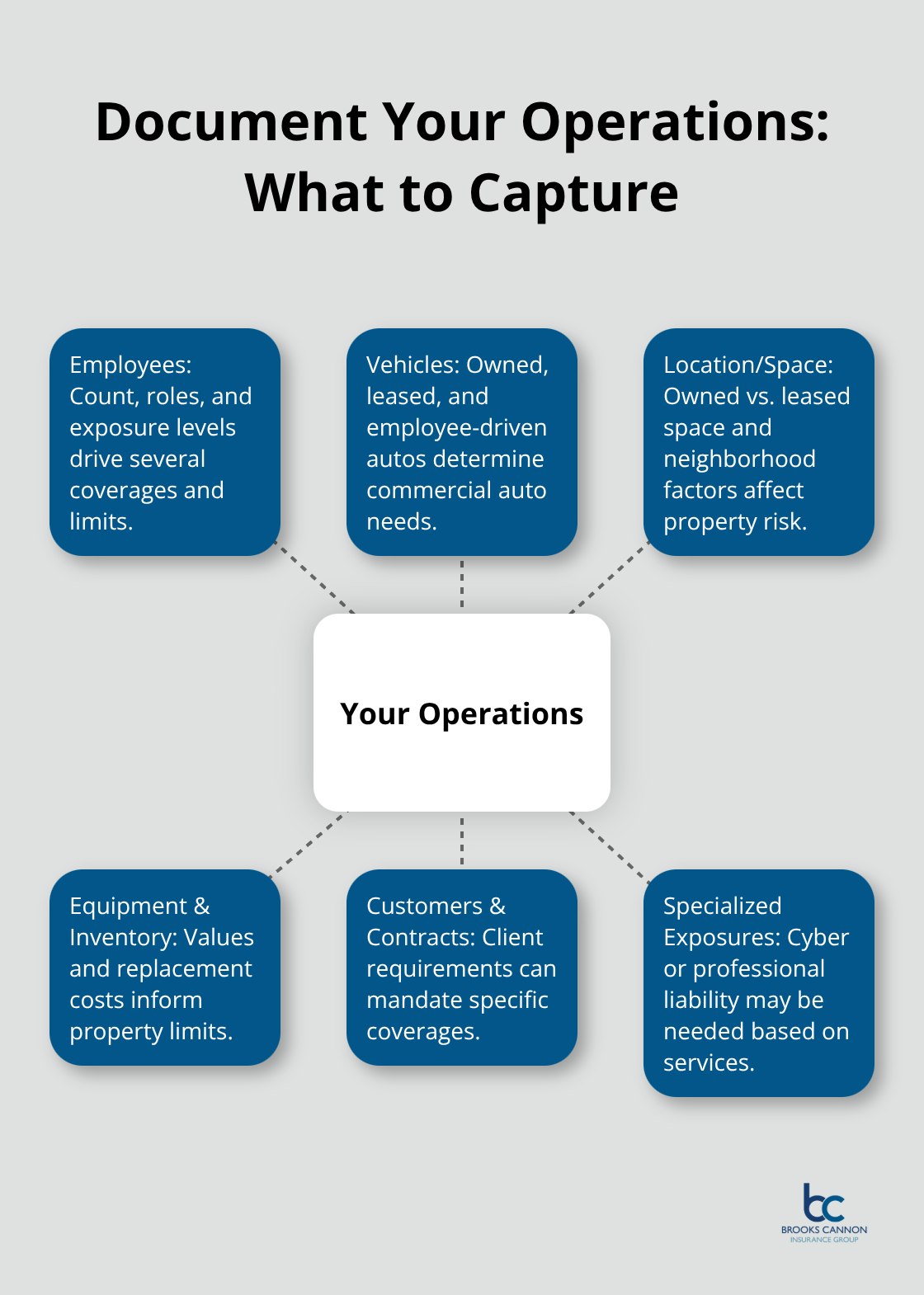
Start with what your business actually does: how many employees work for you, what vehicles you operate, whether you own or lease your space, what equipment or inventory you maintain, and which customers or contracts you serve. This information becomes your foundation for determining whether standard policies cover your actual exposure or whether you need specialized additions like cyber liability, professional liability, or business interruption coverage. Many Dallas owners skip this step and end up with gaps that cost far more than the premium difference would have been.
An independent agency can work with you to identify these specifics before recommending coverage, rather than pushing you toward policies that sound comprehensive but miss your real risks.
Match Your Coverage Limits to What You Actually Stand to Lose
Coverage limits represent the maximum your policy pays for a claim, and most Dallas small business owners set these amounts incorrectly. A general liability policy with $300,000 in limits sounds adequate until a serious injury claim arrives at $500,000 in damages and legal fees. Texas average professional liability claims involve deliverable errors that average around $42,000 to $60,000 in exposure depending on the service type, but defense costs alone can reach $125,000 in roughly 20 percent of cases. Your coverage limit must exceed your maximum realistic exposure, not just cover the average claim.
If your business generates $2 million in annual revenue, a $500,000 general liability limit provides meaningful protection without overpaying for unnecessary coverage. If you operate commercial vehicles with multiple drivers, each vehicle needs adequate limits because Texas requires liability coverage and a single serious accident can generate claims exceeding $250,000. Property insurance limits should reflect the replacement cost of your building, equipment, and inventory combined, not the depreciated value you think they are worth today. Request a current inventory valuation from your accountant or conduct one yourself (photograph equipment and document purchase dates and costs). This protects you against underinsurance, which means you absorb part of the loss even after filing a claim.
Update Your Coverage When Your Business Changes
Your insurance strategy becomes outdated the moment your business changes, yet most Dallas owners renew policies annually without reviewing whether their situation still matches their coverage. Hiring your first employee triggers workers’ compensation requirements in many vendor contracts and government work. Adding a service vehicle expands your commercial auto needs. Expanding into a larger facility increases your property values and business interruption exposure. Acquiring new equipment or inventory raises your replacement cost limits. Moving to a different Dallas neighborhood or expanding into a new Texas market may change your local risk profile and available coverage options.
Schedule a formal policy review every 12 months with your agent, and request an immediate review whenever your business undergoes significant changes. This prevents you from paying for coverage you no longer need while catching gaps before they become expensive problems. Dallas businesses that maintain current risk assessments and adjust coverage proactively avoid the majority of claim denials related to policy limits or coverage exclusions (these denials often stem from outdated information or mismatched limits).
Final Thoughts
Small business coverage Dallas works only when it matches your actual operations, not when it follows generic templates. The risks you face-severe weather destroying inventory, liability claims from customers or employees, cyber attacks targeting your data-demand protection built around your specific business model. Generic policies leave gaps that become expensive problems when claims arrive, and the cost difference between adequate coverage and inadequate coverage is far smaller than the financial damage an uninsured claim creates.
We at Brooks Cannon Insurance Group understand that Dallas small business owners need straightforward answers, not insurance jargon. You’ve invested time and money building your business, and your coverage should protect that investment without wasting money on unnecessary protection. Our independent agency works with multiple top-rated carriers to find the exact coverage and pricing that fits your situation, rather than pushing you toward policies that sound comprehensive but miss your real risks.
Start by documenting what your business actually does: your employee count, vehicles, physical assets, and customer contracts. Request a current quote that includes general liability, property insurance, workers’ compensation if you have employees, and commercial auto if you operate business vehicles. Contact Brooks Cannon Insurance Group to review your current situation and identify coverage gaps before they become claims.
Disclaimer: The information provided in this blog is for general informational purposes only and does not constitute legal, financial, or insurance advice. Coverage options, terms, and availability may vary. Please consult with a licensed professional for advice specific to your situation